
Essays
God & Grace in the Garden & Coop
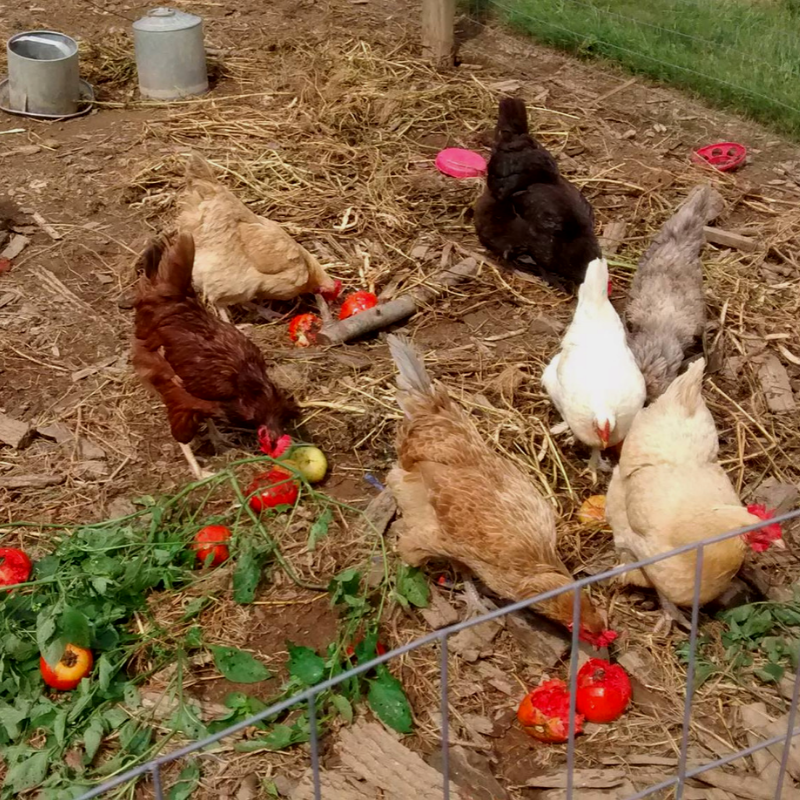
“Hen Party”
I try to make it a habit to walk around our yard most days after work. I circle the house, then head down to the garden where yellow and red Zinnias occupy one row
and red-and-white striped ones form another. The heads of the sunflowers hang heavy, drooping and brown, and the yellow finches are happy to pilfer
their drying seeds. Our tomatoes grow nearby,
dark and dense as a forest, with heavy fruit twice the size of my hand hanging
like red water balloons on nearly every vine.
Our garden is a
riot, an explosion of weedy chaos that cannot, in our current tropical
conditions, be tamed. But, we try. We summon strength and courage to weed one
bed, then another. Hidden, we find the small watermelons the grew from last
year’s seeds, the pale winter squash growing in inexplicable abundance.
This year, with
our hens no longer free-ranging, we’re freed the alarm of their endless
infiltration of the garden gate. No more pecked-at tomatoes. No more chasing
five, six harried hens, trying to shuttle them out through the narrow gate.
This year, the
hens are confined to a large fenced yard attached to their coop and they’ve managed to peck the ground there bare of any sign of life. Noticing their sparse conditions
this summer, it dawned on me that our garden’s
endless supply of weeds might be a welcome addition to their otherwise
bleak landscape.
We started
taking weeds to them by wheelbarrow and wagon-load, tossing the leggy
green plants over the fence handfuls at a time.
The hens were elated. They ran,
pushing and shoving, to scour the windfall of succulent greens. Our rooster, Joker, puffed out his chest,
making several announcements to his girls, waiting until they set-in before
taking his own. Within minutes, the stems were bare, stripped to frail,
skeletal forms.
What a grace this
is, what a miracle: our chickens take our garden’s accidents and turn them into
eggs.
There’s more,
though. Standing in the kitchen, on any
given night, I’m frequently confronted with routine kitchen scraps (the peels,
the cores, the wilted ends) as well as bowls of mystery food left too long in
the refrigerator. These too, the hens down
enthusiastically, clucking and tutting.
When I feel weighted by the guilt of chili left too long in the back of
the fridge, the knowledge that this too can feed to hens gives me solace. These hens are teaching me grace again,
reminding of the power of redemption, the truth that our mistakes are never the
dead end we imagine them to be.
Richard Rohr
sums it up this way: God writes with crooked lines. By which he means, God connects all the dots
of our lives, the much-intended ones AND the ink blots that splatter
accidentally on nearly every page. God
writes the story of our lives with a view so broad, so imaginative, even hens
turning old tomatoes into eggs ought not to come as a surprise.
This. Here. Now. (Again)

Last week, after a fifteen-plus year hiatus from the sport,
I went running with my daughter.
We laced up our running shoes and set off, down the
wet, grassy slope of the field across the street, through a narrow hedge of
what we hoped wasn’t poison ivy, and onto the trail. She bobbed along beside me, like a frisky squirrel, impossibly light
on her feet. She
commented on how slow we were going. She claimed she could walk at the pace at which I was “running.” I told her she could feel free to run ahead
if she wanted. I told her, “I am 41
years old.”
We went up the slight hill and down the other side and she
reminded me to “run through the bottom” – to use the hill’s slope to fuel the
steps ahead. We moved out of the shade
and into the sun and I started to think about walking.
Walking, really, had been on my mind since before we
began.
Would I walk? Would I not?
Was I capable of making the whole distance at a slow and steady
jog? Sure, I’m running now – in the
shade, downhill – but what about the sunny patch along the road? the slow,
steady incline near the house?
I had been thinking about running for a long time – for a
year, really, if not more. But before I
could get started, I seemed to need to know how I would end. Was I starting a lifelong habit? Would I lose ten pounds or more? Was I going to be a ‘Runner’? Or was this a
one-time deal, a passing fad, maybe yoga or Pilates were more my kind of thing?
It seemed I didn’t think the effort was worth it if I
couldn’t guarantee some intangible future result. So, I didn’t run. Until last week, when something in me had had enough and I
decided to let go of the need to know and take it one step at a time.
Trotting along the trail, I recognized my familiar tendency
to race ahead, to absent myself from what is – a slow and steady jog – in
favor of the fear and fantasy of what might be.
So, I started practicing as we ran.
Here. Now. This.,
I thought.
Each time I wondered
if, when, I would walk, I repeated the phrase.
Each time I wondered how far I would get, I returned to where I
was. And while this might seem like an
inspirational post about exercise and the will to overcome – I assure you, it
is not.
I don’t really like running at all. I may keep at it, I might not. But what I noticed (and what may be enough,
for now, to keep me coming back) is the way even this small thing – twenty
minutes on a trail with my daughter – offered an invitation to the spiritual
practices of presence and return.
On the final stretch of road, my daughter sprinted ahead, leaving
me to climb the hill alone. It wasn’t as
hard as I thought it might be.
* * *
My most recent newsletter featured a reflection on the phrase “This. Here. Now.” You can read that essay here. Do you ever find yourself plagued by a need to know? What practices do you use to stay in the present and move along one step at a time? I’d love to hear in the comments below.
What I Wish I’d Said
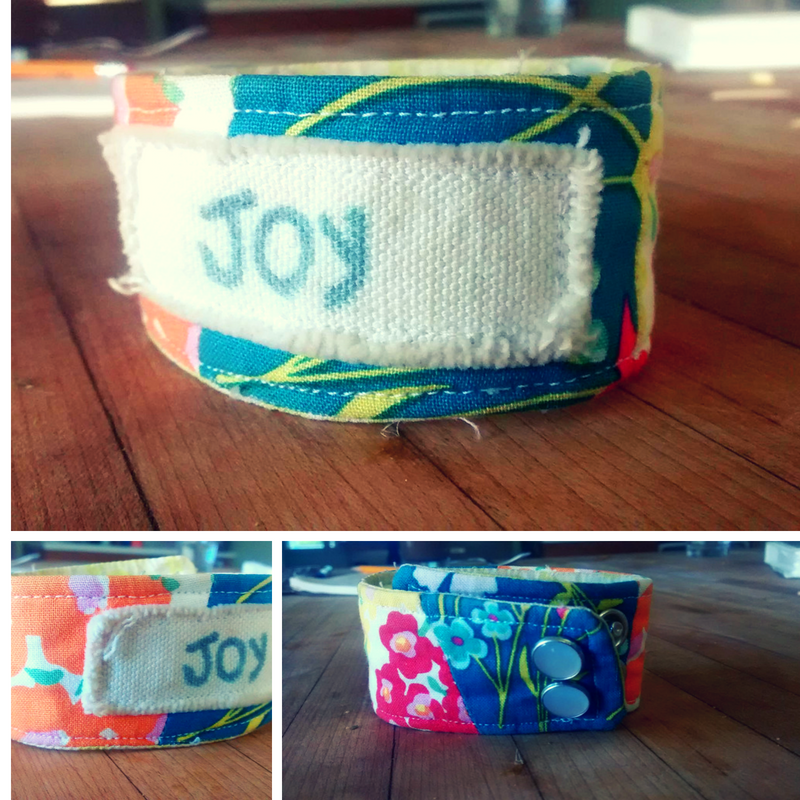
“What’s with the bracelet?” he asked.
The cuff in question, made of brightly colored fabric and
secured with two snaps, circled my left wrist. Across the top, the word, ‘joy’ was written
on a piece of frayed ivory canvas. I was
making my rounds at physical therapy – moving from arm bike, to squats and leg
lifts – when the young therapist posed his question.
“I made it,” I said – an honest answer, but short of the full
truth.
“Oh,” he said, “do you make jewelry?”
The conversation moved on and did not circle back around,
the moment was lost. I was left mulling my reticent reply and wishing I’d been clearer.
//
Have you ever lost something and, when you found it again, you wanted to do everything you could to keep from losing it again? That’s how it is for me and joy. So, I
made a bracelet in all the brightest colors, the happy, vibrant ones, and wrote
the word “joy” on it. I wear it to
remember to hold on to joy.
//
I don’t know what that young man would have said had I
unloaded my frightfully serious reasoning on him that day. But, I wish I had, because it was the truth and sharing truth with others often helps solidify it in the deepest parts of ourselves.
This summer, as I prepare to transition from working at home
to working at a church again, I’ve been looking over these past seven years of
life and taking an inventory of sorts.
What have I been given in this time that I want to carry with me for the
work ahead?
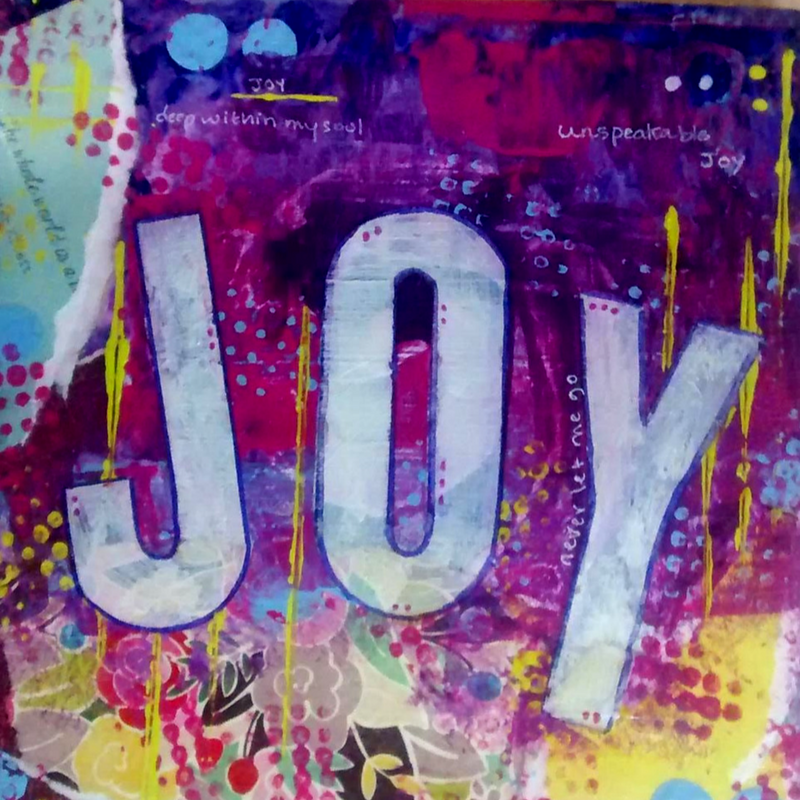
One these gifts is joy – the reminder to cultivate and choose it, to recognize it not as an optional add-on to the spiritual life, but as a fruit of the spirit, an essential marker of the presence (or absence) of God in each of our lives. To remind myself of this truth, I made a small painting to hang in my new office, a painting filled with gorgeous colors, patterns and textures and one simple word: joy.
Turn Toward the Light (Do Not Be Afraid)
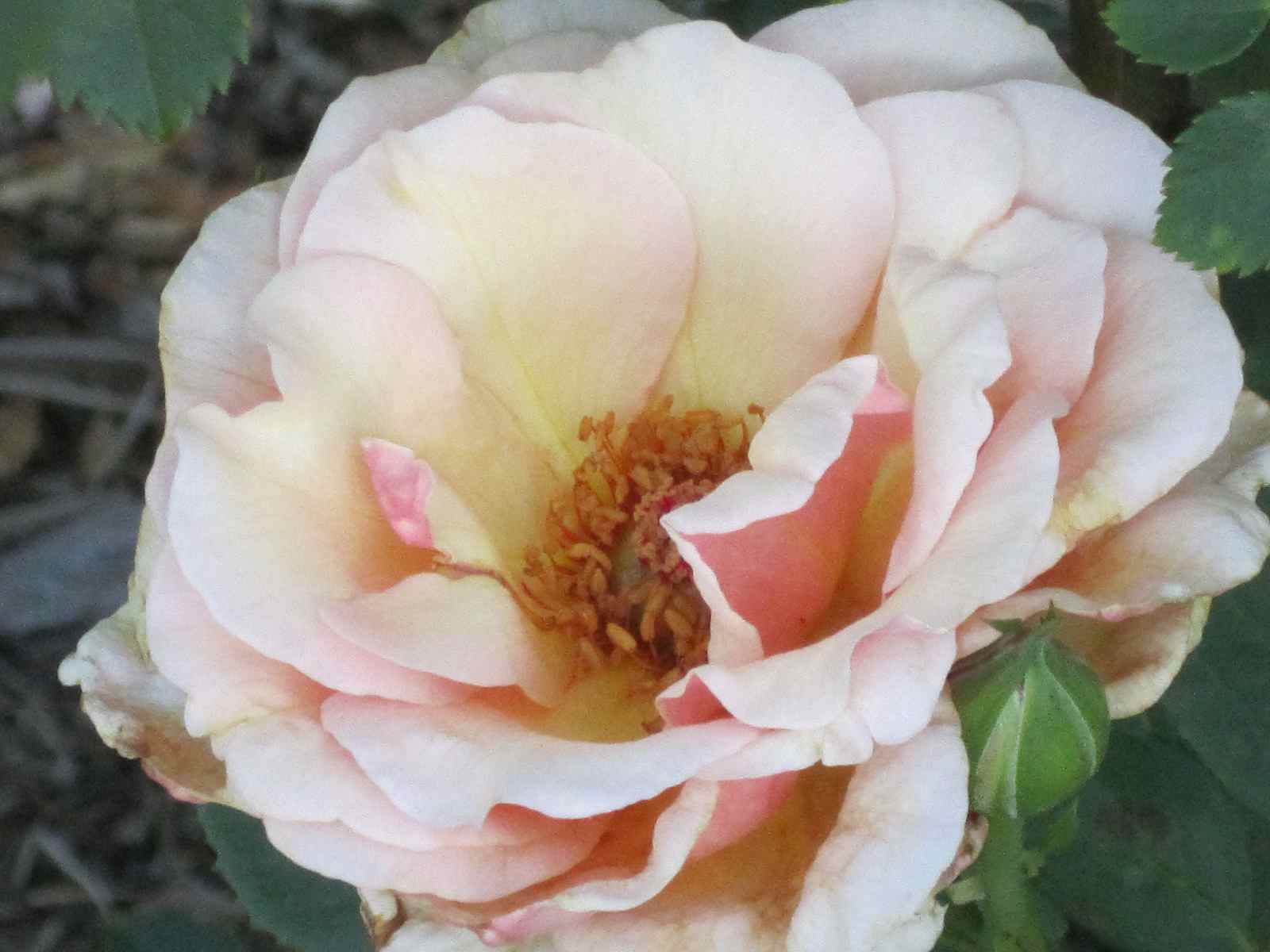
How did the rose
ever open its heart
and give to this world
all its beauty?
It felt the encouragement of light
against its being.
Otherwise,
we all remain
too frightened.
– Hafiz
The world needs us all; every heart open, fragrant, bright with the gift of pure being.
May the light of Love rest upon you this day.
May the light of your own beautiful soul be an encouragement to all who cross your path today.
* * *
Things have been quiet on the blog for some time now. Be sure to sign up for my newsletter and stay tuned later this week for an update on all the new things happening behind the scenes here at This Contemplative Life.
Keep Showing Up
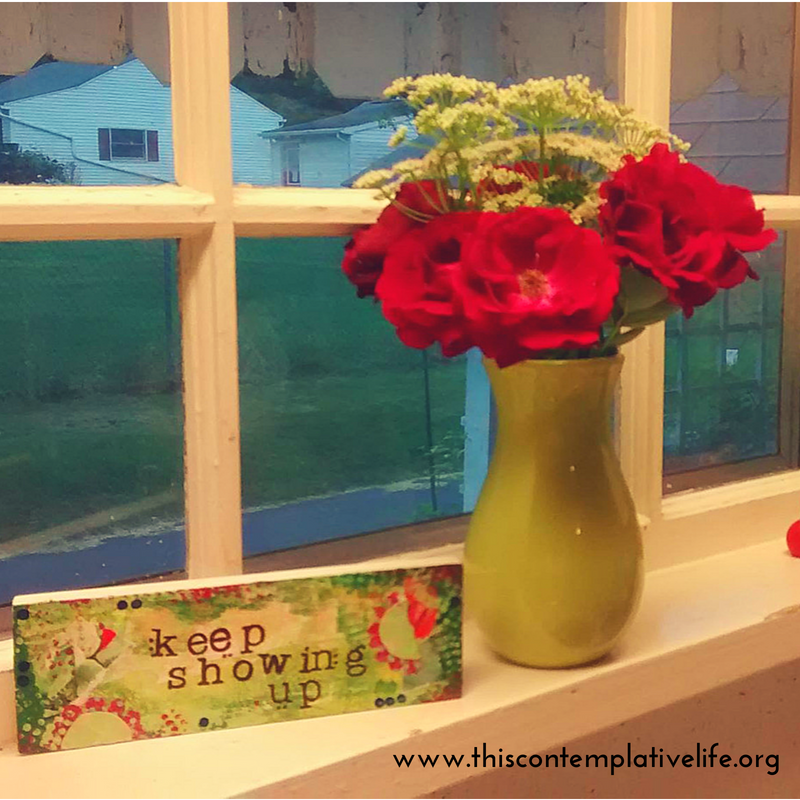
I found myself in a bit of a funk last night. After mowing the front lawn, I sneaked into my office to pray for awhile. It helped. And then I saw my daughter outside and decided to join her because the hot humid day had finally turned cool and breezy. We road our bikes in lazy circles on the driveway and I noticed, again, the red roses blooming like fireworks along the side of the little house. I realized the Queen Anne’s Lace was in full bloom too. After I parked my bike, I ran in for a vase and scissors and Sophia and I cut the first bouquets of the season. I felt immeasurably better then, I felt returned to my home, my self.
I painted this little plaque last year, based on a note I had taped above my painting station, “Keep showing up.” My kids asked what it meant, and I said, “It means keep trying, keep being willing to be where you are, to start again in whatever moment you find yourself in.”
I think that’s part of what happened last night. Thanks to prayer and a cool breeze, I stopped worrying about what comes next and showed up to what was right in front of me – a riot of flowers, a lovely daughter to share the task of cutting the season’s first bouquets.
In her book, An Altar in the World, Barbara Brown Taylor says, “No one longs for what he or she already has, and yet the accumulated insight of those wise about the spiritual life suggests that the reason so many of us cannot see the red X that marks the spot is because we are standing on it. The treasure we seek requires no lengthy expedition, no expensive equipment, no superior aptitude or special company. All we lack is the willingness to imagine that we already have everything we need. The only thing missing is our consent to be where we are.”
Today, friends, keep showing up, consent to be where you are, in whatever you are in. And, when you do, I hope you find flowers, or a friend, or even just a moment’s peace and quiet that helps you move gently, hopefully, into the next moment and the moment after that.
What I Learned When I Was Dying

Edge of the Conodoguinet Creek, Still Waters Retreat, Carlisle, PA
“Don’t forget, you’re going to die.” – WeCroak.com
I had been keeping an eye on the spot for weeks. I thought it was a bug bite. I thought it would go away. But it didn’t. Finally, on the first free morning I had, the
morning I was set to go on silent retreat, I googled my symptoms and found out
I was dying.
Well, I’m not dying (I repeat: NOT DYING), but that morning,
based on what I read online, death suddenly seemed like a plausible possibility. Not only was my symptom a possible sign of something
bad, it was a symptom of something very
bad. I called my Dr and made an
appointment for the following day. I
called back again and said I’d be more than happy to come in that very day if they happened to have a
cancellation.
Then, with nothing more to do, I left for my scheduled
retreat, for six hours of silence and solitude with the news of my own
impending death tagging along, an unwelcome, nagging companion.
//
My husband and I recently learned about an app called WeCroak
which sends users a text, five times a day, with a simple reminder, “Don’t
forget, you’re going to die.” The text
arrives at random intervals (like death) and keeps things simple, clear, and direct.
My husband learned about it through a counselor, discussing
humanity’s fear of death as a source of generalized anxiety. I heard about it from my Spiritual Director
after sharing about my silent retreat. “These kinds of experiences can
help us wake up,” she said.
//
One would think a silent retreat, with death as your companion,
would be The. Worst. But, it wasn’t.
After driving to the tiny house in the woods, I sat in the
kitchenette drinking tea. Surrounded by
windows, I watched bees flitting from plant to plant. Upstairs, later, I rocked in a cushioned chair,
reading Richard Foster’s, “Freedom of Simplicity.” When reading grew tiresome, I stared out another
set of windows and watched witless carpenter bees droning in lazy, senseless
circles. I took a nap, half-wrapped in a
downy quilt, while the sun shone down on me.
I woke to a stink bug landing too near my face.
Don’t get me wrong, I was distracted. I fought back tears from time to time and found
it nearly impossible to focus on my original intentions for the day. I spiraled into moments of worry and anxiety.
I thought about my kids and what would happen to them if
something happened to me. I want to say
my concerns were selfless, but they weren’t.
I mourned my loss of influence in their lives, the things I would not
get to see. I realized, I will not last
the test of time. Which is to say, I
will die, and the world will go on without me. There isn’t really a single thing I can
invest in that will last; as Theresa of Avila said in her famous bookmark
prayer, “All things are passing away.”
Except, that is, for love.
//
Later in the day, I ate my lunch sitting in an old Adirondack
chair near a wide and lazy creek. The
surface of the water hardly seemed to move at all. If I shifted my focus, I could see long fish
swimming loops along the muddy floor. Dandelions,
with heads gone white like old lady’s hair, stood along the edge of the water,
bearing witness, I thought, to its passage.
Those dandelions are, I’m sure, gone today. But the creek remains.
It seems to me, that love must be something like that stream
– constant, slow, enduring, and we are like those fading flowers on the
shore. In which case, the only sane thing
to do is cast ourselves, wholeheartedly, into love’s great stream, to become – with
heart, soul, and mind – part of the love that never fails.
//
This is what death told me last week, when I allowed it to
draw near via a googled symptom and online self-diagnosis. Maybe others might learn the same by answering
death’s texts five times a day for months on end. The apostle Paul, who had his own travels
with death as a companion, tells us the same, “now faith, hope, and love abide,
these three; and the greatest of these is love.” (I Cor 13:13)
Death’s message was clarifying and simple. It put my world, which I thought had been tipped
on its head, right-side-up again. It
brought my feet closer to solid ground, which is to say, it gave me level
footing in the land of acceptance.
I did not make peace with death over the course
of six silent hours spent in the woods on a sunny Wednesday in early May. I’m not that naive. But I did catch a glimmer of a gift hiding in
death’s hand, enough to make me understand what we lose living in a time and place
where death is treated as an inconvenient truth, a reality best avoided at all
costs.
You can read more about the WeCroak App in this article in The Atlantic. Let me know if you try it out!
Origami and God (Fold, Unfold, Refold Again)
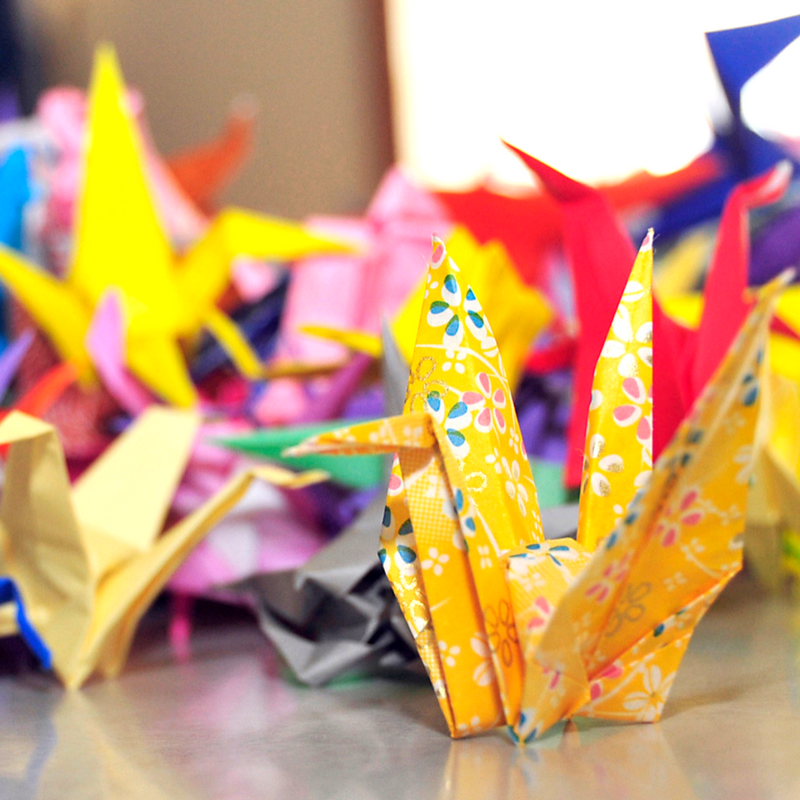
Each of my boys has discovered origami sometime between their sixth and seventh
year of life. It always begins with fortune
tellers and airplanes, then progresses to boats and paper hats. Soon, every surface of the house is littered
with folded scraps of white copy paper. Eventually, familiar patterns lose their thrill and we head to the library searching
for new patterns to master.
Harder patterns, though, require adult assistance. Inevitably, I’m called to assist a frustrated
child in deciphering vague diagrams and tricky folds. This, I do, kneeling on the floor by the wood
stove with an anxious, eager child peering over my shoulder.
“Mom! I don’t
understand what I’m supposed to do,” they cry.
“Ok, let me see,” I say.
They want me to be able to look at the picture once and tell
them what to do. But, I need to begin at
the beginning, to feel the paper moving through its motions beneath my
fingers.
I follow the patterns step-by-step: fold, unfold, refold
again. Even though I know the desired
outcome, the path to completion’s often far from direct. Jumping ahead is not advisable, so I stay in
the moment working slowly, one fold at a time.
Some patterns begin with several steps of folds and creases
that are then, one by one, undone. These
folds are preparatory, lining the page with creases that serve as landmarks for
the steps ahead. It would be a tempting
but misleading to mistake one of these preparatory folds for a final fold.
Sometimes I think this may be how God works in our lives –
not that our lives are paper, manipulated by God into an unforeseen shape – but every life is filled with folds, some relating directly to the final goal,
others only serving as markers along the path.
So much suffering comes from mistaking one from the other – pegging our
lives, our identity on something that will, shortly, be unfolded to make way
for something else.
The problem is, from my human perspective, I can’t readily
tell the difference between final folds and preparatory folds. Even the final outcome remains unclear – what
are we working toward here, God? A jumping frog? A peaceful crane?
The truth is, I’m not sure God cares nearly as much as I do about the difference between unfolds and final folds, about final outcomes and destinations. God may be something more like a child, thrilled with the feel of pliable paper, delighting in the joy of shared discovery.
Knowing this, maybe we can learn to move lightly and freely
through life, turning and folding, shaped in each moment by what is, rooted in
the humility of not knowing, and a deep trust in the goodness of the One in whose
hands we rest. We are being turned, crease by crease, into works of beauty and wonder beyond what we could ever imagine. This is what redemption means, this folding and unfolding, moving forward, always, toward wholeness.
God’s Not Grumpy
I’ve been immersed in Jesuit priest Gregory Boyle’s books recently (Tattoos on the Heart and Barking to the Choir). I’m so encouraged and enchanted by his sense of God’s innate qualities – qualities affirmed in scripture, but often overlooked in our own imaginings of God. All of this led me back to this brief post from August 2015. Enjoy.
* * * *
“What do you think heaven’s like?” my oldest son asked.
My kids and I were slowly waking up, seated around the sticky kitchen island, absorbing summer’s early morning humidity. I cradled my second or third cup of coffee while they spilled milk and cereal and crunched on chocolate toast.
In a moment of unexpected quiet, my oldest son posed his question.
Wrapped in a fog of sleepiness and still focused on my coffee, I said, “I’m not sure. What do you think it’s like?”
Perched on a wooden stool, he pontificated for a while, and made sure to specify that his picture of heaven included the conspicuous absence of bickering.
There had been a lot of bickering that morning. In fact, first thing that morning I scolded the boys for their non-stop verbal warfare.
The ‘absence of bickering’ idea made its way into my sleepy brain, tickling my imagination. Putting on a grumpy voice (not unlike the voice I used to reprimand the boys earlier that morning), I growled out an impression of God policing behavior in heaven. “Hey, cut that out. No fighting allowed in here,” I said.
Distracted from the joy of his own ideas, my son paused and turned to me with a quizzical look on his face. Eyebrows arched, head tipped to the side, quick as a whip, he objected to my impersonation.
“God’s not that grumpy,” he said.
His correction ushered in a moment of silence. Then we both laughed, surprised by his nimble reply. In four short words, my son defended his understanding of the heart of God; God’s very nature.
//
I am often grumpy.
Especially in the early morning, when humidity is at 90% and little sweaty, sleepy people are squabbling all around me.
But God is not.
The fact that my son not only sees, but defends the difference, is a wonder to me and a source of great joy.
My Daughter, Annie Dillard, and I

My twelve-year-old daughter says there are four eggs in the
nest outside her bedroom window. I
believe her, because she’s who one sits and watches, keeping an eye on the world
around her.
//
On the night after the Parkland Florida shooting, my oldest two, my husband, and I sprawled
around the wood stove talking about kids
who struggle, kids who sometimes perpetrate unfathomable acts of violence.
“There’s a boy in my class who seems really sad sometimes,”
my daughter said. “I ask him if he’s ok,
I tell him I will listen if he wants to talk.
But he doesn’t want to. I don’t know
what else to do.” She shrugged her
shoulders, letting the weight of seeing and knowing another’s pain and
isolation rise and fall.
The mother in me wanted to pick up that weight, like a
strongman lifting a car off a trapped child.
I wanted to lift the burden from her shoulders and carry it far away,
toss it off a canyon cliff, never to be seen again.
Instead, I said, “I’m glad you ask him. Sometimes that’s all you can do.”
//
During spring conferences, a teacher
said she’d recently paired my daughter with a student who’s only integrated
into mainstream classrooms for science. They
worked together for a single lab with his classroom aide keeping close
watch. The teacher, also observing, noticed
how my daughter deliberately slowed her pace, waiting for the other student to
process before moving on to the next step.
In other words, she treated him like a real partner.
“Some kids just rush through and do all the work,” the
teacher said. “But she was so patient,
she just let him work at his own pace.” After
they finished, the student’s aide told the teacher, “That girl is the kindest person
I’ve ever seen.”
Tears sprang to my eyes when she said that and later, when I
retold the story to my husband, he got chills up and down his arms. They weren’t chills or tears of pride, but the
kind that come when truth strikes close to the bone.
//
I recently started reading Annie Dillard’s collection of
essays, Teaching a Stone to Talk and
it’s filled parts of me I didn’t know were empty. Dillard’s work makes me want to not only write
better but live better. She writes as
one who watches and listens before asking gentle, curious questions of the
world around her. She reminds me of my
daughter.
I was only three sentences in to her first essay when this small
fact stuck its foot out, causing my imagination to stumble and pause:
“Sometimes [a weasel] lives in his den for two days without
leaving.”
Now there’s something
to write about, I thought. Something for a poem maybe.
Who knew weasels have a private life, hidden beneath the surface
of the world? The very idea dazzled me. Here,
I thought, is something to explore. But, reading on, I realized Dillard knows the
weasel in a way I never will, having both researched it and watched it in a
pond near her house.
I have no pond near my house. I’ve never seen a weasel except maybe in a
zoo. I can write ideas about the weasel,
but I can’t write directly about the weasel (not honestly, at least) because I
don’t know the weasel. Seated here by my
office window, I suspect I’m a good deal removed from the nearest
weasel-viewing-locale. For now, I’ll
leave the weasels to Annie.
I’ll write instead about what I can see, about what I
know. Today, for instance, the gray hen
is foraging in our yard and a pair of sparrows paused in the shrub outside passing
something (a seed?) from beak to beak. Dispassionate
snow flurries are falling. It’s a lovely
snow, the kind you long for in December, but it’s April, and if I hear one more
complaint about this late winter weather, I swear I’ll despair because I’m
holding my breath for spring and complaining wastes air.
Looking up and a little further out, I can see the awning outside
my daughter’s window where an eager pair of house wrens built their nest weeks
ago. I can’t see the mother, but I know
she’s there, sitting on those four eggs in the snow and cold because life
depends on it. I know she is there just
as I know I am here, watching and listening, asking gentle, curious questions. These children, my daughter and sons, they
are my eggs, my weasels; they make me want to not only write better, but live better.
Lament over Jerusalem: FREE Prayer Resource
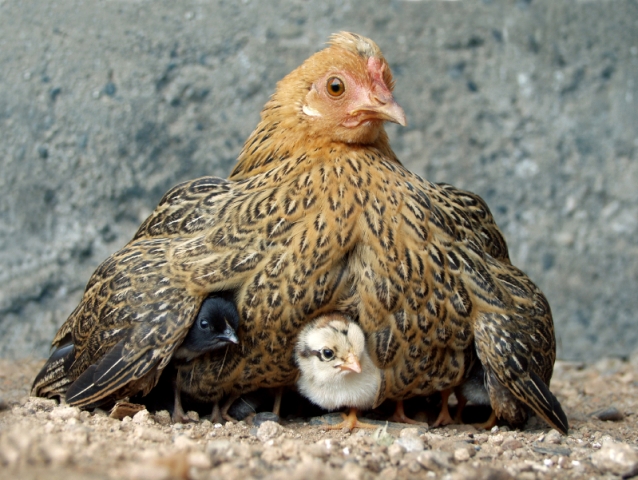
Jerusalem, Jerusalem, you who kill the prophets and stone those sent to you, how often have I longed to gather your children as a mother hen gathers her brood under her wings, and you were not willing. Matthew 23:37
Not long after his triumphal entry into Jerusalem, Jesus’ conflict with the religious leaders intensifies dramatically. The closer he comes to the cross, the separation between those who Jesus has gathered and those who refuse to be gathered becomes markedly clear. As tensions mount, Jesus reveals, again, the deepest longing of his heart – to gather us to himself in love.
As a mother, I know what it is to spread my arms wide and gather my children in – in moments of joy, fear, or comfort. I also know the bittersweet moments when new-found independence, willfulness, or hurt feelings cause my children to resist being gathered.
As a chicken farmer, I know the way a mother hen spreads her breast feathers wide over a nest. I have seen a newborn chick burrow into its mother’s feathered cocoon, have felt with my own hands the warmth beneath her wings, the close, dark hidden-ness.
When I read this verse, I wonder what it means to be gathered. I think of the intimacy – the safety, calm, and rest. I imagine, even the darkness of that hidden place would feel welcome. There is, in all of us, sometimes buried deep, a longing to be gathered.
Yet, still, we often resist. And even when we do allow ourselves to be gathered we are still painfully aware of the desperate, aching world just beyond our sheltered rest. Gathered to God, resting against God’s very breast, we cannot help but be shaped by the heartbeat we hear. Gathered, we become gatherers; loved, we long to be lovers. We become the kind of flock that follows God to the cross, through the cross, and into the kind of life that multiplies and makes manifest the longing love of God.
God’s longing love seeks to gather us ALL in. Sit with that for a moment.
One strange fact about hens is that, when brooding, the mothering impulse is so strong that they will mother almost anything they can find – puppies, kittens, piglets. It seems, with hens, the longing and love are wide enough to gather all who are willing. The same is true, of God.
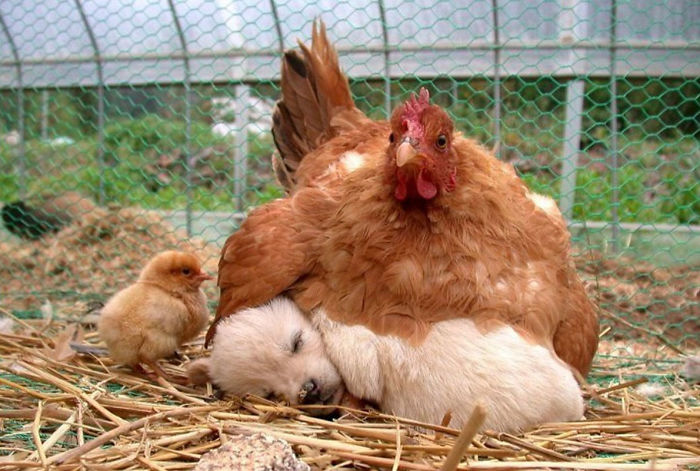
As we wait and prepare for Easter morning, I want to invite you to spend some time with this verse:
What do you imagine it would be like to be gathered by God?
Who do you long to see gathered into God’s longing love?
What parts of you resist gathering?
To help you along, I’m including a simple coloring page/prayer activity I created just for you. All you need to do is clink on the link: Gathering Love Prayer Resource and hit print, then follow the prompts on the page. Jesus’ words paired with prayer and coloring make a simple activity for you to enjoy alone or with a small group of individuals – kids will love it too. (If you do download the page, leave a me a comment below.)
Imagining Palm Sunday (from the perspective of Simon the Zealot)
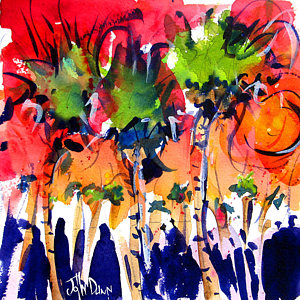
(painting by John Dunn, available here.)
(This piece of fiction is loosely based on Luke 19:28-40 and is told from the perspective of Simon the Zealot who I imagine being asked, along with Philip, to go to Bethany to get the colt for Jesus. Here’s hoping you also find some time to wander around inside the gospel stories in the week ahead.)
It felt like the first day of spring. Like everything we waited for was so close we could almost taste it.
We were close to Jerusalem. The closer we got, the edgier we were. Jesus was quiet. When we reached the Mount of Olives, Jesus turned to me and Philip. He chose us, and told us to go and look for a colt in the next village, it would be tied to a post and we were supposed to just walk up and take it.
How did he know this?
We didn’t ask. He chose us, that was all that ever mattered. Jesus and the others stayed resting in the shade of the olive trees. Philip and I walked alone.
When you were with Jesus, walking beside him, it felt like the sun on your back – faith rose and blossomed. But with every step we took away from him, faith dimmed. Clouds of doubt rolled in, confidence wilted as we walked toward the village.
We hardly dared think, much less talk about what might happen when we reached Jerusalem. Instead, Jesus’ stories ran through my head. Everywhere we went he spun stories, painting pictures with words. I tried to make sense of them, but I couldn’t. Maybe I didn’t want to.
Bethany was small and dirty, like every other village, nothing special. The smells and sounds nearly knocked me out after the quiet walk through the countryside. It was hot, the sun unbearable. I envied the disciples left behind, resting under the trees. The village seemed to go on forever. Women stared as we passed. Children ran up to touch our robes, then scrambled away laughing. We felt strange and out of place.
The further we walked, the more foolish we felt. Reason raised its head – why this village? Why a colt? And where? Where was it?
At the far edge of town, we heard it. A donkey brayed. I stopped mid-thought, and put my hand out to stop Philip in his tracks. Again, we heard it, the screeching sound like metal grinding against metal. It came from somewhere to the right. We followed a small path through a thicket. Our steps slowed, nervously. Then we came to the edge of a clearing. An ancient stone house stood silent, a fire smoldered in a pit. Chickens pecked the ground. Off to one side stood a young donkey tied, just as he had said.
My heart leapt. Philip grabbed my arm and squeezed tight. Our eyes met wide with surprise and glee. It was all we could do to keep from laughing.
Giddiness propelled me, I rushed toward the colt. It skidded sideways, stretching the rope taunt, and erupted in a string of screeches, its lips pulled back, teeth exposed. I lunged and wrestled the rope until Philip again grabbed my arm.
“Simon,” he said.
I followed his eyes toward the house. A small man slowly emerged from the shadows. I pulled my hand back from the colt immediately. Behind the old man a woman and a small child peaked out of the doorway. Chickens squawked and scattered as he crossed the open yard.
I have never seen such a short man, he would’ve made Zaccheaus look like a giant. He had a grave and wrinkled face and seemed coated with a lifetime of hard work and dirt. My heart sank. He would never let us have this animal. I thought of the sword at my side, it wouldn’t take much to force the plan. But the woman and child watched from the doorway.
Philip bowed in greeting and I followed. The little man bowed.
Braced for anger, his simple question startled me. “Why are you untying the colt?”
Why.
Why not, I thought. Why shouldn’t we take whatever we needed to overthrow the Romans? Why try to explain the unexplainable to this dirty man in his dark hut?
Philip’s hand was still on my arm. I stared at the man, so solidly rooted to the ground, and remembered Jesus’ words, “If they ask why, tell them ‘the Lord needs it.’”
Everything was always so unbelievably simple with Jesus, the simplicity itself was confusing.
“The Lord needs it,” I said.
The little man caught my eyes with his own and held them. I watched him measure the truthfulness of my words. I knew he likely guessed my thoughts about my sword, my urgency, and frustration.
Something in my eyes satisfied and he turned to the colt. He reached out and patted the animal, murmuring into its long ears. “Take it,” he said simply, then turned and walked away.
Our excitement grew with every step back through the village. We marched into the olive grove like victors returning from battle. The donkey brayed and bucked at the rope. Everyone gathered around shouting questions, slapping us on the back, startling the colt. “How? Where?” they asked.
“It was just like he said, just like it,” I repeated, grinning and proud forgetting the doubt I’d carried across town.
Then, Jesus pushed in to the circle. He smiled at our surprise and delight. His tired eyes crinkled in the corners. His robe was wrinkled and dusty from resting on the ground.
“You did well, Simon,” he said, clamping his hand on my shoulder and fixing his eyes on mine. “You too, Philip,” he added. Like I said, he was like the sun, you know? And when he shone on you, it was something you never forgot.
Jesus took the rope and leaned in quietly toward the donkey. He patted it, whispered in its twitchy ears like the old man had. I think in that moment, the colt felt just as loved as we did, just as happy and full of hope and excitement. It stamped a foot and brayed flicking Jesus’ face with its ears and we all burst out laughing.
Peter pulled off his cloak and laid it on the donkey’s back. Nathan too, and Andrew, until the poor animal was draped with a rainbow of dirty robes.
It was time for Jerusalem.
I knelt right there in the dust and made a step with my hands. Jesus stepped and leaned while Andrew tried to steady the donkey. But the animal sidestepped and I teetered, pitching Jesus forward. His stomach landed with a thud on the donkey’s back. My face reddened with embarrassment, but Jesus pulled himself up laughing and swung his leg over the side.
When he laughed, it unleashed something inside of us. We were like boys again, free and happy. Here we were, caught up in the biggest adventure of our lives, with Jesus at our side, and the wonder of it carried us all along.
Jesus turned the colt toward Jerusalem, leaning to whisper again in its ear, scratching the coarse hair where the rope hung around its neck. Moving forward, a nervousness settled over the crowd of us again. Then, we followed, and with each step our excitement grew.
Thomas started the singing. His deep voice rose and the others joined in following the words of the psalm we all knew. The psalm of victory. I heard the words entirely new as we sang them there in the dusty streets, under the open sky.
I waited all of my life for a king.
Here he was and here we were together, marching into Jerusalem. But not marching, nearly dancing. As much as I wanted it to be different, as much as I remembered the sword at my side and my dreams of a mighty king on horseback leading me into battle, I was happy. Happy with this fool of a man plodding along on a donkey’s back, this man who loved me.
I felt my love for him surge in my chest as we repeated again and again the chorus of the psalm, “Give thanks to the Lord for he is good, his steadfast love endures forever.”
I wasn’t the only one off pitch. Philip had no rhythm, not an ounce of tune, and we were an ugly bunch weaving our way into town, drunk on good news and friendship and the love we all needed. They heard us first (probably smelled us second) and women and children wandered out to watch us.
Such a strange parade. We sang at the top of our lungs, jostling each other, slapping shoulders and backs. Peter reached out and grabbed a boy in the crowd, swung him on his shoulders and Andrew jumped to reach a palm branch. Breaking it, he placed it in the boy’s hand and the boy cheered and waved like mad.
There’s something about a people, so beaten down with sorrow and fear, there’s little left to lose. Maybe this is what made them join us, welcome us, break branches of their own and join the singing, the dancing and shouting. Some stripped off their robes and laid them in the street and Jesus was there in the middle of it all, steady and solid as the sky.
Things got a little out of hand.
But that never seemed to bother Jesus. He got tired sometimes, needed rest and space, but he didn’t try to control us. He let us be however we were, welcomed us and that day we were happy and he didn’t bother to contradict.
But the Pharisees did.
It was one of the things they hated the most about him, the way he refused to control us. He didn’t seem to need to control anyone and therefore refused himself to be controlled. It bothered me too, if I’m honest. I couldn’t figure out how he might overthrow the Romans without taking for himself some measure of the power and control they exerted over us. But it bothered me less when I was with him, then it felt like I could believe anything and, if I’m honest, I thought he would change when we got to Jerusalem.
To the Pharisees, it was blasphemy, all of it. The way we sang and danced in the street, the image of Jesus on the donkey like some kind of street urchin playing king, it was all offensive. But mostly it smacked of disorder and freedom, two things they feared and fought tooth and nail.
“Rabbi, tell them to stop, make them stop!” they shouted.
Jesus turned from watching the dancing children, the singing men. I watched him meet the Pharisees’ eyes. My hand involuntarily drifted to the hilt of my sword. Jesus held the donkey still while all around him the crowd rose and swelled. There was amusement in his eyes and he smiled a sad smile.
“If I tell them to stop,” he said, “the stones you walk on will rise up singing and dancing. You cannot stop joy, my friends, cannot stop praise that flows like a river. Heaven and earth are being un-damned. We will sing and dance while we can.”
If we ever needed permission, we had it. We cheered and sang all the louder, “Give thanks to the lord for he is good, his steadfast love endures forever!”
It felt like the first day of spring, I tell you. Like everything we waited for was so close we could almost taste it. It was glorious.
//
It’s harder now, to talk about the rest. When we reached the inner edge of the Jerusalem, Jesus burst into tears and the words he spoke terrified and confused us. Confusion and fear followed us everywhere that week; it hunted us, hounded us.
For a long time, when I remembered Palm Sunday, I felt regret, embarrassment. I see how little we really understood.
But Jesus, he loved it. Now I know he carried our praise with him through the darkness that lay ahead. He focused on the memory of our singing when the crowds cried out for his death.
Jesus’ first desire wasn’t to change us. It was to be with us.
And his being with us, changed us, slowly into something closer to who he was, what he was.
I like to think of it like that – he carried us with him, our joy, our love, to the cross and we carry him with us, his joy, his love through every week ahead, singing and dancing or weeping in sorrow. We carry him, he carries us.
Imagination: Creative Power, Curiosity, Vision

I do not think that the opposite of
imagination is reality. Far from
it. The opposite of imagination is
cynicism and boredom; they are influences that deny reality (cynicism) or
escape it (boredom). They blind us to
the beauty of human experience or lead us to distract ourselves with shallow,
unsatisfying elements of it. We need
strong words. We need strong images. We need our minds shaken from time to time,
if not all the time, to keep us from drowning in the swamps of cynicism or
boredom. And that’s what imagination
does.
. . . when I speak of
imagination, I mean the ability of our hearts and minds to create images and
stories that express truths greater than can be expressed in a philosophical
essay. A failure to imagine is simply a
failure to hope: in myself, in others, in God.
– Eric Ramirez, SJ
___________________________________________________________________________________________________
Imagination: (n) the act or power of forming a mental image of something not present to the senses or never before wholly perceived in reality; creative power.
Last night, I led a brief Imaginative Prayer session at a local church. Imaginative Prayer is a method invented and taught by St. Ignatius of Loyola in which individuals or groups spend an extended period of time reflecting on one of the many gospel stories featuring Jesus. The aim of this type of prayer is a direct experience of God’s presence.
In preparation for my class, I spent some time noodling around on Ignatian Spirituality .com and was delighted to discover these downloadable Imaginative Prayer Guides published by Pray As You Go .org. I thought about the role of imagination in my own life, my experiences as a child and young adult, and times when I’ve stifled or encouraged imagination in myself and my children. I learned that imagination is the capacity to form ideas and images of that which is beyond the senses, which sounds an awful lot like faith, to me. And I discovered that the Latin root for the word ‘imagination’ means ‘to picture oneself.’
I listened to the Imaginative Prayer Guide on the Healing of Blind Bartimaeus three times yesterday. Each time, I found something new and, like an athlete doing reps at the gym, I felt my imagination grow stronger with use. I noticed, as I cooked, how my dog imagined I might drop the chicken carcass, dripping broth on the cutting board. She knelt at my feet in anticipation of a world where miracles like that happen. I watched the House Finches imagining the nest they’ll build in my daughter’s window, eyeing every angle of the ledge on which their future will rest. I realized the church is called to be the imagination of the world in which we live – to be the link between that which can and cannot be seen.
Today, I’m wondering what it is you imagine. Maybe it’s something big or something small or something silly beyond belief. When is the last time you let your holy imagination run wild? I’d love to hear about it.
Just Beyond (on Spring Snow and the Kingdom of God)
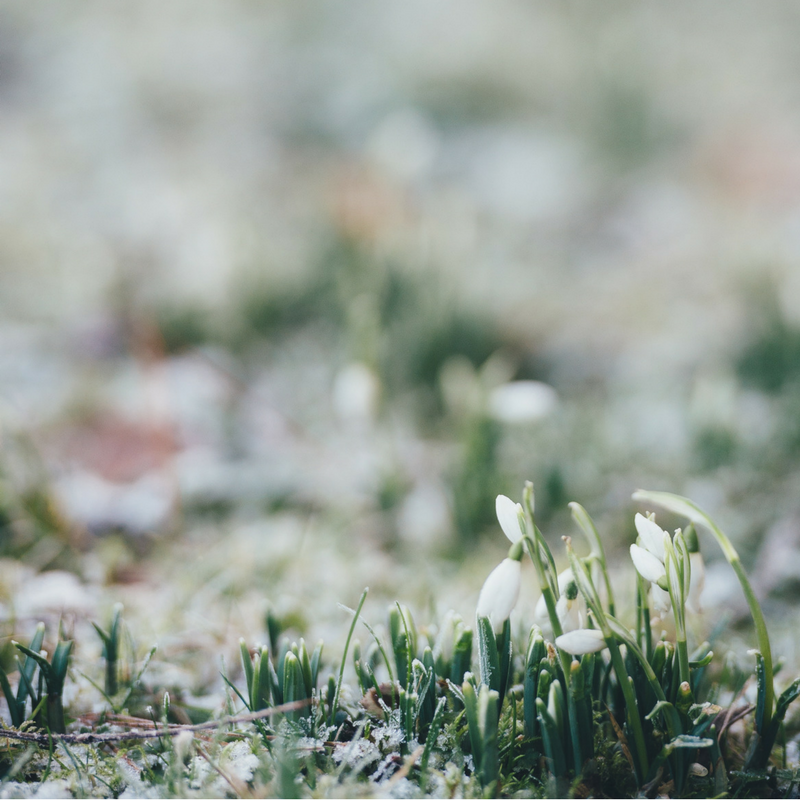
Photo by Annie Spratt on Unsplash
If the weather-watchers are correct, we’re due for snow
tomorrow and possibly more on Sunday. Snow
in March isn’t unusual, but it’s definitely unwelcome. Arriving just as the world starts to sing
its wake-up song, spring snow often feels like the last straw.
I’m doing my best not to check and double-check my weather
app, though I’m anxious to know how the snowfall will impact my work-life and
the kids’ school schedule. Friends
online are sharing weather predictions with accompanying proclamations of
despair and dismay. The more time I
spend online, the easier it is to believe spring will never arrive.
But the songbirds, the ones who now make daily inspections
of potential nesting places sheltered beneath our window awnings, tell a
different story. Something in them seems
certain of spring’s promise, despite the cold-again nights, the frost-filled
mornings. Intrigued by their
perseverance, I’ve been listening to them almost as much as I’ve been looking
online. I wonder what it is the birds sense,
something just a hairsbreadth away from my bumbling human perception.
The songbirds, of course, are not alone. The hens are laying like gangbusters, the dog
and cat have begun they’re annual shedding extravaganza (Lord have mercy), and the
tree branches bear red buds ready to burst at the slightest provocation.
This week I remembered something my Spiritual Director told me several
years back, when my kids were much younger and we were cramped in a small
apartment together all the dark winter long.
There was snow on the ground then too, spring seemed like a fairytale –
a nice idea, but nothing to stake your hopes on.
“Do you hear the birds?” she asked, as we sat together in
her sunlit meeting space. “They only
start to sing when they’re getting ready to build nests and mate.”
I took her word for it.
I allowed the birds to sing hope into my weary-with-waiting heart and I
too started to live like spring was just around the corner.
Maybe it shouldn’t be news to me that our hope, our faith,
our love, are so easily influenced by the voices around us. But most years I need reminders, just the
same.
Being a person of faith means living in light of a reality that may
be just a hairsbreadth beyond our bumbling human perception and allowing that
reality to shape the songs we sing, the nests we build, the future we work to bring to fruition. And when we grow weary in faith it helps to tune into
the lives and voices of those around us who seem to hear and live a bit more
clearly.
This week, Father Gregory Boyle, founder of Homeboy Industries, was one of those voices for me. Quoting from the
prophet Habakkuk, regarding the coming kingdom of God, Boyle says, “The vision still
has its time, presses on to fulfillment, and it will not disappoint; and if it
delays, wait for it. What we all want to
create and form is a community of kinship such that God might recognize it . .
. It shouldn’t surprise us that God’s
own dream come true for us – that we be one – just happens to be our own
deepest longing for ourselves. It turns
out, it’s mutual.”
If you find yourself also near despair – due to snow or otherwise – why not take 20 minutes to hear what Boyle has to say. His words point to realities just beyond perception and his life’s work continues to bring the kingdom into fulfillment.
Meditation and Social Action

Last Friday, I took a few minutes at the beginning of class to ask my Christian Spirituality students how events like the school shooting in Parkland, FL impacts their lives.
“What’s this like for you guys?” I asked. “I know what it’s like for me as a parent, but you’re a whole different generation growing up with this reality. What does it mean for you?”
The shootings were (and still are) heavy on my heart. But I was also worried that the day’s class topic – meditation – would seem too other-worldly, too removed in the face of recent events.
Several students expressed concern about the abundance of violence in our culture and the real possibility of increased desensitization to incidents like these. Another said he found it frustrating how many polarizing opinions were flying around without anyone really presenting a vision for how we can move forward together. A third student expressed an awareness of how very complicated the matter is – “How we we decide where to focus our energy? How do we figure out what part is ours to do?”
As I listened, taking notes as I often do, a strange thing happened. I realized that meditation – time spent dwelling in the presence of God – offers a means of addressing each of these questions.
Meditation, it became clear, is the bedrock of social action.
Time spent in the presence of God increases our sensitivity to the cruelties of this present age. The more we dwell with God, the more aware we are of the brokenness of our world and of our very own lives. In prayer, our hearts are made vulnerable and soft, attuned to the violence of our own words and actions. We begin to long for the kingdom of God to be made real and we’re empowered to live differently in the world, to live as true witnesses to the kingdom which is both already and not-yet.
Time spent in the presence of God nurtures the kind of imagination, freedom, and confidence required to envision a path forward. Only those who are rooted deeply in divine love will be able to risk building a path free of ego and personal gain. Only those rooted deeply in divine freedom can speak boldly and confidently in the midst of our entrenched and antagonistic perspectives.
Lastly, meditation, more than any practice I know, teaches us who we are. In the deep places of our soul, we come to know not only God, but self. Stripped of ego, we’re confronted with both the limits and gifts, the strengths and weaknesses, of our true self. Positioned in truth and grace, we become uniquely situated to discern our own path – to discover the place of alignment between our deep gladness and the world’s deep need (Buechner). Meditation offers, in the midst of the many voices shouting for us to run here or go there, a calm, quiet voice that says, “This is what I have made you for, this is who you are.”
The phrase, ‘thoughts and prayers” has lost its meaning in our culture not only because it is often an excuse for inaction, but because too often it isn’t accompanied by the kind of prayer that actually makes a difference and positions us to do the same. Prayer gives rise to action and change, both internal and external. Action that produces fruit – long and lasting change – both arises out of and leads us back into prayer.
If you want to know how to respond to the current crises we face as a culture, ask someone who prays. Odds are, they will be able to identify a good, solid starting point. If you want to be a person who brings lasting change in the world, begin with prayer that places you before God – simple, quiet, prayer that forms you, moment by moment into the image of God.
* * *
If you are new to meditation or, like many of my students, fear meditation may not be for you, I urge you to check out Ed Cyzewski’s book, “Flee, Be Silent, Pray: An Anxious Evangelical Finds Peace With God Through Contemplative Prayer.” Written from an evangelical perspective, Cyzewski addresses common concerns and offers practical insights to developing a practice of prayer rooted in the presence of God.
The Voice of Love
Prayer . . . is listening to the voice that calls us “My Beloved.” – Henri Nouwen
My husband wakes, alone, in the early morning dark. While the rest of us sleep, he
lets the dog out, rekindles a fire in the wood stove, and turns on the coffee pot. By the time I stumble down, he’s often sitting, cross-legged, in the arm chair closest to the stove, with his
eyes closed. With a timer set on his
phone, he endeavors to start the day in silent prayer.
But, he is no monk in a cell alone.
I wander through, on the way to the bathroom, then back
again with a full cup of coffee in hand.
Then, my daughter’s alarm clock goes off and she staggers blindly into
the living room as well. The dog, of
course, leaves her seat and clatters around, needing a greeting from every
new entrant into the room.
His morning prayer is rarely silent, often interrupted, even though his eyes remain closed.
The other morning, before the lights were on, my husband sat
in his quietening chair and I sat near the base of the stairs, scrolling on my phone. Then, out of the darkness, six-year-old Levi yelled from the top of the
stairs, “Dad? Dad?”
Wanting to preserve my husband’s silence, I answered for him, “What
Levi?”
“Where’s Dad? Is he
still home? Is he going to work today?”
Levi belted his questions, like a winter storm flinging hail.
“Yes,” I said, stealing a glance at my husband, whose eyes
were now open. “It’s early. Daddy’s
still home, but he’s going to work in a little while. What do you need?”
“I want to say goodbye to him,” he called.
I looked again at my husband, seated by the stove, and he
nodded his head.
“What Levi?” he called.
“Goodbye Dad, I love you!
I’ll see you tonight!” Levi said, “Thanks for helping with my Valentines.”
“Goodbye, Levi. I love
you too. I’ll see you tonight, sweetie,”
my husband replied.
Then, from the shadows, came Levi’s twin
brother’s voice, “Goodbye Dad, I love you! I’ll
see you tonight!”
“Goodbye, Isaiah. I
love you too. I’ll see you tonight,
sweetie.” my husband replied.
All semblance of prayer was lost as they scampered back to
their beds. As my husband turned off his timer and prepared to leave for work, it occurred to me that, despite numerous interruptions, his time of silence was also exactly how prayer should
be. Not the absence of sound, but a
listening quietly in the dark for the presence, the voice of love. How very lucky we are when that voice descends
not once, but twice, clothed in the voice of a six-year-old child.
May you find the voice of Love descending on you today in unexpected ways.
The Wandering Hen
She stood still, and silent as stone, under the garage’s
small overhang. I had to look twice to
even tell it was a hen. Her gray coloring and curved outline made her look more
like a bowling pin. The yard and
driveway were coated in a layer of February’s mixed snow and ice. The eaves protected her from a steady rain as
she stared out across the driveway.
“Is that Brownie?” I asked my husband, while peering out the
kitchen window.
“Yeah,” he said, “earlier, she was perfectly centered
between the two trash cans.”
“She’s so strange,” I said in a tone of awe and admiration.
Since we fenced in our flock of chickens a few months back,
Brownie has been one of the only birds to persistently escape. She’s one of our oldest hens, one of the handful
of chicks we bought in 2015. A gray,
speckled, Araucana (easter-egger), she lived in our small, a-frame coop for two
and a half years before being forced to integrate with our much larger garage
flock. She’s also the only hen we have
who sports a real and genuine beard of feathers.
I don’t know how much a chicken thinks, but her persistent
solitude and wandering captivate my imagination. I like to think of her as something like a Desert
Mother or a John the Baptist type, led by an unrelenting urge to be alone,
exposed, in the wilds of our two-acre yard.
Outside of the flock, she has no protection, no direct
access to food or water. She scrounges for
seeds under the wild bird feeder and drinks from the driveway puddles. When the garage is open, she wanders it too,
but I wonder if she doesn’t sometimes sleep in the old a-frame coop where she
was raised. The other day, I found her
sitting, happily feasting in the open corn bin in the garage. Clearly, she has developed a certain level of ‘street
smarts.’
My oldest son and I have put her back in the pen time and
time again. Solomon corners and herds
her in through the wide fence gate. I
have done the same, but the other day I lured her close with a pretzel, then
bent and grabbed her by the tail feathers.
She squawked and lunged immediately, and a few seconds of battle ensued while
I struggled to get my hands around her wings.
Once her wings were tucked, she calmed, and I carried her under my arm
and deposited her unceremoniously in the coop.
I was surprised by the fierceness of her fight. She was out again the next day.
I don’t know what that hen has to tell me, to teach me, but
I continue to watch her with admiration as she persists in holding steady, defining her own way of being in this large and lovely world.
Vulnerability & Trust in the Classroom
Every once in a while, I have the opportunity to teach a full semester’s worth of introductory biblical studies materials over a period of fifteen days. This, January, is one of those once-in-a-whiles. Which is why I haven’t been posting much here. But I have been listening to my life, thinking, paying attention and the thoughts that follow are just a bit of what I’ve been noticing.
“I don’t know.”
I said those three scary words at least twice in class the
other day.
From the front of the
room.
As the professor.
I can’t tell you how alarming that would have been for me
when I first started teaching college level classes. I was fresh from seminary then, wearing the
one suit I owned.
That suit was – as they often are – something like a suit of
armor. It was a symbol that I was an
adult (even though I didn’t feel like one) and that I knew what I was talking
about (even though I didn’t feel like I did).
Looking back, I can see how fear-driven my teaching was, even though I
didn’t want it to be. I wanted to
connect with the students, to engage, but I was unable to allow the kind of
vulnerability that forms community.
I was too attached to my armor of rayon/polyester and
knowledge. I set up every aspect of the
class in a way that guaranteed I would know the answers to any question that
arose. I chose the passages we studied
based on papers I’d written in graduate school – a sure-fire way (I hoped) of
ensuring I would know more about the topic at hand than any one else in the
room.
I often wondered why I felt so isolated, lonely, and
frustrated as a teacher.
//
This time around, some fourteen years later, I purposely
wore jeans on the first day of class.
Mostly, I wanted to feel like myself and, as someone who works from
home, I wear jeans almost every day. Feeling
like myself meant drawing on the sense of authority I carry day-in-and day-out
as a parent, writer, spiritual director, and middle-aged human being. Also, I wanted to lessen the distance between
the students and myself, and jeans seemed like a concrete, visual way to do
that.
First thing, on the first day, I explained that every class
would start with five minutes of silence.
This would be our way of acknowledging the presence of God which dwells
– like silence – above, below, and in-between all our words. After silence, I explained that, because this
was their class, the first twenty minutes of every class was theirs to use as
they saw fit. Every student has an
opportunity to submit a topic for conversation and we use silly questions to decide
who will draw a question out of the stack.
Those twenty minutes were a little awkward the first day –
and still are, sometimes – but we’ve had some laughs, heard some differing
perspectives, and even witnessed a little passion. I like to believe giving the students some time and
space up front, is one, small, concrete way of reminding them that this class is for them. It also gives me an opportunity to observe
and eavesdrop on who they are, how they interact with each other, and how they
think about the world we live in. In
short, it gives me a chance to listen and builds community.
Finally, before lecture that first day, I explained that we
needed to choose a passage to explore together in class the following day. I gave them a few minutes to think about it,
then invited them to offer suggestions.
Many offered favorite, well-known passages, but there were some random
ones thrown out too. I didn’t even
flinch (hardly, anyway) when someone tossed out a story I’d never heard of from
the apocrypha. After we had ten or so to
choose from, the students voted and chose Jeremiah 29.
I stopped by the library after class and grabbed a couple of
commentaries. That night, I spent about
a half hour familiarizing myself with the context and reading through the
passage. Mostly, I figured, we’d figure
it out together the following day. And
we did.
Rather than worrying about the class, I looked forward to
it. I suppose part of this is the
confidence that comes from teaching and preaching for years – a gift I’m
grateful to have found. Under-girding my
decision, though, was the belief that what would be gained by working together,
side-by-side, was more than what might be lost by me not knowing all the
answers.
//
I have a great group of students this semester. They’re older, and more prepared to handle the
course material. Many are seniors and
already thinking about how the things they learn now will apply to life in the
‘real world.’ All of this leads to a more enjoyable class
environment. But the thing I’m most
grateful for, is a deeper capacity to be with the students, to create an atmosphere
where those three little words, “I don’t know,” are nothing more than a fertile
starting point for conversation, exploration and comradery.
Writers’ Retreat: March 3rd 2018

Savor a day focusing on your work and identity as a writer.
Reconnect with the reasons for your art, the source of your words.
Network with other writers and gain insight on integrating writing into your everyday life.
Author, Editor and Writing Teacher, Andi Cumbo-Floyd will lead a retreat for writers of all skill sets.
When: Saturday, March 3rd
Time: 9:00 – 4:00
NEW Location: We will be gathering at the Silver Spring Retreat Center in Mechanicsburg, PA. The center’s Historic Waugh-Wilson farm house dates back to the 18th century and offers a blend of gracious space and natural beauty.
Cost: $60 (as you are able – please contact Kelly if cost is a significant burden)
20 Spaces Available
Registration deadline: Tuesday, February 27th
Includes:
* Two free-writing sessions with prompts
* Craft-talk on balancing discipline and gentleness
* A brief workshop experience giving and receiving feedback
* Homemade lunch
* Opportunities to network and connect with other writers
Andi Cumbo-Floyd is a trained Writing Teacher, highly-sought Editor, and author of several self-published books. Her first traditionally published book is due out May 2018. Kelly Chripczuk is a Writer, Spiritual Director, and teacher and has self-published two books.
With a wealth of knowledge and experience, Andi and Kelly excel at creating a retreat space that is safe and enriching for all participants, no matter what your experience, skill level or goals may be. Our desire is for you to leave the day refreshed and encouraged in your writing life.
Questions? Contact Kelly at Chripczuk.Kelly@gmail.com or leave a comment below.
Reserve your spot via Paypal:
Slow (adjective)

Slow (adjective) : moving or operating, or designed to do so, only at a low speed; not quick or fast. synonyms: unhurried, leisurely, steady, sedate, poky, sluggish
Every year, January 1st brings a wave of declarations and intentions splashing across my facebook page. I’ve hardly started purging the house of Christmas clutter and somehow it seems everyone else has already shaken off the dust of the old year and moved headlong into the new.
In the face of it, I find myself feeling out of pace. Here I am spinning my wheels while the rest of the world races ahead.
Pining my slowness earlier this week, I thought of my paternal Grandma. She never did anything fast, as far as I can remember. She ate slow, walked slow, talked slow. She buttered bread slow and somehow managed to make large dinners that were ready right-on-time while working at a snail’s pace.
Recalling her slow ways, I remembered the comfort she gave even in the midst of (or perhaps because of) her predictable slowness. I remember her lamenting once, during a visit to an Amish farm in Lancaster PA, how she missed the slowness of the old days, how everything was so hurried now, she felt she couldn’t keep up.
Remembering my Grandma’s slowness, I felt less alone, more able to accept my own, often poky, pace.
//
Slow isn’t sexy. A poky puppy is cute, but doesn’t hold our attention span for long when the rest of the world is racing by. And, though we offer lip-service to the value of ‘slowing down’ or embracing an ‘unhurried’ life, we’re quick to defend our productivity lest we somehow be deemed lazy or, worse, slow.
I guess it’s one thing to choose slow. Another to be slow, by nature.
//
This morning, while pushing myself to get ahead and make up for my slow, I remembered a conversation my husband had with my mother-in-law when he first told her we were dating.
His mom asked, among other things, “If she fast? Can she get things done?”
It’s was a funny question to ask, because my husband lives on the slow side of things as well. Maybe she thought he needed someone to kick-up the pace and keep things moving along?
Whatever she had in mind, it was not to be. My husband answered immediately and with certainty, “No, I’ve never seen her do anything fast.”
Remembering his reply, I smiled, and felt another layer of self-imposed judgement about the pace at which I live, slide off, like an ill-fitting skin.
//
I think there are a lot of people who miss slow, but most of us feel we can’t really afford it. Here, I guess, is where the slow people (like me) have something to offer. Hitching along at our leisurely pace we seem to stand out as a symbol that slow is not lost and, what’s more, slow is sustainable. Slow may even be the only sustainable speed in a world committed to fast without pause.
What struck me most in the online definition of slow quoted above, is the phrase “designed to do so.” Maybe that’s what I am – designed to move slowly, to offer steady in a world off-kilter. I like the way that phrase hints at the intentionality of making something (or someone) slow. Almost like slow itself has a purpose or is a gift.
Who needs the gift of your slow today? What practices help you live more in tune with your own natural pace?
The Wood Stove (Need Draws Us)
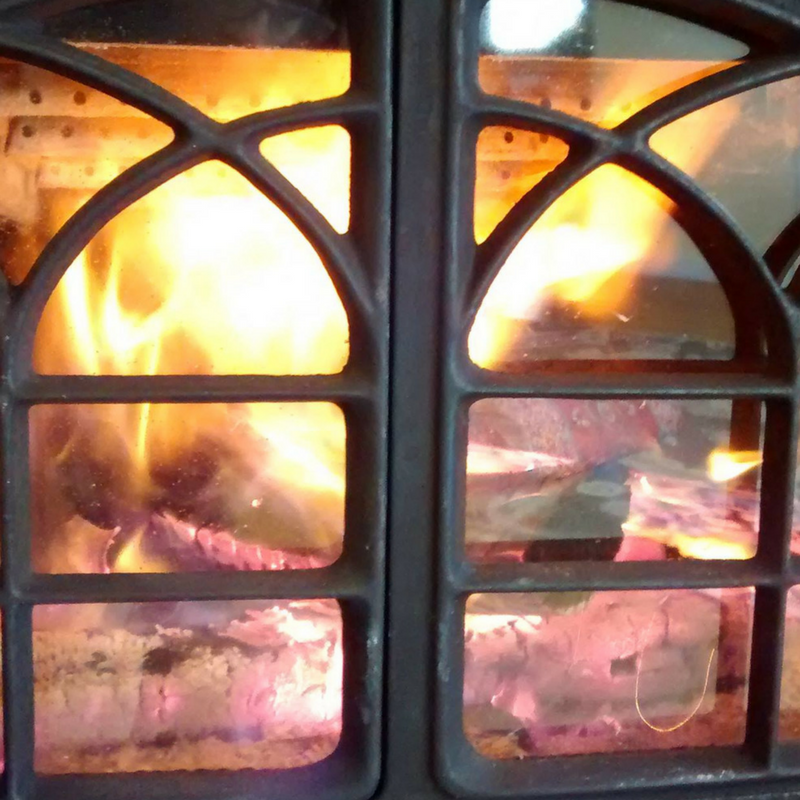
Our need for warmth draws us and keeps us together, sprawled
where the seating is too limited for six, the noise levels too much. The dog, also, is there, taking up more than
her fair share of the love seat.
In the corner, the wood stove ticks as the cast iron absorbs
a slowly growing fire’s flames. On the coldest
mornings, the twins stand directly in front of the stove, blocking its window’s
orange glow. The older children stand
within a foot, one on either side, squeezed between the wall and stove. The smell of drying laundry fills the room as
their clothes absorb the pulsing heat.
They stand until their pants are so hot they can barely walk and sitting
down, forcing the hot cloth against chilled skin, ceases to be an option.
This is how we start and end each of winter’s darkening days, as
the sun slips its way to and from arctic nights. During the day, our circumference expands. With time, heat grows, and the kitchen, the
laundry, the sun-warmed front room, all become habitable and we spread, easing into the furthest reaches.
But, when the sun sinks, we return. Our need for heat draws us into the heart of the house, into the space of one another, into the stove’s
orbit again where we hover until need is met.
These winter days, I find myself grateful for the warmth and the need that gathers
us around our own glowing sun. Need is also a gift and, often, the clearest path to communion with others and with God, who draws us also; God, like a great pulsing heart, a glowing sun, a wood burning stove, drawing us all close and closer yet.
Books
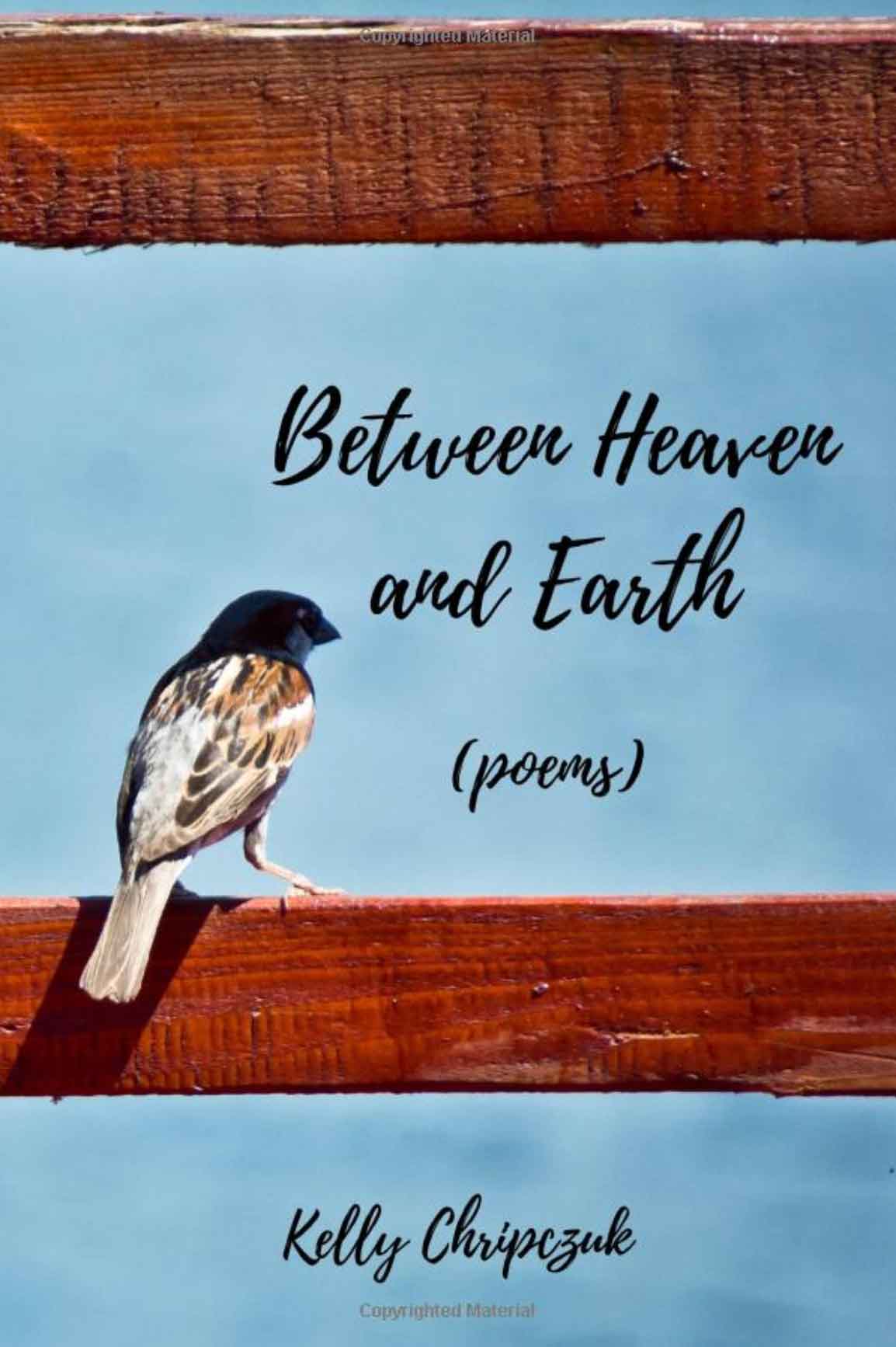
Between Heaven and Earth (poems)
Prayer can easily become an afterthought, a hasty sentence, a laundry list of all the things we want. But what if prayer is a time to find out what God wants for us–and for our world? What does it mean to pray that the kingdom would come here and now as it is in heaven? Explore these questions in this study, and learn prayer practices that nurture intimacy with God and sensitivity to God’s dream for the world.
Follow this writer, spiritual director, and mother of four as she dives into the deep end of chicken farming and wrestles with the risks and rewards of living a life she loves. At turns hilarious, thoughtful, and always compassionate, Chicken Scratch will change the way you see the mess and chaos involved in living life to its fullest.
