
Essays
Like the Rings of a Tree
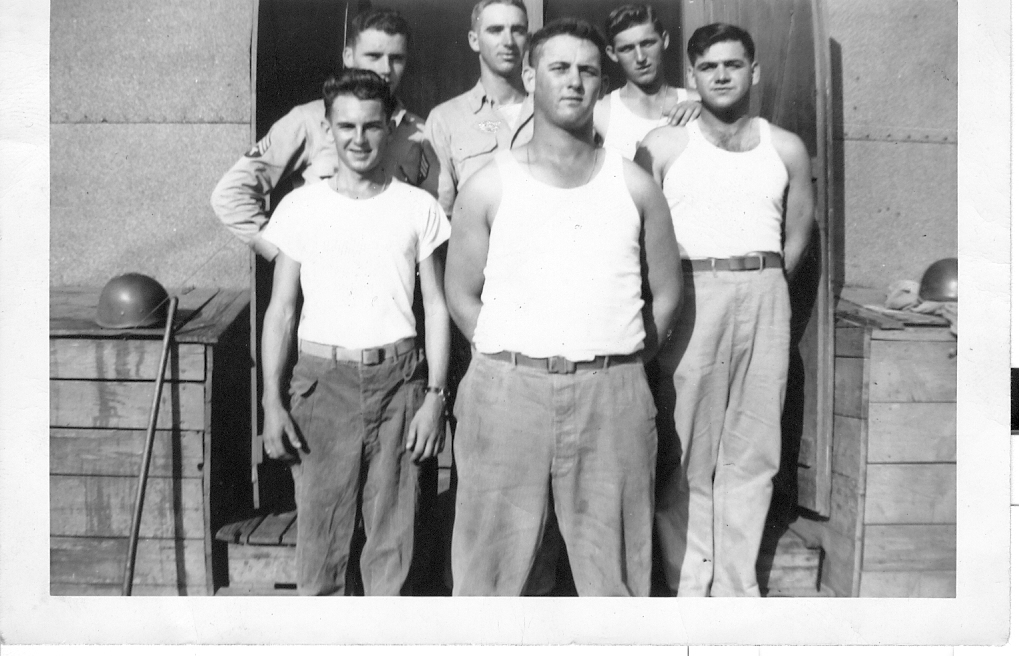
“The Boys of Sayre” is written on the back of this photograph.
My grandfather, Ralph Hausknecht, is in the front on the far right.
Our lives are made up of stories, like a tree is made up of rings. The oldest stories circle us, hold us, growing and shifting as we grow, they wrap around our very lives, holding us to the past, shaping the way we face the future.
* * *
My Grandfather was a veteran of the second World War. I was a thin scrap of a girl with long brown hair and bangs, when he sat at the kitchen table with me. His fingers held the worn black pages of photo albums, turning pages, touching and talking, but his stories ran past me like a stream in the woods, like the wind through leaves and I, being young and green, could not take them in.
What I do remember is his presence, sweaty from working in the garden, his thinning hair combed-over, the way he simply was. Watching an episode of Call the Midwives where Nurse Lee cares for an elderly veteran, I am swept through with a longing for that man who died some twenty years ago now.
In the bathroom of my grandparents’ house is a wooden drawer that holds the scarves and a beautiful comb and mirror set he mailed home during the war. As a child, I would shut the door and stand behind it, fingering the silk and silver, those tokens of love that flew half-way across the world to the woman who refused to marry him before he left, to the woman who refrained for fear he would never return.
Grown now, I gather these stories like sticks fallen to the forest floor, I search the stories of his life, counting and adding them like rings of a tree, carving out an image of who he was, who he is, as he lives still in the shape of his stories.
Telling the stories of my ancestors, I imagine them growing as I speak, as I write, as though through my words I can conjure a mighty grove of trees; giant oaks and speckled sycamores, twisted and worn with age. I gather my children there in their shadows, turning like he did, the worn, black pages of photo alums. The stories run by my children’s ears, like so many streams, but deep down, in a place I cannot see, they are drinking them in.
Talking of what was we grow together into what will be.
This post is linked with Playdates with God.
If You Want More . . .
These all look to you to give them their food in due season; when you give to them, they gather it up; when you open your hand, they are filled with good things. Psalm 104:27-8
* * *
It was as though the room had tilted to one side, like a ship careening over the waves so that the twins and I, sliding, now sat clustered at one end of the table. They were “na,” done with their small lunch and broken bits of crackers and cheese were strewn across the table.
Isaiah stood, grinning, in the chair on my left and Levi was planted on the floor between us. He was done with climbing on the table (as per my request) and stood looking up at me, his mouth open and waiting like a baby bird.
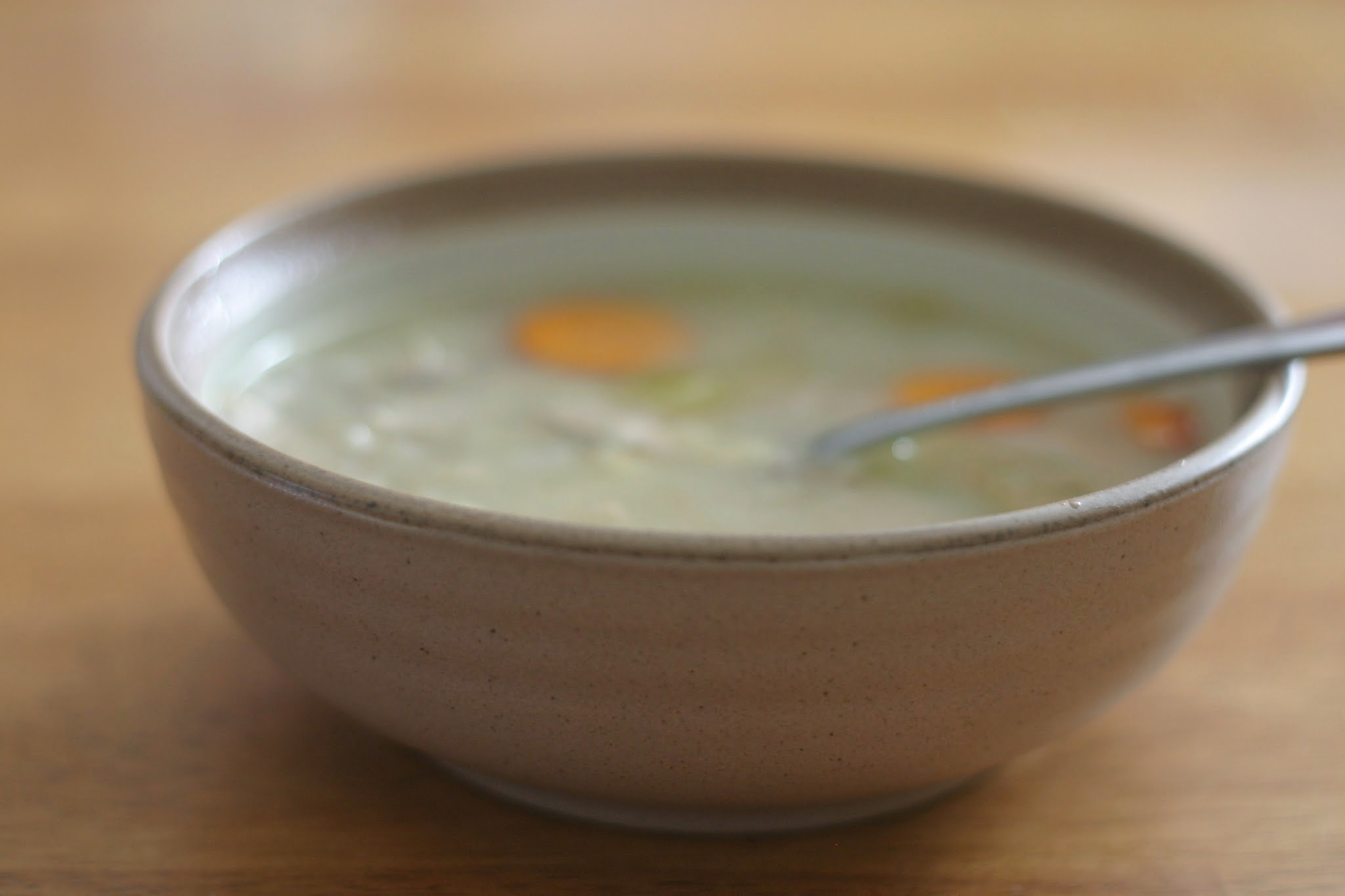
They wanted, desperately, the soup I was eating. The same soup they rejected by the bowlful the night before, now made positively alluring by the fact that it was mine.
Nutrition is nutrition, so I scooped small bits – three kernels of corn, a few pearls of barley, a drop of broth – onto the end of my spoon and ladled it into their mouths that waited wide with exaggerated expectation.
They love to be fed in this way, they’ll eat almost anything if it comes from my plate, my spoon, my outstretched arm extended from my own smiling, expectant face and, truth be told, I love it too. It’s a game of pleasure, of need and fulfillment and we’re all pleased as punch as their mouths open and close to the rhythm of bites like happy clams opening and closing with the movement of the tide.
Then, eyes sparkling, Levi clamped his mouth down tight on the spoon, refusing to let go and smiling like the cat who swallowed the canary. Wrapping his small fingers around the neck of the spoon, he held on tight despite his smile as I tugged and wiggled to set it free.
Finally, exasperated, I asked, “Levi, do you want more?”
He nodded his head, a quick up and down that extended from his tightly pressed lips, raising and lowering the spoon that was wrapped in his hand and mine.
“Then you’re going to have to let go.”
Whether it was reason that spoke to him or the resolve in my voice, he let go immediately and made ready for more as I spooned and filled Isaiah’s waiting jaws.
I heard my words as I said them and, also, heard more than my own words.
“Do you want more? . . . Then you’re going to have to let go.”
* * *
God sits at the table in front of a wide and smiling bowl of soup, steaming.
Standing nearby, my mouth is open, waiting, expectant, delighted as each good thing passes down, happy. Happy to be eating, but more so, happy to be loved in this way, nurtured at the hand of God.
And I am learning to let go of the spoon, and even, if I have to, the soup, trusting it will come and go as all good things must; trusting in the joy of the moment, in the love of one whose hand stretches out, always, with good things, like the long arm of a mother extended from her own smiling, expectant face.
This post is linked with Imperfect Prose and #TellHisStory.
The Butterfly and the Rat
The twins ran to the kitchen shouting, “Mow! Mow!” and I followed to confirm the sighting.
For months now they’ve named and claimed every “mower” they see as we drive or walk through town. Every lawn mower, leaf-blower, golf cart, etc. elicits a liturgical call and response between the three of us:
“Mow! Mow!” they shout, cueing my, “Did you see a Mow?” and their reply, “Yep!”
They squeezed in together behind the wooden baking table and stood pointing out the window with looks of unadulterated glee. I bent down and squeezed in too, to confirm their sighting, and scanned the dirty concrete alley-way that divides our house from the next. The small alley is where we keep our trash in tightly lidded containers and the neighbor’s bikes and scooters lay scattered.
Looking out from where I crouched wedged behind the kitchen trash and between the window and wooden counter, I saw an old scooter handle that stood leaning against the wall and thought, “oh, that must be what they see.”
“Mow,” I confirmed, “you found a mower.”
But they continued to shout and point with bright expectant faces and I looked again, following the worn metal handle down toward the ground.
“Oh!” I thought, as my gaze came to rest with horror on an animal that lay dead against the wall of the neighbor’s house and I knew then what they were trying to say.
“Mouse, you found a mouse,” I said.
They echoed back, “Mouse! Mouse!,” their voices filled with even greater joy at my evident understanding.
They were giddy with delight and I was impressed that they knew the word, though there was no pretending that thing was a mouse. It was a long as my hand, a good eight inches from end to hairy end with another six to eight inches of tail – a RAT.
They loved it, of course, this wonderful, magical “mouse” that lay “sleeping” in the alley and they stayed, jubilant at the window, as I fixed lunch and texted my husband while the word “RAT” ran on an endless loop through my brain. We’d already dealt with ants and I expected to see evidence of mice when winter set in, but rats??
It lay out there in the sun all. day. long. giving me the heebie-jeebies and making it hard to think about lunch or dinner.
“A rat,” I thought, “a RAT!”
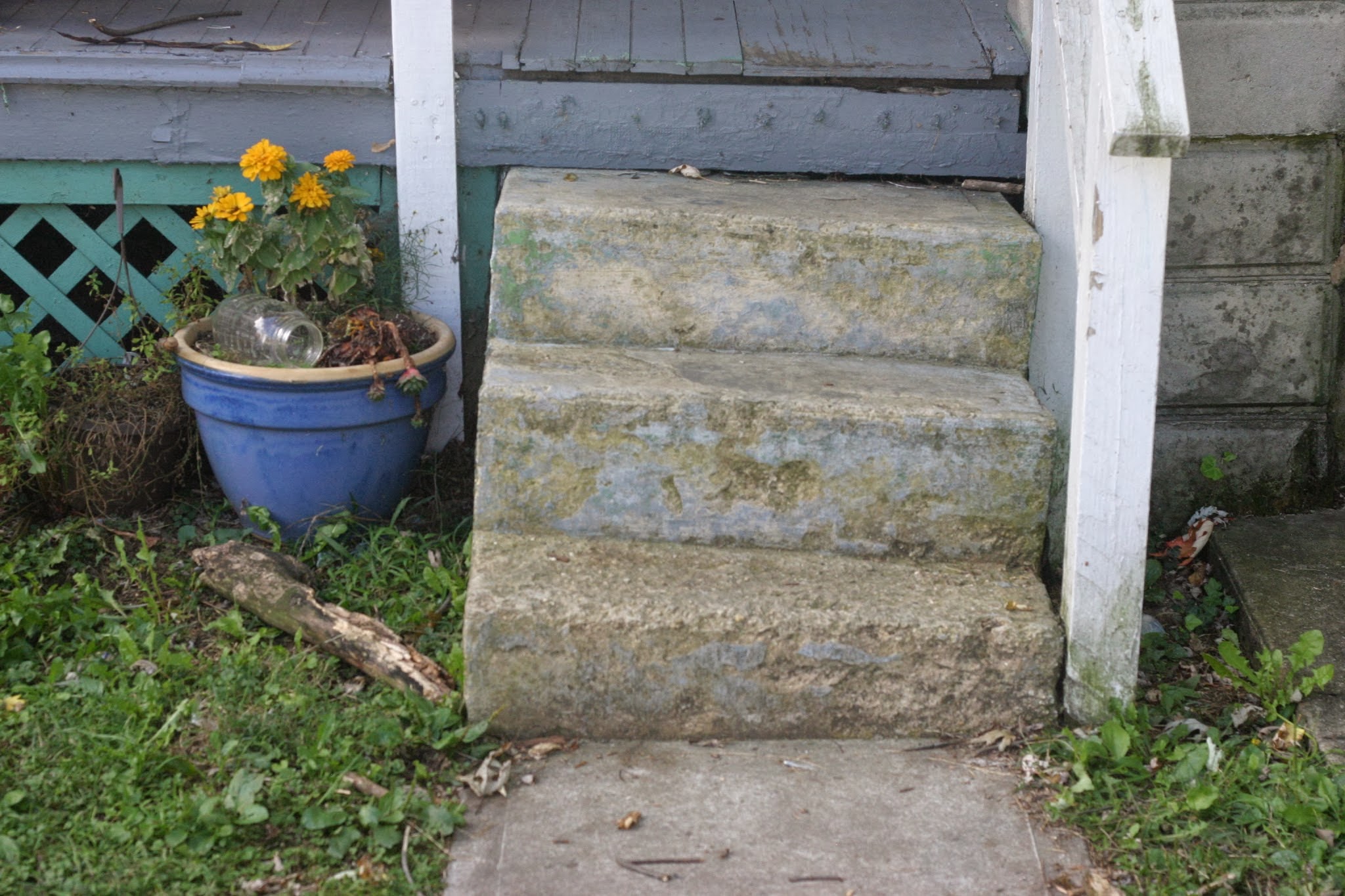
Would you believe me if I told you that earlier that day, sitting on the crooked gray concrete steps in the front of the row home we’re renting (as, I suppose, that rat lay dying in the back) I heard the voice of God? Sitting there in the crisp fall sunlight as the twins played “mow” with a variety of broken tree branches, a beautiful monarch butterfly landed briefly on the sidewalk and God spoke, I swear, straight into the heart of me.
The butterfly floated on large, unwieldy wings, looking like it was taking its first flight ever and I felt a glimmer of hope, that maybe things were going to turn out OK after all.
And then we came in and not thirty minutes later, there was the RAT and I was tempted, yet again, to despair.
But oh, that rat, it was a gift too.
That rat gave me the gift of freedom, the gift of laughter and astonishment, the gift of letting go.
A beautiful butterfly flitting is one thing, but a plump gray rat, laid out in broad daylight is another, and more than God’s words about the butterfly, which I have yet to fully embrace, that rat made it clear to me that God is here.
How can I explain it except to say that this is where I live, here where my feet crunch and track across the dry dirty ground, here where the cigarette butts float into our yard with the heavy rains. Here, in this place, where the smoke wafts in through open windows and a cabinet knob pulls off in my hand. In this place, I find the butterfly’s message hard to embrace, though I try.
That rat was a gift, it confirmed my despair, my frustration and freed me from unnecessary guilt over my own unhappiness. More than that, though, it invited me to surrender, to letting go, to looking out the window eager and astonished to see just what might turn up next.
My husband went out after dinner to bag the rat and our older two scrambled to get their shoes on in time to witness. He scooped it into a plastic bag and added it to the trash, but not before lowering the bag for the kids who were clamoring around him to see, to wonder, to marvel.
God comes to us all in so many guises, the bible confirms it – God in a cloud or pillar of fire, God in Balaam’s ass, in a fig tree, a wildflower. And so it is that God is made known among us, God with us, God in human flesh, God in a butterfly, God in the rat between two houses on West Louther street.
This post is linked with Playdates With God. and A Holy Experience.
Daughter
Daughter
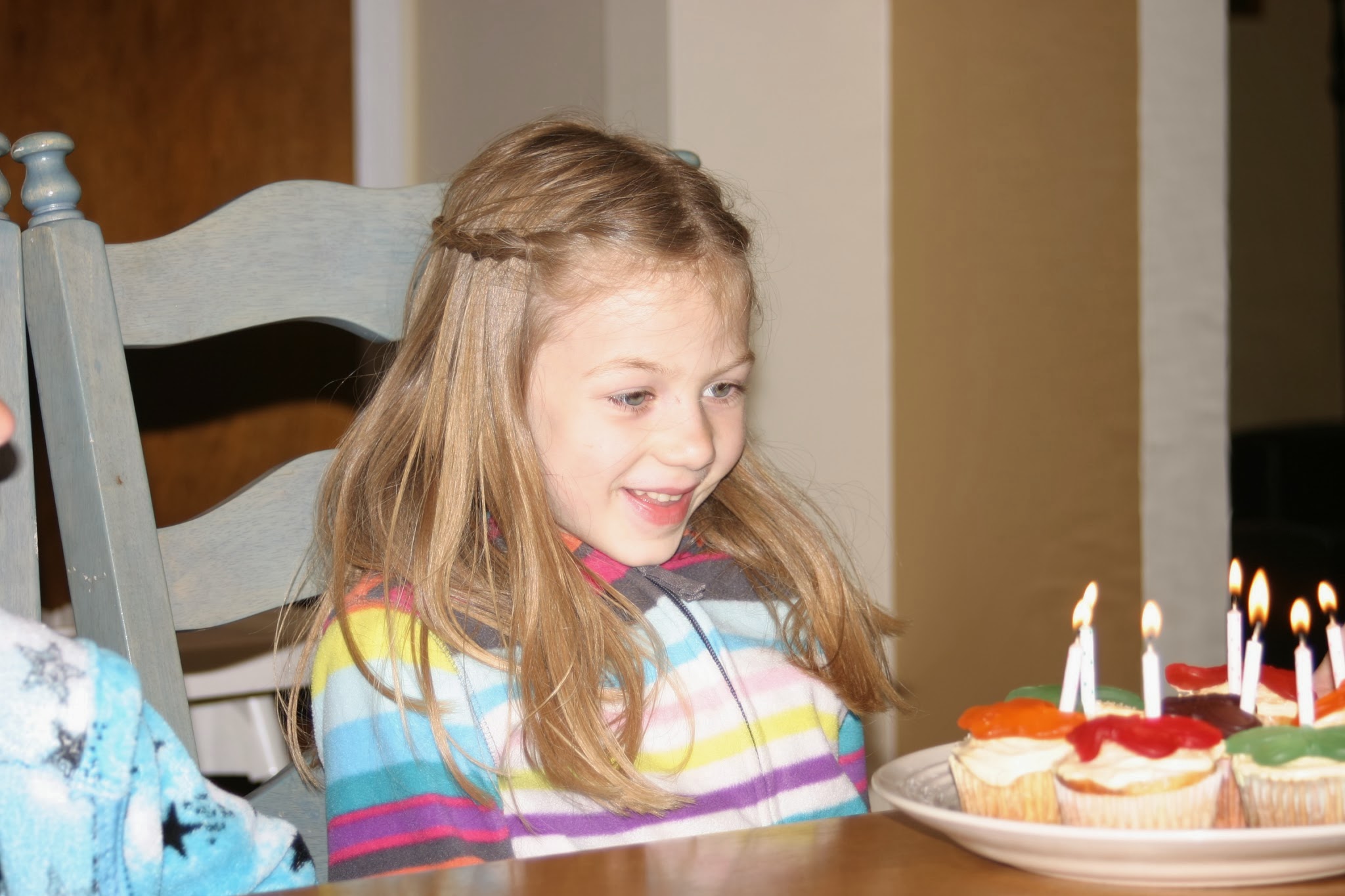
At seven,
she is like the first
green shoot of spring,
full of the promise
of what’s to come.
This post is linked with Five Minute Friday on the prompt, “She.” Click over to read more five minute posts on the prompt.
Writing It on the Walls
Don’t tell my two-year-olds, but in a classic case of role-reversals, I’ve been writing on the walls while they nap.
It all started in the morning when I woke in the darkness and smacked my head straight into the wall of things I hadn’t done the night before. My mind crowded instantly with images of the bags that needed to be packed, the lunches to be made, the papers waiting for initials, the clean laundry that sat souring in the washing machine, and so-on and so-forth, so that I was sinking from the start.
Then, as the morning progressed, I yelled at my son and brushed coldly by my daughter when she wouldn’t stop crying over banging her shin on the stairs. I had an all-out screaming competition with a two-year-old that consisted of the word “no” being exchanged at louder and louder volumes until my throat was sore and he collapsed in tears.
And then, after loading the stroller into the van and out and packing it with toddlers and pushing it through three sets of doors, they wouldn’t let me walk my kindergartner to his classroom (did I mention this was his first full day of school?).
Yes, that’s how it started.
But there were the emails too, and dishes and the crumby, crunchy floor and two two-year-olds climbing in and out of the cupboard with a seemingly unending barrage of “Poop! Poop!”
Then we had the WIC appointment which, thankfully, didn’t require finger-pricking, but the twins whined the whole way there and all the way to the farm stand where we spent our checks on tomatoes and corn, cucumbers and peaches.
I relished the silent ride home while the twins crunched on cucumbers, I thought things might turn out OK after all.
Until we parked and I backed into a tree with what I’m hoping was my bumper.
I didn’t even stop to look at it because I still had two little people to get out of two buckles each and across the street and even on that short little trip, shoes fell off and had to be replaced and they battled over crossing the threshhold of Home just. because. they. could.
Then the neighbors came home from the funeral, home from burying their baby boy who never saw the light of day, who died in-utero at thirty-nine weeks because the cord got pinched.
And I didn’t know what to make of it all, only that it wasn’t going well and I couldn’t fix it, not any of it.
But somewhere in the middle of it all, as I stood desperate in the kitchen, the words of Julian of Norwich came to me. Julian, who lived her life cloistered in a cell with two windows – one that faced out on the world and one that faced the alter and cross. Julian, who lived in a time of war and plague and deep anxiety, yet dared to believe and claim that we are all held, all sustained by the love of God, her words echoed through me,
All shall be well, and all shall be well, and all manner of thing shall be well.
Julian’s words sank into me like an anchor, a life-line, restoring, reconnecting me to the One who is life, the One who was and is and will make all things well. So I wrote them down on contact paper and posted them over the sink.
I think of that baby, so close to life, but cut off, inexplicably from its source, and I think that I am often not so far from that. I wrote Julian’s words on the wall, so I could remember, when everything seems dark that there is something, someone, who holds it all, holds Us all in the palm of his hand.

The Kissing Hand (Kindergarten and the Scent of God)
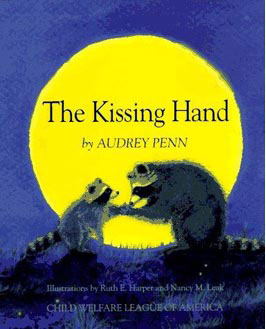
It was the first day of kindergarten. My oldest son and I walked toward the low brick building holding hands and he reached over with his right hand to pull on my wrist, pressing his small hand deeper into the crevasse between my thumb and index finger.Pressing, pulling, he buried his hand in mine as I asked, “What are you doing?”
“It feels like it’s slipping out,” he explained.
Then I held on tighter, adding, “Don’t worry, I’m not going to let it go.”
Inside, he sat on a large alphabet rug with his classmates, his long legs folded under as his teacher read Audrey Penn’s, The Kissing Hand.I sat at his desk in a tiny chair that pushed my knees to my chin and braced myself against tears as I listened to the story of a Mama Raccoon and her son parting for school.
The story is based on a scene the author witnessed, where a mother raccoon placed its nose on its baby’s paw and the baby pressed the paw to its own face, as a way of remembering its mother’s scent.In Penn’sbook, the mother raccoon kisses her son’s paw, telling him,
. . . whenever you feel lonely, and need a little loving from home, just
press your hand to your cheek and think, ‘Mommy loves you, Mommy
loves you.’ And that very kiss will jump to your face and fill you with
toasty warm thoughts.
Later, the young raccoon, Chester, repeats the ritual for his mother,
“Give me your hand,” he told her. Chester took his mother’s hand into
his own and unfolded her large, familiar fingers into a fan. Next he
leaned forward and kissed the center of her hand. “Now you have a
kissing hand too,” he told her.
We moved to another part of the room and I crouched beside my son who sat now in a chair just his size in front of a large piece of paper.He sponged cool green tempera paint onto my outstretched hand and I pressed it firm onto the page.Then I coated his with yellow and he too pressed his hand down, leaving an imprint on each side of the page; one large hand with long green fingers and a smaller one, yellow as the sun.
Sitting in that room that felt so empty and far from home, I wondered how God’s love would be made present there. Then I realized it would be, in part, through my son, who carries the love of God that his father and I have massaged into his limbs, his bones, his heart; that he is the scent of God’s presence to his classmates and that I am the scent of God’s presence to him.
And I thought of the One who the prophet Isaiah says, has engraved us on the palms of his hands.
God who, like a mother, carries his children with him breathing deep the scent of his people even as he whispers, “I love you.I love you.I love you.”
* * *
Click on the video below to listen to Audrey Penn reading The Kissing Hand.
(This post is linked with Playdates With God).
Red Bird, Black Bug
(this is what I’m listening to as I type, though we live nowhere near a field)
* * *
At our old house, the cardinals swooped and soared through the back yard, pausing on a tree or fence before flying through the air again like a flaming arrow flung. Here, at the apartment where we are living in-between, and only a few blocks from where home used to be, there are no cardinals.
There are slugs, though, which is something we never had at the old house – big hearty ones measuring in excess of five or six inches. They slip silently along the side-walk and I narrowly miss stomping on a big fella in the early morning rush for school.
No cardinals here, just slugs. And crickets.
The whole place is filled with their drone when I step sleepily down the stairs in the early, dark morning. They pulse relentlessly, these black, singing bugs. Some days it feels like their song is holding us all aloft and, unlike the Cardinal, that bright messenger winging through my days, the lowly crickets tune is constant and in this I find some small measure of comfort; we are carried along moment by moment by the cricket’s song.
* * *
Over the past year, I’ve written a lot about cardinals and birds, if you’d like to read more, try This Nest, These Birds or A Prayer for Winter.
This post it linked with Five Minute Friday for the prompt ‘Red.’ Click over to read other posts. And, yes, this did take me a little more than five minutes . . .
The Smoker
He was middle-aged,
with a shock of honey-blond hair,
dressed in a suit and tie.
Crossing the street in front of me,
he stood on the far corner,
smoking a cigarette,
waiting to cross again.
Raising the thin tube to his lips,
he took a drag, tilting his head
as if to follow that breath to the end.
Then he held it for a few seconds or more
and let it go.
“That’s how I want to live,” I thought.
Breathing deep,
holding on for a moment,
then letting go.
This post is linked with dVerse Poets Pub.
Learning to Float, pt. 2

(This story was originally posted last summer as part of a longer essay, click HERE to read part 1.)
I’m headed to the biggest grocery store in town on the day
before the fourth of July. This is only the second time I’ve ever gone shopping alone with all four kids and I know it’s a fool’s errand, doomed from the start.
My heart
sinks a little at the sight of the full parking lot. The sun beats down mercilessly on the blacktop as I anxiously calculate the time that remains before the twins are due for another nap.
As I turn off the engine, my oldest shouts with
urgency from the back of the van, “I have to go to the bathroom!”
Of course.
I unload the stroller and position the older two on either side. The double stroller is like a pontoon and the
kids and I float along like rafts tied-on as we ride the tide toward the
automatic doors. I grab a cart and
assign roles. One will push the
stroller and one the cart, as I carry the list and pull things from the shelves.
I see a friend with whom I’ve been meaning to connect, but
time is pressing on me – time before the babies break down, time until the
older two break down, time until I break down – so I brush her off. Now a second friend is trying to chit-chat as
we turn and head for the restroom. I refuse to enter the bathroom with the older two, a passive-aggressive expression of my
frustration at the inconvenience of this pit-stop.
I’m tense and irritable at the crowd and the scene we make. The aisles, like the parking lot, are packed with shoppers loitering, choosing slowly, chatting and generally in. the. way.
I’m trying so hard, fighting, resisting.
In the pause of our bathroom break I can feel
it, the invitation to surrender.
What am
I so afraid of? What do I seriously
think can go so wrong that this trip must be a battlefield, an attack against
which I’m perpetually braced?
The question sinks from my head to my heart until I can
glimpse an alternate view, until I can taste the prospect of adventure and fun
and possibility, until I relax and start to float.
And so we float through the store, our boats
bumping the aisles and strangers’ carts and each other.
We laugh at Levi who pulls boxes off the
shelves with fixed determination when the stroller wanders near the aisle’s edge. We absorb the smiles of
strangers as my kids squabble over who gets to help with what and I stand like
an air traffic controller waving people past us and directing kids, my tiny
fleet of beautiful, floating boats.
* * *
What is life if not one long lesson in the art of letting
go, of learning to float in the sea of grace and mercy that lies below and
within and all around us everyday, every
moment an opportunity to surrender.
This post is linked with Playdates with God.
Twin Pictures of Faith
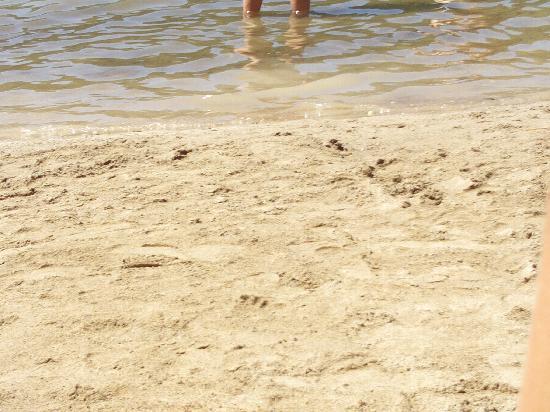
He crosses the sandy shore, walking his slow, sturdy toddler walk and carrying a small, plastic teaspoon filled with sand. Shirtless, still wearing his pajama shorts, he focuses with a force of determination that causes his hand to shake. Depositing the sand on a pile of his own making, he crosses the sand again to refill his spoon.
“Mountain,” I say in my sing-song Mommy voice, “You’re building a mountain.”
Looking up to where I stand, knee deep in the icy cold water, he squints into the sun and smiles.
“Mout-een, mout-een,” he confirms, before returning, spoon in hand, to the impossible task before him.
He is moving a mountain, spoonful by spoonful.
* * *
His twin brother, the tumbler, light-footed little Levi, who just days before nearly drowned in a foot of water, comes splashing, tripping out to me. His eyes are half-shut, blinded by the light, but he runs, carelessly toward my outstretched hands.
Locking his hands in my own, I lift him off his feet and drag his body, belly-up, through the water, making wide, splashing circles around me, spinning him like a washing machine on rinse cycle.
I worry that I will hurt his arms, that water will splash on his face, but he is giddy with delight, enraptured with the pleasure of the moment as he whirls through it.
“Moe! Moe!” he cries when I attempt to right him on the sandy floor, he cannot get enough of this moment’s joy.
* * *
My boys made a tableau that day at the lake, two pictures of faith – the slow and steady faith of the Widow’s Mite and the head-long falling faith of one carried by arms of Love. Two boys, two pictures, so different, but not so very far apart, laid out before me as I stood between them, knee deep in the icy cold water.
This post is linked with Playdates with God and Jennifer Dukes Lee.
What We Took From Eden
I imagined it would be like preparing a body for burial, one last loving touch to each wall, each floor before saying goodbye. I was grateful my daughter, seven, came with me. This house holds her earliest memories, the ones that hover, wordless, in the recesses of her mind.
She cleaned windows, reaching higher than I’d known she could, and begged endlessly to mop. She climbed onto the counter and drank water right out of the faucet, because we didn’t have any cups.
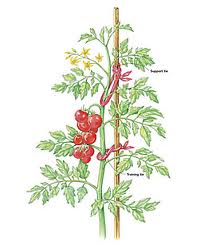
In the end, we opened the back door one last time and filled a small box with the ripest things we could find in the garden, mostly tomatoes. I took my familiar position, sitting on the concrete steps and watched as she walked this last time through her very own Eden, that small patch of grass and weeds and boxed in vegetables that she helped to plant and pull every year.
I told her it was time to go and she lingered, looking, leaning, “Let me get just one more,” she said, longing to take something more with her than that box of luscious fruit, already full to bursting.
* * *
That night I made spaghetti sauce, fresh and light, every ingredient pulled from the dirt of our own lives. Dirty garlic bulbs and tiny red onions, hardly worth the time to peel, green pepper and, of course, the tomatoes.
It was a small harvest, but it was enough; it was the best sauce I ever made.
(This post is for Five Minute Friday on the prompt, “Last.” Click over to read more five minute posts!)
Living is Believing
‘Tis curious that we
only believe as deep as we live.
Emerson, Beauty
She was bent at the waist, plucking at the ground near the
swings, hunting and pecking like a chicken and I thought for a minute that
maybe she’d lost something. When we
reached the swings, she straightened and turned.
“I’m not crazy,” she said, “I just like weeding.”
Then she turned and bent again and continued pulling the
weeds that grew scattered across the wide expanse of mulch, moving from patch
to patch like a frog crossing a pond on lily pads.
She was white-haired and thin and as I watched, did not
appear to be overly crazy.
I lifted the boys onto swings and rotated from one to the other,
pushing on their soft, solid backs while my older two swung like monkeys,
maneuvering the swings in every way possible save for the way they’re intended.
“When you grow up as one of ten,” she said, “weeding all the
time, it’s hard to stop.”
“Well, it’s satisfying,” I replied. Then, though she didn’t hear me, “I miss my
garden.”
* * *
“I’ll be so relieved when we have a contract on a house,” I
said one evening as we cleaned the kitchen, “so I can live in the future
instead of having to live here and now.”
Since selling our house, we are living in-between in a place that is not lovely. The walls are bare and white, the windows
hung with three dollar blinds and I don’t want to spend a dime or an ounce of
energy on improvements here that could be used on a “real home” when we
move.
“I feel like I’m in a cage,” I say, when my husband gets home
and I pace from room to room. Turning to
the windows for an escape, I’m disappointed to find the neighbor’s old siding, the
deli sign across the street that blinks continually , “O – P – E – N.”
* * *
I watched her hands, wrinkled and tan, as she drew closer. She held a small metal tool that loosened
each weed, then pulled them out root and all.
She didn’t seem to mind that it wasn’t her garden, her mulch
or, even, her weeds.
She kept right on clearing the area, one by one, like the
man in that story of the star fish dying on the shore, tossing the weeds aside,
handful after small handful.
It seemed futile, it was futile – the Crabgrass, the Plantain
and Mallow, all sure to re-grow, to spread again.
Watching her bending, gathering, I thought of Elijah’s widow
gathering sticks outside the city wall.
The old woman clutching the dry branches, gathering what she needed to return
home and build a fire and bake one last meal from a few bits of oil and
flour. To the observer, her actions
would appear futile, but she was a gatherer, a baker, a mother, so she lived
while she still could and her living became belief. The oil continued to flow, the flour was enough.
I thought of the boy
with two loaves and the fish, his hands small and shaking as he offered the meager
meal, extending on skinny arms the too small, not enough. To the observer, his actions were futile, but
he was a giver, provider, so he lived who he was and his living became belief. The bread and the fish split into a million pieces like light refracted through the prism of Christ’s touch and it was enough.
* * *
I am going to have to
start living here, I tell myself.
If I stop living and keep pacing, I may well stop seeing. And if I stop seeing, for example, the branches of the gentle oak tree that
wave softly to me when I lift the blinds and glance in their direction, then it will
be because I’ve stopped believing.
I’m going to have to deal with the boxes in the back room
and hang hooks on the wall for the backpacks and coats that will come and go
this whole winter long. I’m going to have
to find a place for things, to tend my plants, to nurture bits of beauty and
light and to write it out when I can, because it’s who I am and then, maybe, my living will also, please oh please, become belief.
The Spider’s Sac (a story of desire and betrayal)
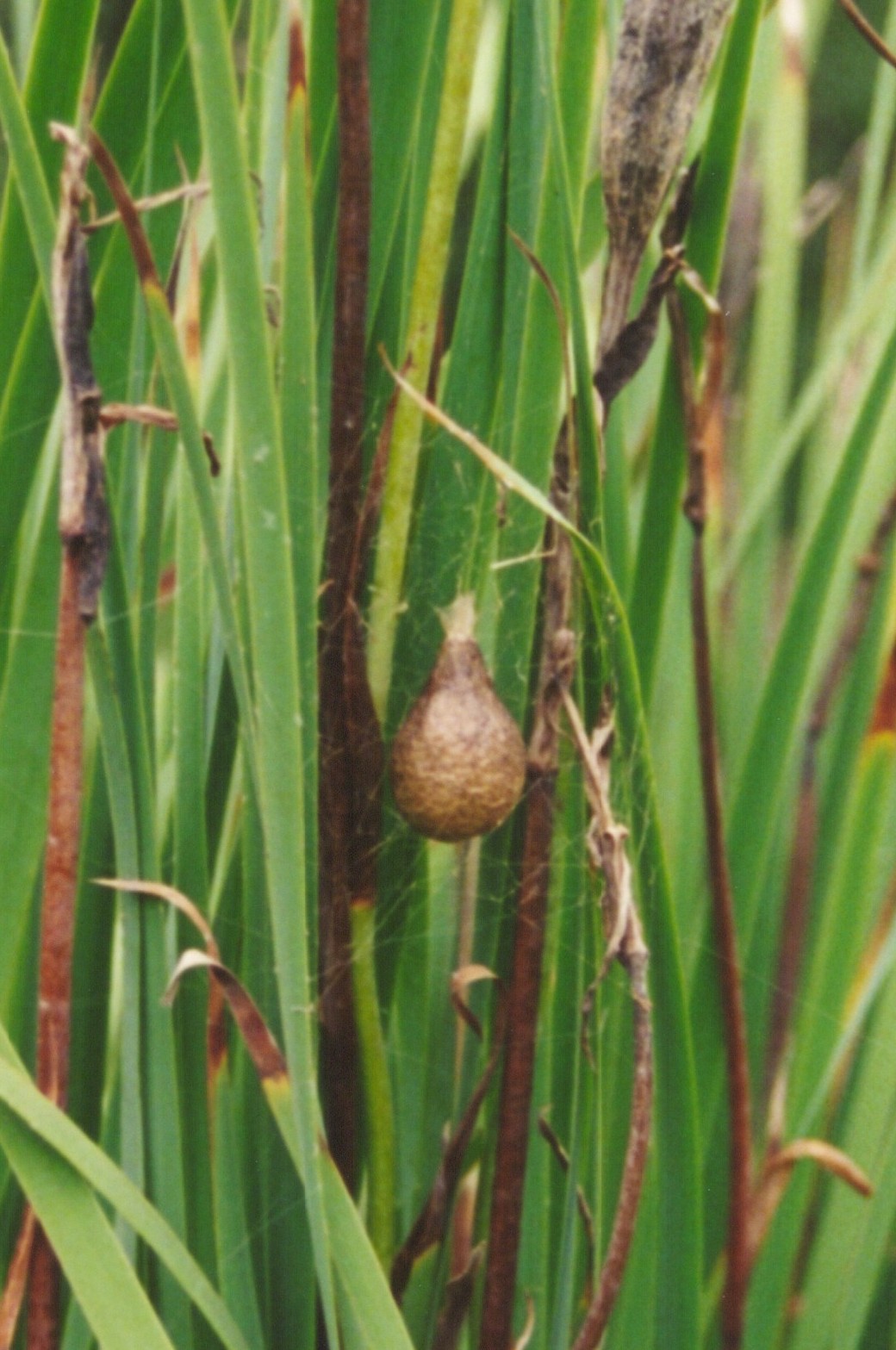
Last summer my older children discovered two large, black
and yellow spiders in our neighbor’s flower garden. The first was heavy and round and we marveled at her girth
as she sat swaying in the breeze, resting on the zigzagging line that ran down
the middle of her web. The kids set up their
little green, plastic lawn chairs on the sidewalk nearby so they could sit within
arm’s reach, observing her every move. They
fed her roll-up bugs and watched as she lovingly, gently wrapped the bodies of
trapped bees and flies as though swaddling them for a long nap.
One day she appeared diminished, shrunken to nearly half her
former size, but the same in every other aspect. We bent and swayed staring at her, trying the
view from different angles, doubting what our eyes were telling us. Not long after that she disappeared.
A week or so later a second spider appeared in a different
spot just up the hill from the first. Her
web was nestled out of reach in a clump of scraggly black-eyed-susans. This one was also round and full with a bulbous
abdomen.
I took to visiting this new spider nearly as often as my
kids, so I noticed the day that she too appeared diminished, relieved of her
great girth. This time, with a little
searching, I spied the weight she’d lost hanging suspended in its own web in
the midst of a large green and red blood-grass bush several feet away. There hung a sphere about the size of a
ping-pong ball. It was grayish brown and
textured – a sac of gloriously tiny spiders to be.
* * *
Visiting those two leggy creatures, I began to notice similarities between their lot and mine.
We three, the spiders and I, knew the energies it takes to tend one’s
web day-in and day-out, the work of cleaning and repairing. We also knew the work of growing large with
life, cumbersomely large, and the fearsome task of releasing that precious new
life into the world. The spider’s egg sac became a symbol of maternal sacrifice
and devotion for me, a symbol of the cost of bearing life.
My maternal desires and fears intersected and
came to rest there on that small cluster of eggs that hung suspended on glistening
filaments in the blood-red grass.
* * *
I was the one who pointed it out to the kids. I suppose this was my first betrayal, calling
attention to the fruit of the spider’s great labor that she’d so carefully hidden. My four-year-old son wanted
it immediately, couldn’t understand why it should be left alone and I felt a
fierce protectiveness rise up within me, unexpectedly.
I told him to leave it alone.
I warned him with mama-bear fierceness
without really explaining why, without giving a reason.
I didn’t say what I felt and feared, that if
we messed with the small spherical fruit of the spider’s life we would ruin it
and then the spider’s life and sacrifice would be in vain. All of that liveliness spent, for nothing.
Here was, perhaps, my second betrayal.
In my fear I equated the value of the
spider’s life with her productivity and in so doing negated the gift of her
being. My fears dismissed and diminished
her – the gift of her colors, black and yellow, the gift of her beauty and
patience, of her waiting and living while we watched, the gift of her futility
as she made and re-made the web each day that would be broken by evening.
The third betrayal followed closely on the heels of the
second, as though somehow intertwined.
After mistaking, diminishing the spider’s being, I then did the same to
my son. I chose not to invite him into
my fear and longing, not to share my deep feelings with him. Instead I laid down the law,
seeing him as a potential rebel, a threat to be managed rather than a potential
co-conspirator in honoring the sacredness of the spider’s gift.
Branded the rebel, betrayed by my unwillingness to invite
him into the mysteries of love and fear and desire the eggs represented, my son acted the part I’d laid out for him. He did it in a moment when no one
was looking after being told not to by his mother and father, but never having
been told why. Reaching out with his
thin arm, leaning over the blood red grass, his fingers plucked the egg sac from its web
like an apple from a tree.
Some time later I heard them, he and his sister, dreaming
and discussing the babies that would be born.
They were squatting, hunched down over the ball on the front porch,
captured in awe and excitement over what they held, glowing with a level of
praise that surely would have pleased the spider had she been there to
hear.
This I know only by remembering because I missed it in the
moment. I was blinded by rage as I came
tearing through the screen door, accusations flying from my mouth like lashes
from a whip. My daughter immediately
fell back on her innocence, fleeing like the disciples in the garden that night
when Jesus was handed over, wanting nothing to do with the one who was
betrayed.
The shame, the regret, were immediate. My son cried as we laid on him the weight of
all of that life that now lay suspended not in its web, but in his dirty little
hand. We told him what I should have
told him before, that he was holding something precious, something sacred. All of this we, I, laid on him,
self-righteousness hiding the deeper story of my desire and fear and identity
that were all wrapped up with the spider’s eggs.
Dinner was on the table and we hurried in, pushing my son
along even as he struggled under the weight of his guilt. We prayed a hasty thank you and started the
meal, but my son sat, downcast, un-eating, making small whimpering sounds. My anger had turned cold by now and I wanted
him to get over it or, maybe I was already beginning to feel uncomfortable with
the weight of guilt I’d hung on him. We
told him to settle down, let it go and eat his dinner, but he couldn’t.
Finally he said with the great strength it takes to name
such things, “I feel guilty.”
My husband and I exchanged glances. “What do you mean?” I asked, prodding, as
though the statement weren’t clear enough, as though he wasn’t feeling exactly
what I’d wanted him to feel.
He lifted his head and looked at me, his eyes two deep pools
of brown sorrow, and I could see at once the truth of what I’ve done. “I feel guilty about what I did,” he
repeated.
“Well, it was a mistake, we all make mistakes,” my husband
and I chimed in quickly.
“But you never make mistakes,” he replied.
“Yes I do. Everyone
makes mistakes,” I said, with some urgency this time.
“I never saw you make one,” he countered, with caution.
My husband and I quickly started dressing ourselves down,
dressing all of us down, suddenly anxious to rid ourselves of the burden of
infallibility, anxious to be human with our children so that they can be human
with us.
His father told him, wisely, that when you make a mistake
the best thing you can do is try to fix it, so after dinner they all tromped
out the door and worked at replacing the egg sack in its web.
But ah, those eyes.
It was impossible to look into my son’s eyes and not see my own guilt as
well; see how I’d crafted a cross for
him built at the intersection of my fears and desires, how I’d hung him there
with a weight of guilt far beyond his understanding, beyond his responsibility.
We all make mistakes and I made at least three if not more
that afternoon. But when I saw the hurt
in his eyes, I cut him down from the cross of my own making and held him to me,
gathered him up from across the dinner table, hoping my love could make it
right, even just a little.
Looking back I’m ashamed of what those spiders would think
of me, those two gorgeous creatures who had the wit, the wisdom, to care for
their off-spring so tenderly. I realize
now that these children, these boys and my girl, are my egg sac, my precious
sphere, my connection to the future and life beyond my own small span of
days.
Lord, still my hand from grabbing, from tearing them
down. May my words, may my love, build a
web for them in which they rest, nestled, cradled until the day comes for them
to break free and head out into the world.
Lord, help me, like the spiders, to tend to my own web, the fine threads
of love and grace that hold me here for this time; lend me the grace, the
courage to build it anew each morning.
This post is linked with Playdates with God.
Photo credit here.
Learning to Float

Last summer I stood watching my then four-year-old son trying to learn to float at swim
lessons. He’s as scrawny as a wet cat,
all skin and bones with straw colored hair sticking out in every
direction. I’m thankful for the swim
shirt that hides the sharp protrusions of his shoulder blades. He looks vulnerable in the water and full of
fear as his teacher gently and then with some force tries to pry off one
then the other of the hands that my son has wound around his neck.
He’s on his back now, his torso cradled by the teacher, his
head at a stiff angle, tense and lifted from the water as though doing a
perpetual sit-up. And that, of course,
is what he’s trying to do. Not to float,
but to sit-up, get up, in any way he can to be out of the water. The teacher coaxes, “Put your head back. No, I’ve got you. Relax.
No, I’ve got you. I’m not going
to let you go.”
When his turn is over, he scrambles out of the water
clinging to the wall with relief.
Climbing and grabbing onto the side are familiar motions, but relaxing
and floating are not. I quickly wrap his
shivering back with a towel so that he can feel himself again.
* * *
In the weeks leading up to the twins’ birth and in the
months after, I had the distinct feeling that my family and I were learning to
float in a sea of grace. I was unable to
buy groceries or clean the house and friends came on a regular basis to
help with those tasks as well as taking our older kids to play in parks and
playgrounds so I could rest and care for the babies. Meals were delivered to our house several
nights a week for nearly six months.
Several times during those months John or I would break down
in the evening after the kids were in bed or on a Saturday morning. We both felt that we were constantly treading
water, that it was all we could do to keep our heads above it all.
But at the same time, in the midst of the struggle, we knew
that we were being kept afloat by a power greater than ourselves. With time we
learned, more than we ever had before, to stop fighting it, to let ourselves
relax in the light touch of an unseen hand supporting us from below; to believe that there was more to be
gained by giving in than resisting.
* * *
On days like today I can feel myself resisting, fighting
with everything I have, to avoid the surrender.
To avoid letting go and floating again in the ocean of grace that is my
life. I know it makes no sense, but I am
continually holding myself up, rigid and tight, drawn back from the edge,
clinging with all I have. The grace I
must learn to live in, to float in, day in and day out, often seems so far
beneath me and, like a scrawny cat resisting a bath, I scratch and claw and
reveal myself to be all kinds of desperate to not give in.
At some point it becomes clear to me that I can’t keep
fighting like this or we’ll all walk away bloody and torn from my clawing.
* * *
“Look, God, I’m floating.
I’m doing it.”
“Uh, no,” God says, drawing my attention to my arms which
are, to my embarrassment, wrapped tightly around his neck.
A tiny “oh,” escapes my mouth and a small laugh at my own
expense as God removes my arms and repositions me in the water. My eyes close tight and I try to relax. I think I’ve got it.
“There God. Wow, this
feels great. Who knew grace could feel
so solid?” I ask, pleasantly pleased.
This time it’s God who laughs, a short grunt of exasperation
and my eyes pop open. To my surprise I
find I’m clinging like a spider-monkey to the edge of the pool.
You can’t float without trust and so I climb back into the waters of grace, lean back, and do what comes counter-intuitively, all the while trying to heed the voice that says, “I’ve got you.I’m not going to let you go.No.Just relax.”
Two times Two (an introverted mother of twins tells it like it is)
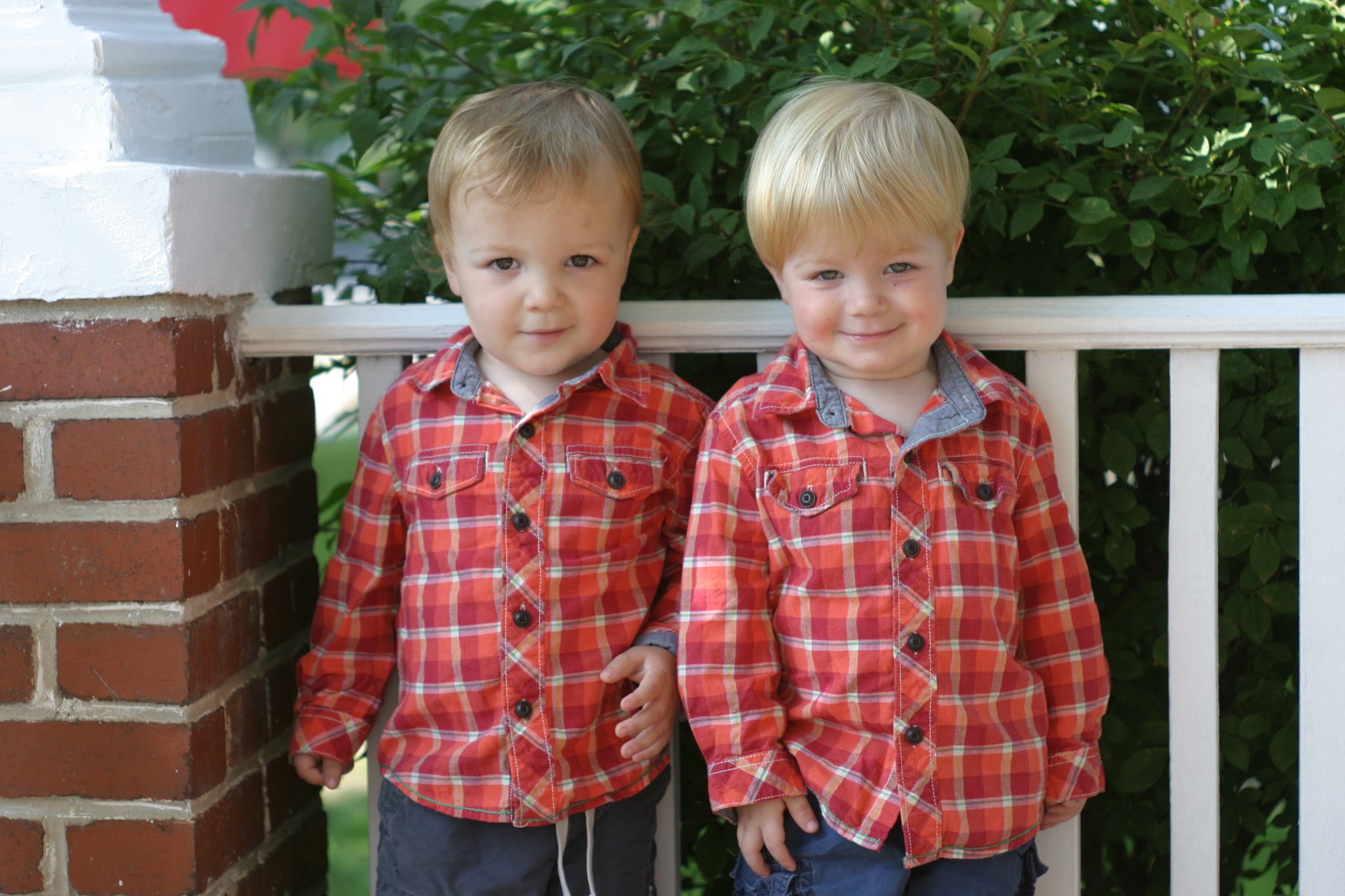
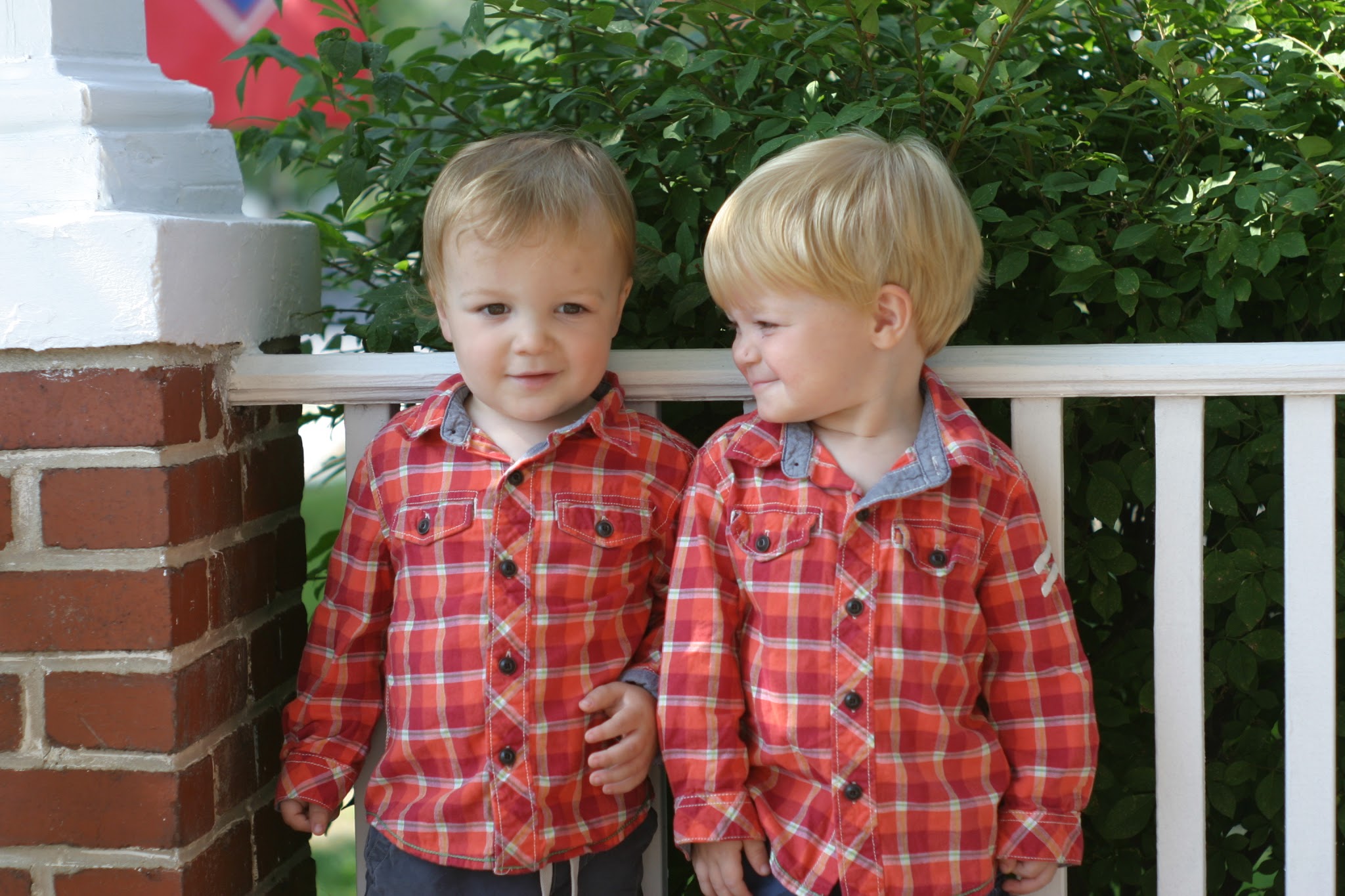
The second my body ceases its motion, they fly to me on
winged feet, stampeding down the runway that stretches from one end of this dirty old apartment to the other. The center of
their world has just plopped down on the couch and sensing the gravitational
shift, they’re drawn to me like magnets.
Then the climbing begins.
They stand on my bare feet, the hard plastic of their shoes
digging and twisting into the thin skin while they pull and push at my arms, my
legs, my clothing.
“Up, up,” they say, with wide, focused eyes.
“Ma-ma.”
“Ma-ma.”
“Ma-ma?”
“Ma-ma!”
They hunt and peck with an incessant stream of monosyllabic
words, each one falling with precision and persistence. Their words, their hands, wear away at me
like water dripping on a stone, like a hail storm aimed at me and only, always,
me.
Every day it feels like I am sinking, like the swirling eddy
of children at my feet – the one who clutches my skirt and follows trippingly
along and the other who flings himself toward me from across the room – is going
to pull me under.
I tread water until nap-time, when precious silence falls on
us all and I wrap it ‘round me like a cloak and sit huddled in its calm. I drink it in, breathe it as it wields its restorative powers.
When they wake, crying, or smiling, calling “Ma-ma, ma-ma” I’m
mostly ready again with juice and snacks and a welcoming lap. I relish their sleepy-headed stillness, the
way the one sits against me, his unmoving weight carrying the same calming
effect as the silence of his absence.
In these first few moments after wakefulness, life is enough
for them, enough for us all and I soak up the contentment as they lift squat
plastic cups of juice to hungry chugging lips. I adore the pleasure with
which they consume one after another of a bowl of sticky, yellow raisins.
Then we’re off again.
Sailing, bobbing, floating along the long and winding stretch of time
that careens through the afternoon, toward the exhausting rapids and treacherous rocks of the
pre-dinner-time hour.
I’m Gonna Miss That Boy
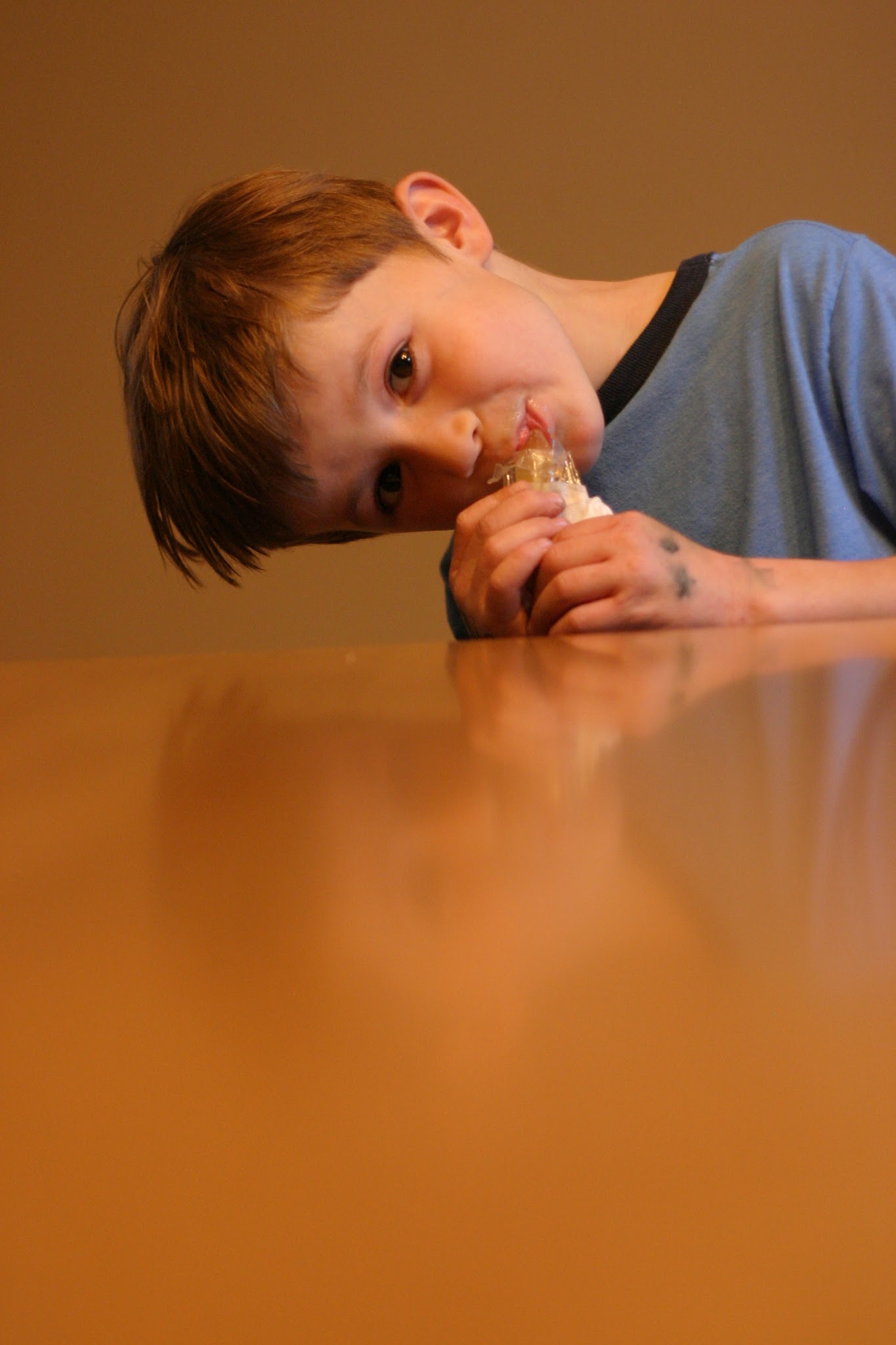
Tomorrow, they turn two and two weeks later my big boy will head off to kindergarten.
We walked last night through the spritzing rain and I held his hand with the always dry, cracking skin while my husband pushed the big wide stroller brimming with little brothers. I thought about the way he and I walked so much when the twins were little. We walked to survive, walked so we could, for one brief part of the day, face in the same direction, side-by-side. He who wanted to go-go-go and chatted me up like a friendly salesman and I, ever the introvert overwhelmed by the sea of humanity that filled our tiny bungalo.
I would push those boys along out in front of me and they sailed smooth like a boat on a glassy sea save for the hand of their brother resting on the stroller handle. That pressure, that hand, irked me, but he held on relentlessly, his hand like an umbilical cord holding us together, two castaways stranded on the island of twins.
And now I will walk him to school with his older sister and turn and walk home alone behind the double-wide, no hand to hold, no gentle pressure on the handle.
The other day, he said to me, casually, at lunch, “So, mama, how are you enjoying adulthood?”
I’m going to miss that boy.
This post is linked with Five Minute Friday. Click on the link to read more posts on the prompt “lonely.”
The Weeping Cherry Tree
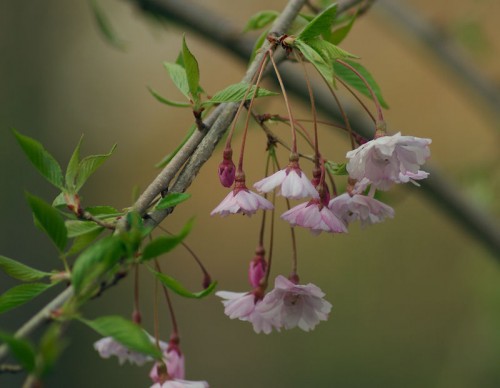
This spring, the branches
of the weeping cherry tree
across the street
hung low, heavy with beauty
and swirled around the trunk
like a woman’s skirts,
shifted by the slightest breeze.
This too is how my children move,
teeming ’round my legs
as we set out for an evening stroll.
Shifting forward and back,
they whirl like an eddy at my feet
and it seems to me that I am not the center,
but simply caught up in their current.
Photo source: HERE.
This post is linked with dVerse Poets Pub.
The Dutiful Son
He worked all day in the fields, starting when the dew shimmered on the cool grass and pausing only to drink a little water in the high heat of the midday sun. Great, dark circles of sweat, dried now, stain his cloak and the blisters on his hands are open, oozing. He’s spent, exhausted and under the exhaustion simmers a low-level frustration at all that remains to be done. Looking up, he notices that slowly, one by one, the
servants are dropping their tools and heading toward the house.
Soon he’s alone in the field, the only one
left.
He finishes his
row then stops to tidy up the poorly finished work of a hired hand. Mumbling to himself, he thinks how nice it
would be if they could hire someone as diligent, as neat in their work as him. Someone who shows up on time and
doesn’t quit til the job’s done and maybe even works an extra hour or two. He smiles a wry smile, imagining a whole
field full of workers, carbon copies of himself moving in lock-step to get the
job done the right way.
The image is quickly followed by the thought that just two of him would be enough and his smile fades as the memory of his brother
returns. With the memory comes a surge
of anger that swells from somewhere deep in his gut, rising like bile before he
quickly and automatically swallows it back down.
He has a headache that’s made worse by the glare of the late setting sun and his shoulders are tight and
stiff. With a sigh, he turns toward the
house.
He walks slowly,
dreading the quiet dinner with his father who too often sits staring into the
distance. When he’s not staring he talks longingly about old days when the two boys bustled through the house and
fields together, tumbling along after their father like puppies, eager and excited. Though shaded with joy and laughter, the stories are too familiar and from a past too distant to feel real and the most the older brother can muster in response is a sullen and sulky silence. Every time he launches into his own story about a detail of the day’s work he’s haunted by the uneasy feeling that his father’s isn’t really listening. Loosing confidence, he slows and lets the story hang unfinished over the table, like a question that has no answer.
Climbing the small slope toward the house, he senses a hum of energy in the air, something like the pause before a long-awaited storm. In the distance, the servants appear to bustle with excitement. One runs past shouting and another runs in the opposite
direction wearing a look of surprise and astonishment.
With the excitement comes music, loud and cheerful, that gets louder with every step and grates on
his already aching head.
The music is pierced with shouting and singing as though a party were in full swing.
Grabbing the sleeve of a servant running by, he demands to know what’s going
on.
The startled
servant’s look of joy vanishes as she stares into the older brother’s questioning
eyes. The feeling that she’s been caught doing something she shouldn’t is immediate, but she pushes it
down, trying to regain her cheer. Breathlessly, she explains, “Your brother
has come, and your father has killed the fatted calf, because he has got him
back safe and sound.”
Her words don’t make sense.
He stares at her, not comprehending.
Taking advantage of the moment, the young girl runs off, back toward the house, visibly shrugging off the older brother’s dark look as
she draws closer to the music and dancing.
Scraps of the
servant’s words, “Your brother.” “Your
father.” “The fatted calf.” echo inside his head as he
tries to make sense.
When it finally
dawns on him his back stiffens and he draws back, pulling himself up to full
height as he looks toward the house. His heart that was already
brittle, stiff and sore turns to stone and sits heavy in his chest.
“Your brother.” “Your father.” “The fatted calf.”
The duty, the devotion that carried him through the long, aching day, gives way without warning to a deep rage. He turns and strides off into
the quickly falling darkness like a lost soul.
He paces behind the house. He can’t go home, yet
he doesn’t know where else to go, so he broods like a storm cloud on the
horizon.
Then his father is there, his face full of apology and understanding and unspeakable joy at the
younger brother’s return. Had his father commanded him to join the party, he would have obeyed, but it’s the
old man’s pleading, his unwillingness to just leave him alone in the cool
darkness that forces open the cloud of furry that’s been growing older
brother’s chest.
His false
motivations and his deep sense of being unloved come pouring out in a torrent
of rage. A deep complaint wells up from within his heart, “Listen!” he barks, raising his calloused hand, commanding the attention that’s already his, “I’ve been working like a slave
for you.” His voice is high, sharp and piercing and spittle flies with his emphasis.
His tirade continues, each sentence flying at the old man who stands with watery eyes, his hands hanging at his sides, palms up, as if in preparation for an embrace.
The party continues, the music rising and dropping in the background as the son spews the anger and hurt that has been his companion in the years since his brother abandoned them both.
Finally, embarrassed and sweating, he’s done and stands, breathing heavily, eyes averted. He’s told his version of the story and waits empty-handed for his father to confirm or deny it.
“I’ll leave,” he thinks, in the pause that comes after the fading of his words. Desolate, he lifts his head briefly as if in challenge before turning his muscled body toward the night.
Light as a feather, his father’s wrinkled hand shoots out and catches his sleeve, holding it tight with the fierce strength of love as he speaks the only word he knows can break the darkness, “Son,” the old man said, “son.”
This post is linked with Playdates with God and Hear it on Sunday, Use it on Monday.
Answers to Prayer
The realtor’s car flew along green fields and over rolling hills. Seated in the back seat, a small and simple prayer formed in my mind.
Looking up and out the wide, flat glass of the windshield, I glimpsed a cherry-red Cardinal lifting off from a large puddle in the middle of the road. The timing was impeccable, as if he’d been waiting there, staged to arise in answer to my prayer.
“Hmm . . . ,” I thought to myself.
Turning toward my husband who sat beside me, I caught sight of a single deer running through a golden field.
“Look,” I said and “hmmm . . . ,” I thought to myself.
Pulling into the driveway of the house we’d come to see, I kid you not, the sun that had been playing a day-long game of hide-and-seek shone down bright and clear right on us.
“The sun came out,” I said to my husband with a smile as we unfolded ourselves, up and out of the car.
* * *
My husband’s text to a friend the night before read, “Kelly and I are sideways about a house. Do you have time to talk?”
When I saw it, I said, half-joking, “Sideways? Head-to head is more like it.”
There was one house that was a maybe. It fit our short list of needs and I was ready to settle because the alternative – the dark, dingy, over-priced rentals we’d toured, the leases that bound us financially for a year – were more than I could face.
Our good friend texted back, “Sure, how ’bout tonight?” and showed up at our door shortly after the kids were in bed.
He listened, this great hulk of a man sprawled on our living room floor, and we talked and by the time we were done some of the dense fog of fear and pain had lifted and my husband and I shifted from foes to allies again, sitting side-by-side even in the painful unknown.
* * *
Our earliest dates took place in diners where we sat in sticky booths considering one another over endless cups of coffee. Returning back to campus one night, we stood under the street-lights, eyes searching eyes and it bubbled out of him, “I just want to make you happy.”
That same boy turned man sat across from me at a diner the following day and I was able to see again the bond of love that spanned the table between us holding us in the booth; that cable that runs from heart to heart and forms a home for us and all the little loves we’ve spawned.
“You’re right,” he said, as we ate, “I’ve been thinking about it all day long, I made a list of pros and cons and there are really only two things about that house that I don’t like. And two isn’t that many.”
Slowly, carefully, we each relinquished the claims we’d been holding in exchange for holding each other. Finishing our meals, we slid into the low, red, Volkswagen and chugged our way over to the realtor’s office.
* * *
We walked through the house slowly, by ourselves. Turning, talking, touching walls and switches, we tried that house on and turned slowly, each for the other, to see how it fit.
Stepping onto the deck we heard loud and clear what we hadn’t heard the first time through, the unmistakable roar of route 81 that passed nearby just out of sight. It was loud, undulating, unceasing noise. Continuing through the house, the walls reverberated with the sound of passing trucks.
As the clouds rolled in, low and heavy and the wind picked up, it seemed that all of heaven and earth rearranged itself to carry the highway’s sound to us. It was the one thing we could both agree on, the noise of a nearby highway wasn’t something we were willing to embrace.
* * *
I prayed that we would know and we did. We knew, together, that it wasn’t the house for us. But beyond that, we knew in all the little ways we could, that God was with us and that gave us the courage to walk away from what might have been an easy answer.
That night our realtor offered us the key to a vacant rental he owned and suddenly, just like that, we had a place to live while we continued looking and waiting. It wasn’t the answer we wanted, but it was an answer to prayer. Sometimes, when we’re able to let go of whatever it is we want so badly, those unwanted answers can be enough, not because of what they “get” for us, but because of the way they remind us so clearly that God is with us.
This post is linked with Playdates With God and #tellhisstory.
Broken (Five Minute Friday)
By the time we were scheduled to get phone and Internet service, two days after the MOVE, we had already spent one night curled backwards on the love seat watching “Frasier” and “Better Off Ted” on the laptop that sat percariously perched in the window. The Deli across the street, aside from offering a host of fried foods and free delivery, also boasts a “guest” wireless line, so we logged on and vegged out for a few precious minutes before climbing the stairs to face the child who would. not. sleep.
Monday night came and we plugged in the phone, but there was no dial tone, so we crumpled, exhausted, onto the couch again, swapping snippets of conversation in the seconds that became minutes while the shows buffered and buffered some more.
Tuesday night was spent on a cell phone, getting shuffled from voice to voice in search of a solution. There was mention of an $80 dollar service fee if the problem lay within the house and they suggested we test the connection outside using a corded phone.
But who knew WHERE the corded phone was? As usual, I could remember seeing it on top of a basket at some point, somewhere, but the basket I pictured had already been unpacked minus the phone, so . . .
We curled again, backwards, and the sign from across the street illuminated our faces while we watched sitcom characters solve their problems in twenty minutes flat every. single. time.
This post is linked with Lisa-Jo’s Five Minute Friday, although her blog is currently broken, so I can’t actually insert the link. Classic.
Books

Between Heaven and Earth (poems)

Prayer can easily become an afterthought, a hasty sentence, a laundry list of all the things we want. But what if prayer is a time to find out what God wants for us–and for our world? What does it mean to pray that the kingdom would come here and now as it is in heaven? Explore these questions in this study, and learn prayer practices that nurture intimacy with God and sensitivity to God’s dream for the world.

Follow this writer, spiritual director, and mother of four as she dives into the deep end of chicken farming and wrestles with the risks and rewards of living a life she loves. At turns hilarious, thoughtful, and always compassionate, Chicken Scratch will change the way you see the mess and chaos involved in living life to its fullest.
