
Essays
A Little Gumption (the mustachioed man)
Every day, while driving my daughter to kindergarten in a van
stuffed with four children that were wrestled, wrapped and carted out
one-by-one, I saw him. Sometimes on the
way to school, sometimes on the way back home, he appeared on the edge of the horizon like the
sunrise.
He was consistently fascinating.
He ran with a loose gait, drooping athletic pants swaying
as he pressed on, one step at a time, his arms bent, hands in front of
him. He wore a hat, or more often a white
visor and also white gloves.
But the
thing that struck me most was his moustache.
It takes a certain kind of moustache to attract the
attention of a driver passing by with a van full of noise and need at twenty
miles an hour, so maybe you can picture it without me having to draw it out in
fine detail. I will tell you it was
brown and heavy, but well-trimmed.
He was a regular Tom Sellek, my mustachioed man.
Something about his regularity, the predictability of this
sighting, this crossing of paths pleased me.
That, and his moustache.
It takes a little gumption to sport a moustache like that,
don’t you think? And I guess there are
times when we could all use a little gumption.
This post is shared with Just Write, which is about, well, just writing. But somehow I confused it with a 5 minute time-limit challenge I saw on another website, so what you see here is a very quickly written little piece. Enjoy!
He Runs Through the Night For Her (Lessons in Bravery)
Then I heard the voice of the Lord saying, “Whom shall I
send, and who will go for us?” And I said, “Here am I; send me!” Isaiah 6:8
My two oldest children, four and six, share a room far
enough away from my own upstairs bedroom that my husband and I keep a monitor
on so we can hear if they need us in the middle of the night. My son has bad dreams or wakes for one reason
or another several nights a week. He
calls and we stagger downstairs to reassure and then everyone drifts gratefully
back to sleep.
There are times, though, that we forget to turn on the
monitor or we accidentally leave the volume down too low and we miss my son’s
slow, repetitive cry.
“Mama, Dada, Mama,
Dada.”
. . . click HERE to read the rest of this post with the community over at SheLoves Magazine . . .
* * * * *
I wonder, where have you see bravery lived out in little ways? I’d love to hear your stories here or on A Field of Wild Flowers’ facebook page.
This post is also shared with Playdates with God andHear it on Sunday, Use it on Monday.
For my Husband on our Anniversary (or Thereabouts)
(Tuesday was my thirteenth wedding anniversary and in the wintry slump of sick kids, it was tempting to feel a little discouraged. And yet, there remains, between my husband and I, much to be encouraged about. This post is for my husband, whom I love.)
* * * * *
The
Wild Rose, by Wendell Berry
Sometimes
hidden from me
in daily custom and in trust,
so that I live by you unaware
as by the beating of my heart.
Suddenly you flare in my sight,
a wild rose blooming at the edge
of thicket, grace and light
where yesterday was only shade,
and once again I am blessed,
choosing
again what I chose before.
* * * * *
When
two people stand, face-to-face, holding hands with their arms extended, as we
did on our wedding day, they create a space that’s more than the sum of each
of them. With their arms and bodies they
frame-out a small and simple dwelling place; a room composed of both their
separateness and togetherness, for Love encompasses both.
Henri Nouwen suggests that marriage is a vocation to
build together a house for
God in this world. It is to be like the
two cherubs
whose outstretched wings sheltered the Ark of the Covenant and
created
a space where Yahweh could be present. . . . the intimacy of marriage itself
is an
intimacy that is based on the common participation in a love greater
than the
love that two people can offer each other. (from “Clowning in Rome”)
I’d
be lying if I said I could’ve foreseen where we were headed all that long time
ago. Here we are thirteen years later
doling out syringes of medicine while one of us runs a child to the doctor and
the other juggles dinner and bedtime for three more.
We
are no longer who we were for good reason, but there’s an ease that comes with knowing each other for so long. Enough so that
you can bring me a twelve-pack of diet coke and a bag of Fritos, both wrapped
in newspaper, for our anniversary and it means something more between us.
There’s
so much more love these days, more than we started with, for sure. Love of a
different depth and quality, as though in the beginning we loved in black and
white and now love lives between and around us in a rainbow of different
colors. This love sparks and flies
so, drifting off in so many different directions so that, sometimes, love like this,
stretched so far, can seem diminished somehow against the wide expanse of
life.
Hold
on tight, my love, don’t let go, though life pushes and pulls. This
space, this dwelling place made by two becoming one, remains.
I chose you, I choose you, again and again.
(This post is linked with Imperfect Prose, for the prompt, “Engourage.” To read other posts on this topic, click on Emily’s buttong in the side-bar.)
Worn, Weary and Threadbare (for when you need permission to Rest)

“Come unto me, all you who are weary and heavy-laden, and I will give you rest.” – God
I came into the retreat like our old cat Samson used to come
into our house after a string of nights out on the town. Samson would just disappear and refuse to
show up for nights on end as we leaned out the screen door, peering and calling
his name into the darkness. Then, a few
days later, he would come dragging in, thin and dirty, walking slowly with a
limp.
That’s how I felt that morning – I arrived completely
exhausted. Life with four young children is like drinking from a fire hose, all struggle and gasping and refreshment to the point of drowning. The discipline of a monthly retreat has revealed the intensity of life lived between those moments of rest and I often arrive haggard, gasping for breath.
The day opened with an opportunity for each participant to
write on a scrap of paper three words that described how they arrived. Then a large ceramic bowl was passed from
hand to hand around the gathered circle as we named our words and laid our
papers into the bowl.
It felt to me that others had much nicer words, like
“rested,” “eager,” and “waiting.” But as
I lifted the heavy bowl and dropped in my small scraps of paper three words
escaped my lips like a cry,
worn,
weary,
and threadbare.
I passed the bowl quickly and sat quietly. I listened and prayed throughout the morning as
the tears rolled down.
Later I found a
sunlit window and sat curled in a chair soaking it in. I ate a quiet lunch that settled in me like a
bowl of warm milk, full of soothing comfort.
Then I returned to the retreat house and stretched out on a long
cushioned bench. I wrote a little, read
a little too, but eventually I gave in and, leaning to the side, I curled up
there in the lap of God and drifted my way off to sleep.
(This post is linked with Playdates With God and Hear it on Sunday, Use it on Monday. )
(This image was found here.)
A Little Bit of Death (of blessings and curses and sinus infections)
Yesterday I took my youngest on a tortuous trip to the Doctor and brought my oldest home early from school sick so, it seemed like a good time to post this little bit about sickness and death that I wrote a little while back. Enjoy.
. . . I have set
before you life and death, blessings and curses. Choose life . . .” Deut. 30:15
I headed out to see the Doctor one Wednesday this past fall to be treated for
a sinus infection. I was pretty sure I
had it by Wednesday of the week before, but my husband was having his wisdom teeth
out on Thursday and I was in denial and hoping to avoid a Doctor visit. It started as it often does with a head cold
that moved quickly into my chest and a week later I was
still swallowing and blowing out mucus in a wide variety of greens that rivaled the arrival of spring. A few days into it all the low-grade fever started, just low enough to
think I was imagining it, but high enough to make my aching body fall into a
miserable stupor every evening.
Sinus infections
are such a slow, low, underlying illness to me, not loud and boisterous like
bronchitis, not pity-inducing like laryngitis, not violent enough to strike
fear into your friends and co-workers like a good stomach bug. I can live, get by, with a sinus infection
long enough until it becomes clear that even a little bit of sickness, a little
bit of death, is too much.
* * * * *
I love the verse above that comes near the end of
Deuteronomy; love that God doesn’t stop
with laying out the choices – life or death – but feels the need to add a qualifier, a hint for
those of us prone to making poor choices. Like an anxious game show host rooting for
the contestant, God poses the million dollar question and then, giving a not so
subtly disguised cough, offers the answer too, “choose life.”
God knows the Israelites too well, those
golden calf builders and murmurers in the wilderness. It’s such an obvious decision, “life” or
“death,” “blessing” or “curse,” but God
knows our endless excuses, our propensity for choosing death in all of its
wide variety of guises. So God makes it
clear – clear that we will struggle even with this the simplest and most basic
of choices and clear that he, God, is rooting for us to choose well.
Humans are notoriously inept at distinguishing between that which is life-giving and that which isn’t and I imagine God has ceased to be suprised by our propensity for making poor choices. The problem lies not so much in our choosing death – the gospel sees this, in fact as inevitable -the problem is in our refusal to let it go. Even the tiniest bit of death clings and spreads itself within us; just as a little leaven
leavens the whole loaf, so too a little death deadens the whole.
* * * * *
I wonder in the end if this isn’t part of the reason God came to us in human form; God embodying Life so fully that we might somehow finally be able to see the difference, make an informed decision as it were. Then God, Life in flesh, takes it one step further, embodying death itself, not by choice, but by surrender. In that one act of surrender death itself is transformed and with Christ’s resurrection the hope is born that all of our wrong choices, little and big, might be also transformed – redeemed. Because of this we gain the opportunity to be freed at last of every little bit of death that lingers and we find the courage to choose again and again, even though we fumble all the way.
At the End of This Swaying, Fraying Rope
There’s a level of desperation around our house these
days. Winter has set in and we’re
cramped and snotty, sneezing and feverish.
We’re making daily trips to the store for things we forgot and debating who should go to the Dr. next as we shuffle endless
loads of laundry from basket to washer to dryer and back to the basket again.
It feels like an endless game of “whack-a-mole”
as I field phone calls and drop offs and trips to the library then turn to see
one twin chewing on the now-empty bottle of infant Ibuprophen. As I run to call poison control, hurdling the
baby gates like an Olympic athlete, I realize I can’t even be sure who drank
the medicine, so I run back to check both boys over, frantically searching for
tell-tale sticky hands and berry-flavored breath. Thankfully, it was “not a toxic dose.”
I called the Dr. yesterday morning about our son who’s
running a high fever after two days of antibiotics and left the wrong birth
date on the message. I thought it was wrong as I said it and tried
to correct myself, so in the end the message went something like this, “His
birthday is 8.11.2011. Or wait, that’s
not right, it might be 8.10.2011. I’m
sorry, I really can’t remember right now.”
I’m at the end of my rope, you see, hanging here white-knuckled with fingers grasped tight. As I dangle, gasping for breath, waiting for things to stop spinning, I’m reminded of Eugene Peterson’s translation of Jesus’ first Beatitude,
“You’re blessed when you’re at the end of
your rope. With less of you there is more of God and his rule.”
This, of course, catches me up short. Blessed, right here, right now, dangling, struggling, sagging with nowhere to go. Blessed because the end of me is not the end of everything, only the beginning of something more, Someone more.
I’m reminded too of something I read a few months ago in Scott Cairns’ book, Short Trip to the Edge (which I also wrote about HERE). Cairns is an Orthodox Christian and writes briefly about the role of a prayer rope, a string of 33 square knots that are used to focus the fingers and mind during prayer. As Cairns puts it, the prayer rope “does its bit to re-pair the inherent schism within the human person, [it] helps to . . . bring the mind into the heart (36).”
As I reflected on this image the idea came to me that prayer itself is like the weaving of a rope that leads us deep into the heart of God where we are anchored and at rest. The rope woven through prayer is so different than the one I work my way along most days. I struggle daily along the rope of my own striving like a scrawny adolescent in gym class trying to perfect the hand-over-hand technique necessary for upward momentum. This rope, the end of which dangles before me daily, is one of my own making, my striving, my success or failure.
But the rope of prayer begins where that one ends and leads downward out of myself or perhaps deeper in to the place where Christ now dwells in my heart as I asked him to all those long years ago. This rope of prayer, when I tend it and mend it, leads me to the places of deep blessedness and true security.
Once again I lower my expectations and ease myself down off of so many cliffs of my own making. I sit down, sink down into grace and love and with every prayer I find the courage to let go one more time, to lean-in to the blessedness.
Here I am, again, at the end of me; here I am, again, blessed.
A Prayer for Winter (when the world is sleeping)
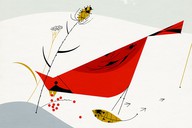
us a Cardinal;
a bright visitor flitting
across the
landscape of this
wide and
dimly lit world
that lies
sleeping.
Send us a
moment of beauty
to reawaken
us,
just one
bright messenger of Hope.
Amen.
Unhitched (how I ended up in this field of wild flowers)
Last January I quit my job . . . this is the story of how I was given the courage to do it.

My small church graciously held open my position as
associate pastor for six months after the twins were born. As the time ticked by and the heavy heat of
summer turned into fall, then winter, my mind and heart danced anxiously around
the decision of whether or not I would return to work. There were the usual pressures, finances and
a fear of losing ground professionally, as well as the fear of losing myself in
the incredible task of caring for four young children if I didn’t return to
work.
In my heart, though, I knew I simply couldn’t do it. At five months out my body was still worn-out
from the incredible pregnancy, the birth and the long-haul endurance race of
breastfeeding twins. The answer was
simple, clear even, and I knew I couldn’t go back to work, couldn’t spin one
more plate even if I wanted to.
Still, I waffled, circling the kitchen in the evening while
cooking dinner. I peppered my wary husband with questions and arguments, offering
different angles to consider and repeating
again and again the questions, “I can’t do this, can I?” and “Am I crazy to
even think of going back to work?”
My husband wisely kept to neutral ground while voicing his
support for “whatever I decided to do.”
I reached a decision, though I still could hardly speak of
it, and told our main pastor. I
tearfully wrote a letter of resignation and headed to the board meeting where I
would make my big announcement. I got
there early, my typed letters laying lightly in a bag at my side and sat down
directly across from my friend, the senior pastor, who asked one more time,
“Are you sure, you want to be done?”
It was a simple question, probably more for the sake of
conversation than real inquiry, but I felt its pull like gravity. In that moment I felt my need to be needed,
my love of work, my desire to be important, all of those rose to meet the
question and I paused as any addict might when confronted with a whiff, a
glimpse of that which he or she has decided to renounce.
Then a vision came, brief and vibrantly
clear, like a flash in my mind. I saw a
donkey standing in a field beside a heavy yoke that lay in the grass. At the same time, while seeing the yoke and
feeling the familiar pull of my old job, I also saw the sunlit field, which lay
like a colorful quilt spread beneath a bright blue sky. The field was filled with flowers, a joyful, chaotic display of beauty that stood like an invitation all around.
The
clarity of the invitation – to set aside my “work” and simply explore that field in all it’s beauty – helped me find the freedom to choose. There would be no condemnation if I chose to return to work, the
donkey after all is a beast of burden, gifted at getting the job done. But suddenly I could see more than the work that
needed to be done. I could see the field as more than a means to an end, more
than just furrow after furrow of earth to turn for productivity’s sake. I saw the beauty and possibility; I saw it
could be a place for resting, a place for savoring and enjoying, a place worth
exploring rather than cultivating, if only for a season.
“Yes,” I said, “I’m sure,” though the tears still threatened
to rise.
I’ve cried many times since making that decision, felt
waves of grief rise up on Sunday mornings as I miss the pulpit and its power,
as I miss the role and the joy of getting behind the plow with a team and
getting things done. Yet I realize now
that the work will always be there, but these precious beautiful flowers, oh
my, they fade so quickly, I can hardly take them in and I don’t think I could
live with myself if I missed even just one.
I made my choice and wherever you see a field of wild
flowers, that’s where I’ll be, just wandering, waiting, breathing them in and,
oh my, if this is your season to work, may God bless you in it, but do stop by
from time to time and I’ll show you what I’ve found, what God keeps showing me out in
this field of beauty and wonder.
Want to read more about the transition to being a mother of four? You might enjoy, The Blessing or Impossible. Follow this blog on facebook at A Field of Wild Flowers or on twitter @inthefieldswGod.
Photo credit: asergeev.com
Incarnation (God Stoops and Bows and Stretches Out Among Us)
The Word became flesh and made his dwelling among
us. John 1:14 a
Every day after their naps I carry my one year old twins down
the stairs, one on each hip, like a hulking maternal weight-lifter. Pausing in the kitchen, I lean them over the counter one at a time to grab their matching sippy cups and then hurry toward the living room hoping to make it there before my arms give-out.
Still holding them as they grip on to my shirt and cling to their
precious juice, we all slide slowly to the floor where I sit cross-legged in
front of the couch, one boy on each leg.
Here they alternate between snuggling and gulping, occasionally working out a tenuous trade of cups, a treaty composed entirely
of gestures and grunts. There’s an
invisible, but mutually agreed-upon line of separation that runs down the
middle of me – if one crosses into the other one’s territory all hell breaks loose. This causes me to marvel at their possessiveness, their indignation at having to
share me as though they’re not both being held.
Later, at the end of a long day, just before my husband gets
home or after dinner when the dishes are done and the floor swept, I make my way out into the living room. Once there, I lay down and stretch out on my back on the floor.
I hardly hit the dusty, old carpet before the
twins come running and pile on me like puppies, slobbery and sweet with their
toothy, wet smiles. Their top-heavy little
bodies tip and flip and roll on and off and around me and my only care is to
make sure no one gets hurt.
Sometimes, through great effort, Isaiah rights himself and
circles out and away from me. He toddles along on stocky legs and padded baby feet,
grinning his gap-toothed smile as he looks back over his shoulder, then
turns, running, and dives back into me.
When I’m on the floor, I’m theirs – my body is theirs, my time is theirs and they
claim their right to me fully. I come
and lay down among them because I know they will be drawn to me and my desire
is to be with them.
It occurs to me in this season of Advent that I can think
of no better image for the Incarnation.
In my stooping and bowing, my sliding down and laying out I am mirroring
God to these boys; God who comes to dwell among us, laying down, stretching out
in the middle of our dusty, dirty world, hoping we will be drawn to him.
God who holds us, who delights in us and marvels over our petty
arguments, our human desire to part and parcel him out as though we are not all
being held.
This post is linked with Playdates with God.
Joseph’s Dream (The Surrender to a Life Larger and More Beautiful)
This year I’ve found myself drawn to the character of Joseph in the stories of the nativity. Mostly I find myself wondering about him – what kind of person was he to be able to surrender to a life so far beyond his control and desire? to allow the inklings and images of a strange dream to shape his future? As I wondered I started writing which led to this little bit of fiction. Enjoy! and May your Christmas be blessed!
* * * * *
There was no way to get comfortable, just as there was no
way to quiet his racing mind. Laying on
the thin sleeping mat it felt as though his thoughts mirrored his body,
restless, twisting, turning and seeking resolution. He rose a time or two, paced, knelt, and rose
to pace again. He wandered out at one
point into the dark night, the cool air, and paused to look up at the wide sky,
the brightly hanging stars. Rather
than feeling relief, though, he was overwhelmed by his own smallness so that the
wideness of the sky left him feeling more lost and fearful than he had since he
was a small boy. The enormity was
disorienting, frightening and he quickly turned back inside and lay down with
something like resolve.
Still, sleep didn’t come.
Most of what he knew about life he’d learned from working
with wood and it was no surprise that his distracted mind, even now, kept
returning to his workshop. He’d learned,
over time, to read the wood and find there the answer to his questions, not in
the way of the sooth-sayers, seers and magicians who lined the market square,
but in the same way that every skilled craftsman knows that all things material
speak also of the eternal if one is able, willing, to listen.
So it was that his mind worked on the problem, the
conversation, going over it again and again as though sanding, seeking beneath
the surface some deeper meaning, some guiding revelation. He’d turned and walked out when she told him,
the largeness of her revelation, of what she was asking, striking him like the
wideness of the night sky so that he felt suddenly small and foolish,
lost. His leaving was automatic, rising
from the primal urge to flee in the face of pain.
He was grateful now that he hadn’t struck out in anger or
rage as he might have in his youth.
Grateful that life had taught some level of restraint.
He’d always been a dreamer, an idealist of sorts and in his
youth the use of force and power were reflexive as a means to an end. Believing in the righteousness of his ends,
his ideals, he’d been known as a hothead, a firebrand, a short fuse that was quick
to light and long-burning. His religion,
his righteousness, and the accompanying anger had given him a sense of
identity, a sense of arrival and of having a place to stand in the world which,
at the time, he took to mean that he was at long last a man.
It was hard to say exactly what had changed him over the
years other than the usual series of failings and fallings and losses. The wood too, had worked on him even as he
worked on it. Wood doesn’t respond well
to power and anger. It had enraged him
at times working beside his own quiet father; the way he couldn’t make the wood
do what he wanted it to, couldn’t make it bend to his willing, but instead had
to surrender himself to its lead. It was
the wood that caught him up short time and time again, caught him in his
fire and force.
It took years of projects that splintered and split apart at
the last minute, of bent nails and wood that turned on him to accept that he
was not in charge. When he worked in a
shop of his own he would occasionally give in to frustration and rage, throwing
a project with defiance. There was a
humility required in the craft that stood at odds with everything he believed
about the world and what it meant to be a man in it.
But that was a long time ago and now he felt himself
changed, smoothed, worn-down, as though he were the piece of wood and life was
itself the skilled hand of the carpenter.
Life had sized him up, stripped the bark and rough edges away until he
found himself exposed and yielded like wood in skilled hands.
Life had whittled away at him until what was left was
something less, but purer and he’d fallen into a habit of waiting to see what
use there might be for one so diminished.
The arrangement, the engagement, had seemed too good to be
true, unexpected, but fool that he was, it brought a spark of hope. The girl wasn’t pretty, but sturdy and
young. To his eye she seemed like a
tree, a rough exterior hiding something truer within; she had a depth and
presence like all trees do and he found himself drawn to her. He’d approached the engagement like he
approached most pursuits these days, slowly, watchfully, and maybe that was why
her words shocked him so, stung him in a deep place.
Now he lay wrestling unwilling to accept one more submission, one more surrender to
a life larger and more painful than he’d bargained on.
At some point he found himself dwelling in the thin space between
sleeping and wakefulness and this was when the dream came. In the dream he was working in his shop,
fitfully sorting through piles of discarded wood, looking for something he
couldn’t name. There were layers of dust
and wood shavings everywhere that rose up like small clouds and flew like
sparks as he frantically lifted and moved the lumber.
Then he found himself in a shaded wood. Sunlight glinted down through the uppermost branches
of tall trees, but the ground where he stood was dark and cold. Here too he was hunting, searching for
something. His axe hung from his
calloused right hand as he plowed through the woods that seemed to go on forever. He felt a deepening anxiety as he pressed
forward, stumbling over the roots of ancient trees; the feeling that he was
forgetting something important mingled with the feeling that some dark shadow
was following him.
He was running, crashing through the woods
given over almost completely to panic when he saw a glimmer of light in
the distance. The light calmed him
enough that he stilled, turned and, as it happens in dreams, found himself standing
inexplicably in a brightly lit clearing.
A stream ran through it, chattering along happily and beside it stood a
young tree, its leaves green and shimmering.
Something about the tree and the happy brook and the way it
contrasted with his fear and anxiety sparked a deep rage inside of him. Feeling the axe in his hand he turned and
wielded it with all the strength of his youth.
He fell the tree in a few quick fierce blows and let the head of the
axe fall to the ground, leaning over it drawing in deep shaking breaths.
Then, looking up, he saw a small shoot growing up out of the
stump as if in defiance to his destruction.
It grew and sprouted branches, leaves, before his very eyes. It was as though the tree he’d cut down
contained within it the seed, the root of an even greater tree. This, too, sparked rage in him and he leaned
back, straightening, and lifted his ax into the air bent on destroying the
stump and the shoot with it.
It was then that he felt the hand, hot and heavy like fire
on the back of his arm, then that he felt the Presence of one standing,
hovering behind him. The touch stopped
him, mid-swing and the fullness of time fell open around him. It was
as though the angel’s touch released a damn of sorrow and fear that had been building and the
intensity of it all bent his knees and brought him broken, weeping to the
ground.
There was no way to say how long this lasted; it was an
eternity and a moment at once. As he
felt the fire on his arm, he felt his own fear and foolishness as he had when
confronted with the night sky and when the girl had told him her story. Then the words came like a force
that pulsed through him entering not just through his ears, but through his whole
being, “Do not be afraid.”
Those words washed over him like a wave so
that his fears were lifted and following, like a second wave, he heard his own name, ”Joseph,
son of David.” At the sound of his name,
he felt himself returned, no longer wandering or lost, but solid, present like
one who’s returned home after a long and harrowing journey.
As he knelt, rooted beside the stream, he felt the angel
lift his chin, the touch now cool and refreshing, like water from a
spring. His chin was lifted and his eyes
looked to where the tree had been and there he now saw the girl, Mary. She looked straight
at him and in that gaze he felt himself being aligned with her, felt the love
rising in his gut, felt for once that he knew where he was, who he was and that
everything from then onward would arise out of that knowing.
In her eyes also he saw the light of the child that would come, like
a glimmer of light without shadow, a small spark that would grow. As he looked, the angel whispered in his ear
one last word, “Jesus.” And at the sound of the name, the spark leaped in
Mary’s eyes and Joseph’s heart leapt within him.
In the morning it would seem that after the dream he’d fallen into a deep,
heavy sleep,. It was the kind of restful, peaceful sleep he would never experience
again. For though the dream located him,
changing forever the map of his life, the days and years ahead were still
filled with restless, shifting nights. Nights
of worry,and foreboding, nights of fleeing and the hovering fear that he would
prove at long last to be nothing more than a fool. In this way his life was sanded down, bent in
ways beyond his choosing and he learned to stop wondering what it would become
and lean into what was.
During those restless nights the dream was a star that
guided him and he clung to it fiercely, that and the shepherds’ visit, the star that
hung low and heavy over the birthing place, and the visit of three dark
strangers who mumbled in a foreign tongue, fussing over the child. All of these became points of light in the
darkness so that now when he lay restless, wrestling on his mat and rose, stepping
out into the wide, dark expanse of the night, he felt not small and fearful,
but rooted, as one following a scattered trail of stars toward home.
The Longest Night (Winter Solstice and Grief)
The Well is Deep
It is a long journey
down into the deep well of grief,
but there are gifts too,
along the way.
Bright and shining stones
that line the path
guiding us into the heart of things.
These appear before us
one by one
like stars across
a darkening sky.
The journey is long
and the well is deep,
but these stones sustain.
– K. Chripczuk
* * * *
I feel caught this week between real grief and desired joy as I tend my little flock and run and rush between holiday concerts and parties. I’ve fought the urge to tear-up while waiting in line to drop my six-year-old off at her elementary school, noticing the newly stationed policeman watching over her small, bobbing frame as she disappears through those wide doors. And I’ve felt a guilty pleasure every time I get to bring her back home with me at the end of the day. I’ve sat through too brief moments of silence unable to wrap my mind around a single word or a prayer that might suffice, which are followed by halting renditions of Jingle-Bells and tiny voices squeaking out memorized lines of “good news of great joy for all people.”
Tonight as I stood in the kitchen finally mixing up the long-awaited Christmas cookies it occurred to me that this is the longest night of the year – the winter solstice. Here we are just a few short days before Christmas experiencing the longest night and to top it all off it’s windy and cold here and I’m walking around tossing in ingredients and stirring up cookies with a blanket wrapped around me like a toga.
If ever there was a time to pause and feel the weight of the darkness of the world we live in, then maybe this is it. Before we turn to solutions and be-and-do-better-isms, before we take one more step down the road of blame or we allow our hearts to be darkened any more by the deadly poison of fear, maybe we can stay, just a little longer with our grief. The words of Alice Howell ring in my ears tonight, “In the midst of death, there is life! In the midst of despair, there is a future! There is a purpose to all grief – the fruit to come of it is wisdom.” (Sacred Journey)
There’s much to be missed if we move too quickly out of this darkness.
Maybe, if we give this night its full measure, we will be ready for the rays of light, the bright shinning forth of joy to come.
Where Mary Meets Us (Did You Know Mary Had Five Boys?)
But Mary treasured all these words and pondered them in her heart. Luke 2:19
I noticed her as I passed through the small chapel on my way back to my room where I would pump milk for the two babies I’d left at home. She was standing at the front of the chapel space cradling a child and as our eyes met I felt a moment of recognition and thought, “Now there’s someone I can relate to.”
This was during the first of nine mini-retreats I would be attending for a program on contemplative silence. I was disappointed to see that my fellow participants were older than me by a good twenty to thirty years. As a young mother I felt woefully out of place, painfully aware of my fear that I didn’t fit in, and afraid of the hunch that this was the wrong time in my life to embrace contemplative spirituality—to pursue a call to prayer and silence that stood in such stark contrast to the daily realities of my life.
It was with relief that I noticed the statue of Mary. There she stood, a young woman holding her young child smack-dab in the middle of that holy space and my eyes were suddenly opened to seeing Mary as a mother like me, Mary as a woman who pondered, who prayed in the midst of an everyday, ordinary life.
Continue reading this post here at shelovesmagazine.com.
They are Eating My Prayers (the hungry are filled with good things)

I stand over the small wooden table gazing at the meal, my eyes taking in its
beautiful simplicity. The host ladles me
a generous scoop of steaming, creamy soup and I shuffle slowly around the table in silence with
my fellow retreat participants. I fill
my plate with a simple fresh salad, top it with nuts, and move on toward
the bread. Reaching my hand out to pick
up a slice I notice that each piece is generously buttered. It’s enough to make me want to weep.
To me, that butter is love and I see immediately how buttering bread can
be an act of love – generous, simple and true. With the sweep of a knife and the smooth gliding-on of glistening yellow goodness that bread became a sacrament, a means of grace, that butter yet another expression of the love of God in the world.
* *
*
James Martin’s book, Becoming Who You Are, includes a discussion about Andre
Dubus, an author who became a paraplegic in mid-life:
In his essay, Dubus, a devout
Catholic, describes the laborious process of making sandwiches for his young
daughters to carry with them to school. As he maneuvers his large, bulky
wheelchair around his cramped kitchen, as he reaches for the utensils, as he
tries to open cabinet doors from his awkward position, and as he cuts the
sandwiches, he realizes what he is doing for his children.
Each moment is a sacrament, this
holding of plastic bags, of knives, of bread,
of cutting board, this pushing of
the chair, this spreading of mustard on bread,
this trimming of liverwurst, of
ham. All sacraments . . .
Dubus wrote about this in an essay entitled “Sacraments,” where he also says
the following,
A sacrament is physical, and
within it is God’s love; as a sandwich is physical, and nutritious and pleasurable,
and within it is love, if someone makes it for you and gives it to you with
love; even harried or tired or impatient love, but with love’s direction and
concern, love’s again and again wavering and distorted focus on goodness; then
God’s love too is in the sandwich. (Meditations from a Movable Chair)
* * *
There are so many days when I feel it to be true – the fact that I simply
don’t have enough to do this job of mothering well. Not enough patience, not enough compassion
and curiosity, not enough LOVE. I am so
busy. I am so tired. I am running on empty.
But still, I feed them, even if that feeding only consists in the tearing
open of a bag full of salty, fatty carbohydrates; even if the meal was bought
with money we didn’t have because for once I just wanted to sit down
and relax together, gathered around these few moments of guilty pleasure.
I chop, I peel, I dice and slice. I
sauté, bake, simmer and spread every day, three times a day or more. I ladle, scoop, and dish it out. These rituals I perform day in and day out, like a liturgy of love, each stroke of the spoon a prayer, each flip of the spatula an amen.
These
days, when feel I don’t have enough, I trust, I hope and pray that these simple
acts of love, these sacraments coming as they always do in broken ways will be
transformed as they’re consumed.
Sunbutter and jelly sandwiches, gold fish and juice-filled sippy
cups transfigured into love so that even on the days in which I have
so little to give, they are being filled with good things.
These children of mine, they are eating my
prayers, being filled, bite after bite, with love.
How to Use a Runaway Truck Ramp (An Excerpt and A Review)

I was only a few weeks in to blogging when I stumbled across Shawn Smucker’s blog via a friend’s site. His was one of the first blogs I ever followed, probably the first I commented on, and I continue to look forward to his posts each day. Shawn’s newest book, How to Use a Runaway Truck Ramp, came out this week and is available in multiple formats on Amazon and at Shawn’s website, shawnsmucker.com.
The book follows Shawn and his family of six on a four month cross-country adventure. Having dreamed of traveling the country in an RV “someday” Shawn and his wife Maile move their plans up by a few decades as they find themselves faced with a failing business and a simultaneous call to move into writing as a full time career.
Maile is also a writer and blogger and both contribute to the book that’s both funny and reflective. Shawn and Maile capture the excitement and anxiety of adventure while continuously giving glimpses into the deeper workings of God and grace in their lives.
I’m please to share an excerpt from the book below and encourage you to check it out on Amazon or click over to Shawn’s blog to find more reading. This excerpt is a little more serious than much of the book, but is a prime example of the depth of insight with which Shawn and Maile explore life.
* * * * *
One night I called my mom. Within a few seconds of hearing her voice on the other end of the line, I knew something was wrong.
“Shawn, I have some not-so-good news,” she said in a quivery voice reserved for funerals and personal catastrophes.
“What’s wrong?” I asked.
“Your aunt has cancer,” she said.
It’s rather shocking, actually, to discover something like this. It felt like discovering there was a traitor in our midst. I found myself wondering which nearly invisible cells in my own body were planning a revolt. Which tree was going to fall on our bus. I started seeing death behind every oncoming car, or hiding in every shadow.
Then a few weeks later I found out that some very close friends of ours were miscarrying their baby. I didn’t know the details. But the sadness was recognizable and reminded me of standing next to Maile at a routine doctor’s visit when she was pregnant with our third child. The doctor looked up at us with pursed lips and confused eyebrows.
“I’m really sorry to tell you this,” she had said. “But something isn’t right.” A few weeks later, Maile miscarried. Friends hugged us. We walked around our house quiet and empty.
There is something devastating about hope unattained. The unexpected diagnosis. The bright candle that turns into a smoldering wick. The “something isn’t right” speech. Sometimes, just sometimes, it makes me wonder if hope is worth it. Makes me want to live a life where I always expect the worst, keep my hands closed, my eyes on the ground in front of me. Too much looking out at horizons exposes one to the possibility of disappointment.
Then on a Tuesday evening during our time in Nashville, I went outside to help Maile’s brother till his garden. He and I took turns pushing the rototiller around, pushing all the old dead grass and hay under the rich brown soil. Then I raked out the dead stuff to the edges and piled it all into the wheelbarrow. The soil went from looking barren and rather unwilling to expectant. Open.
It takes a lot of turning over to reach that point. A lot of pounding and tearing and grinding of the soil. The rototiller grasped at the ground like giant claws. Our shovels bit into the ground and formed the edge of the garden.
As I worked the soil and the sun dropped behind those Tennessee hills, I thought of my aunt with cancer. My friends losing their baby. They were being tilled. They were being churned up.
But I know them, and I know their hearts. And while it will not diminish the pain they feel now, I marvel at what rich soil they will become.
* * * * *
Shawn Smucker is the author of How to
Use a Runaway Truck Ramp and Building a Life Out of Words. He lives in Lancaster
County, PA with his wife Maile
and their four children. You can find him on Twitter and Facebook, and he blogs (almost) daily at http://shawnsmucker.com/ Maile blogs
at mailesmucker.blogspot.com.
Nothing Will Be Impossible (Where Mary Meets Us)
“For nothing will be impossible with God.” Luke 1:37
I can’t do this.
I am doing this.
Both. And.
This is where we live,
where Mary meets us.
And we all cry out together
to the angel and the blinding light,
“How can this be?”
Then comes the reply,
“The spirit of God, my friend,
the spirit of God.”
And we all cry out together,
and we all cry.
Both. And.
* * * * *
I wander around the house these
days, treading water, trying to stay afloat while crunching layers of cheerios
under my feet and endlessly ferrying dirty glass bowls from one room to
another.
I tell myself I’m the least
likely candidate to be in charge of what feels like a small daycare.I think to myself, “This is not me.This is not possible.How can I be a mother of four kids?”
Click here to cotinue reading this post titled: Impossible.
* * * * *
What impossible thing are you facing today? May Mary’s question and the angel’s answer be a guide and a comfort to you.
Where the Wild Things Are (and where Good News begins)
The beginning of the good news of Jesus Christ, the Son of God . . .
John the baptizer appeared in the wilderness, proclaiming a baptism of
repentance for the forgiveness of sins. Mark 1:1-4 adapted
I met my friend in the wilderness the other night. Well, it wasn’t exactly
the wilderness, but it was a bar of sorts, which for me still qualifies as a
real and somewhat alarming wilderness, being the good Christian girl I was
raised to be. She was late and I sat there in the dim light trying to appear busy
on my phone and constructing to-do lists on the white placemat in front of me.
She arrived full of unnecessary apologizes which I quickly brushed aside
and we dove in head first. Between us there’s little need for small talk and
right there in the middle of that noisy wilderness we each pulled open the
layers of our lives and sat back, listening through tears as our hearts talked
for awhile.
This is the friend who tells me how her marriage really is, tenuous and
struggling, and shares how she slapped her son in a moment of exasperated rage
that has melted now into a messy pile of regret. She is the one I can tell how
I yelled at my own son, threw a royal tantrum of rage that scared him and me
and how we all ended up on the couch in tears trying to figure out how that day
could be redeemed.
* * *
I have to admit that I never really liked Maurice Sendak’s book, Where
the Wild Things Are. I tend to like books that are warm and pretty, books that affirm my need
for a world that’s safe, orderly, and predictable. But, it’s possible that the
fact that I don’t particularly like the book is an indication that I do get it,
a little bit at least. What I do understand is that Max is struggling with the
wilderness, with all that is wild and untamed both inside and outside of
himself.
Something about the unrelenting, all-humbling job of parenting leaves me all
too familiar with this wilderness. If my life were a children’s book, then one
might notice a forest of sorts growing in my house most days right around four
pm or any other time that happens to be about an hour before my husband is due
home and a half-hour before I lose it.
Too often by that point the day is been played out – patience is gone. I’m
wresting dinner onto the table while kids are whining, fighting, hanging and
swinging off of my legs like the little wild things they are. By then we’re all
wearing our wolf suits and if the windows are open the whole neighborhood can
hear the roaring, gnashing of teeth and rumpus that ensues. As a parent, as a
human, I’m well acquainted with wilderness and wild things, within and without,
but it doesn’t mean I like it.
* * *
It’s significant that the gospel of Mark places the advent of the good
news of Jesus Christ right smack in the middle of the wilderness. This gospel
has no time for angels, places no stock in genealogies or other such small-talk
as a means of introducing the striking, challenging figure of Christ who
emerges in the pages that follows. Mark begins like my friend and I do, by
peeling back the layers and starting not in the skies full of stars and angel
choirs, but on the bare, dusty, rocky ground of the wilderness.
Something about this gives me heart, gives me hope, as this first week of
advent is designed to do. Something about it resonates with the prophecies of
Christ and the prophets who spoke them, those craggy ill-kempt men and women
who lived on the edges and thereby lived and spoke that much closer to the
heart of things.
The good news begins in the wilderness. What a challenge, what a hope.
* * *
The friend I met with told me how she’d shared with her counselor that she
has few real, close relationships, few relationships where anything beyond the
bright cheery small-talk of this season might be appropriate. Her counselor
said, “Yes, but what about this Kelly? It seems like you have a real
relationship with her, why do you think that is?”
My friend, God bless her, said, “Kelly’s real. I mean, she told me she
threw an apple peel at her children, for goodness sake, so I feel like I can be
my real self with her.”
After telling this story she looked at me with tears in her eyes and said,
“Why is it so hard to believe that our humanity is what’s most attractive
about us?”
* * *
Oh, my friends. How deep and wild is the wilderness within you? Who do
you have who’s willing to meet you there?
* * *
This is the beginning of the Good News of Jesus Christ – the One who came
and dwelt among us, who meets us in the fullness of humanity. Christ, who
“sailed off through night and day and in and out of weeks and almost over
a year” to meet us here, “where the wild things are.”
I’m so grateful for my friend who gave me permission to share from our conversation – she’s one of the flowers in this beautiful field.
Dostoevsky ‘s Cook (An Angel, an Onion, and a Pair of Boots)
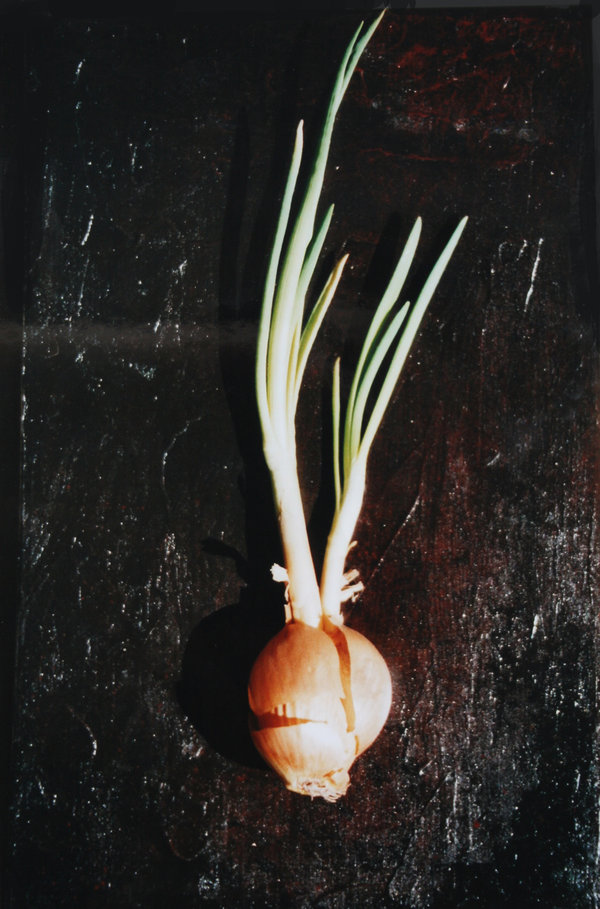
It’s only a story, but it’s a nice story. I used to hear it when I was a child from Matryona, my cook, who is still with me. It’s like this. Once upon a time there was a peasant woman and a very wicked woman she was. And she died and did not leave a single good deed behind. The devils caught her and plunged her into the lake of fire. So her guardian angel stood and wondered what good deed of hers he could remember to tell God; “She once pulled up an onion in her garden,” said he, “And gave it to a beggar woman.” And God answered, “You take that onion then, hold it out to her in the lake, and let her take hold and be pulled out. And if you can pull her out of the lake, let her come to Paradise, but if the onion breaks, then the woman must stay where she is.” The angel ran to the woman and held out the onion to her. “Come,” said he, “catch hold and I’ll pull you out.” And he began cautiously pulling her out. He had just pulled her right out, when the other sinners in the lake, seeing how she was being drawn out, began catching hold of her so as to be pulled out with her. But she was a very wicked woman and she began kicking them. “I’m to be pulled out, not you. It’s my onion, not yours.” As soon as she said that, the onion broke. And the woman fell into the lake and she is burning there to this day. So the angel wept and went away. – Fyodor Dostoevsky
* * *
There was a time about eight months after the twins were born that I felt like I really needed (ie. wanted) a pair of rain boots. I scoured the internet for weeks on end, I watched e-bay like a hawk and finally I bought a beautiful pair of lime green boots – they’re the happiest boots I’ve ever seen.
When they arrived my children swarmed the door as they do any time the UPS man approaches. I grabbed the box, declared it MINE and quickly set it aside to open later. When I finally opened them I was greeted by their heavy rubbery smell and marveled at their beauty as my children stood by, their eyes glowing with excitement and anticipation. I looked the boots over and set them aside.
My children gasped in astonishment, “You’re not going to wear them!?” They immediately clamored around my precious new boots and began man-handling them in a wide variety of ways.
In that moment something rose up in me and I blurted out, “No, these are MY boots. You MAY NOT touch them.” My children looked heartbroken, confused, as I gathered those boots and hauled them off to my room where they stood in line like soldiers awaiting the call of duty, waiting until I was good and ready to enjoy them.
* * *
It’s strange, I know, but I rather like Dostoevsky’s onion story. I like the way it captures the impulse of human greed in such a recognizable way, how cleverly and simply it reveals the way that greed hurts not only the greedy, but all involved.
I love this story in the same way I love the story of Jonah for it too is a story of greed and jealousy to the point of hatred and Jonah too is willing to die rather than let go of his righteous anger. These stories catch me and I glimpse myself in them as one does in walking by a mirror or store window; in a flash something is revealed in me that I know to be true but am not often willing to recognize.
I value this story for the way it catches me unawares and raises questions about my possessiveness, the way I protect me and mine and the cost of the things I keep. No one could truly be as “wicked” as the woman was said to be, but that impulse is something we all know.
I’m a giving person, as a mother of four one could argue that I give of myself all day every day and it’s good and right that a few things should be saved for just me alone. I would say you’re probably right on most accounts, but the next time my husband reaches over into my bowl of chips and I slap his hand away with a snappy, “Get your own bowl,” maybe I’ll remember this woman and her onion.
When the words “It’s mine, not yours,” rise so easily, so reflexively, and in such contrast to the mercy and joy and grace of the moment, I want to notice them, to sit awhile and consider their source, to notice the cost they bring to bear on my own soul and the souls of those around me.
Help me to remember, God, with grace, the cost of MINE. Help me to discern what to hold tightly lest I be held, imprisoned by that which I hold.
* * * * *
I read this story last month in preparation for a retreat on Giving and Receiving. It stayed with me, captured me, and rolled me around in its images and irony, its extremes and it’s still not finished with me yet. So here I am, sharing it with you. What do you think?
Playing the Love Card (a cure for grumpy bears and grumpier mothers)

One day Bartholomew was grumpy . . . His ears were cold.
“Wrap your scarf around your ears to keep them warm, ” said George.
But Bartholomew was still grumpy. His legs felt too stumpy.
“I’ll carry you,” said George.
At home, Bartholomew’s porridge was too lumpy,
his tummy too plumpy, and he was too small.
“I’ll feed you,” said George.
At bath time, Bartholomew hid. He did not like anything at all.
“What a day,” said George. “You’ve been so grumpy, your legs have
felt stumpy, your porridge was too lumpy, your tummy too plumpy but,
Ba . . . I love you just the way you are.”
Bartholomew felt better.
He kissed George and he brushed his teeth all by himself.
“Time for bed, Ba,” said George. “We both need a little rest.”
“Nah,” said Bartholomew.
* * * * *
My husband and I worked at a personal care home for about two years when we first got married. When the time came for us to leave one elderly woman told me how much she would miss us. She said how much she liked and admired my gentle, soft-spoken husband and then she said, “But you, you could be a little grumpy at times.”
I let the sting of her well-meaning comment settle a little, then looked her straight in the eye and said, “You’re right, I can be a little grumpy sometimes.”
I guess maybe something like that could go on my tombstone, “Here lies a beloved wife and mother who could be a little grumpy sometimes.” It’s true after all, there are days when I simply feel far from myself, out of sorts with the world and everything in it. Days when there’s an itch in my soul that I can’t scratch, the feeling of something chaffing away at me so that the day itself leaves me fit to be tied no matter how good or bad or in-between it is. Just ask my kids or my husband, they could tell you about it for sure.
I’m aware enough now at the ripe old age of thirty-five, to know when it’s happening, to feel it coming or be able to step back in the middle of everything and see myself with an objective eye. I know enough to recognize that it usually comes over me because of some rigid unspoken rule I’ve placed on the day or the moment. There’s nothing wrong with hopes and standards, but when the whole day is conspiring against you (as today happens to be, if you hadn’t already guessed) it’s best to somehow let yourself and those you love off the hook in some way or another.
The only way I know to escape this is to surrender to the small grains of love and grace that surround me, to take my eyes off of my goals or dissatisfactions long enough to see something more and to open myself to the love that is True no matter what, whether I’m able to get out of the mood or mess I’m in or not.
You’ll forgive me, won’t you, if there are days, weeks, months when I play the “love card” with my grumpy old self, when I play it over and over like a favorite worn out record for my kids and my spouse? Don’t we all have days when we and the world we live in are just too “lumpy, plumpy and stumpy” to bear?
I’ll admit that there’s something about playing the love card that seems a little weak, like maybe I’m getting too soft on myself, letting my standards slide a bit too far. Love, really? Like gratitude, it seems so ineffective, so unproductive, to people who’re sold on the likes of power and control and self-improvement.
Maybe, though, love is the best card we have to play, the only card that can bring us out, set us free from our wretched state of sin and sorrow and, perhaps even grumpiness. I’m convinced it was one of Jesus’ favorite tricks, which of course made plenty of those around him madder than all heck and drew others to him like all grace draws a sin-heavy soul.
I have to wonder, too, if this isn’t what Christmas and the cross that follows are all about, God playing a big ‘ol grand love card on our behalf, freeing us to be better than we know ourselves to be. “I love you, just the way you are,” says the manger and the star, the sky full of angels and light. “I love you,” says God, “I love you.”
Love came down at Christmas,
Love all lovely, Love Divine,
Love was born at Christmas,
Star and Angels gave the sign.
– Christina Rosetti
I Would Like to Buy $3 Worth of God, Please (vol.3)
This is my response to the following quote, the last in a series of three:
I would like to buy $3.00 worth of God, please. Not enough to explode my soul or disturb my sleep, but just enough to equal a cup of warm milk or a snooze in the sunshine. I don’t want enough of Him to make me love a black man or pick beets with a migrant. I want ecstasy, not transformation; I want the warmth of the womb, not a new birth. I want a pound of the Eternal in a paper sack. I would like to buy $3.00 worth of God, please. – Tim Hansel on most Christians’ priorities.
* * * * *
I understand what Tim Hansel is trying to say here – that too often we want only what’s comfortable or convenient of God, which is true. I have a problem, though, knowing what to do with this observation. It somehow seems to send me veering off into guilt (well, I guess I’m really not good enough after all) and subsequent striving (because I’m not good enough, I will take on self-improvement projects and thereby transform myself).
This is old, old thinking for me, you see, I’m naturally a bit of an extremist, black and white to a fault, do or die, all or nothing.When I was a teenager at a youth rally in a stadium filled with my peers, I responded to the call to be a “martyr” for Christ, a call that naively predated our current era of terroristic martyrdom.I sat with my friends in our high seats with my heart pounding and hands sweating as the altar call came with the instructions to stand and yell, “I want to give my life away,” then make your way with speed down to the front.
I did it; I stood and shouted and ran like the devil was on my tail, as though one more act of courage might finally get me over that fearful line in the sand that I always felt existed between me and the God I longed for.When the choice comes between hot or cold, I’ve always pushed hard toward hot, fanning the flames of faith and devotion, laying on wood until the fire raged pulsing with a life all its own.But over time a fire like that consumes too much and burns those who wander too close to its light.
At the same time, though, I, like the apostle Paul before me, am the chief of sinners, the foremost hypocrite, a real standout in the crowd of double-speaking, fork-tongued followers most of us know ourselves to be.Giving my life away in that stadium packed with sweaty, hormonal teens may have been the easy choice; easier to give my uncertain life away than toembrace it with all of its ambiguity and freedom and potential for disaster or glory.
That simple act of faith was nothing when compared to the taste of daily surrender, daily trust, daily openness to the abiding call of love that I’ve learned in the many years since.Every day now I sit, metaphorically, in that stadium seat, each moment offering choices both false and true, and my heart pounds and my hands grow sweaty as I face the same choice again and again and again.
Yet what I now know to be true is that I was no closer to the love of God when my voice cried out and my feet made their thundering, pounding run toward the stadium’s ground level, than I was the moment before when I sat hunched amidst my friends who’s hearts surely were pounding too.I now know that there’s no falling or running or sinning my way out of the love of God, no surrender of a life that isn’t mine to begin with.
We don’t need more martyrs, more striving, try-harder sorts of people and God doesn’t need them either.What we do need are people who’re willing to embrace and be embraced by the presence of God in whatever guise it comes – even in the $3 bag if that’s what’s offered or what our hearts can bare. I think of people like Paul and Moses who counted themselves lucky to have seen less of God; a blinding light or a heavy cloud passing over a mountain’s crevasse was more than enough for them.God appears most often in the small, the whisper, the enigmatic response and blessed are those humble enough to recognize him there.
I don’t have many opportunities for grand gestures of faith these days, but moment by moment I’m choosing surrender. I’m seeking out the small scraps of God, the hem of his garment, the crumbs that fall from the breaking bread of communion. These I can gather by the handful, feasting on the tiny morsels, spreading them around and sharing what I find.
I know now that I don’t have to “sell out” to God, because God has already “sold out” for me; I know that the answer to a faith of passive resignation isn’t greater self-control. Though I spend a lifetime trying, I’ll never gather up all there is to be had of the One who gathers us all.
God, in this season when we await the One who comes to us in the tiny, frail package of human flesh, help us to be willing to receive you as you are. Teach us the art of surrender to the you and may the words of our hearts ever be as faithful and willing as Mary, “Let it be unto me.”
Coats (May Warm Be Enough)
The More We Own The Less We Have to Name
If we had only one coat, we would call it Warm,
but if we got another, it would not be Warmer,
just our other coat,
and if we bought, borrowed, stole
or rescued from the trash
a third, fourth, or fifth coat,
if our closets held so many coats
jackets, parkas, capes, stoles, mantles and mackinaws
that if we changed them daily from October through April,
rotating cashmere, leather, fleece and down,
scarlets and peacocks, blacks and browns,
if we had coats to cover the entire tundra
and with it all our ancestors
who ever felt the chill of His absence,
none of these would be Warmer,
none of these would be Enough.
– L.N. Allen
We have a whole room in our house lined with pegs and devoted to the storage of coats – a startling array of outerwear designed to help ease six people through four seasons worth of weather and everything in-between. In that small back room, a former porch now closed in, there are more coats for us all than Baskin Robbins has flavors – a coat, you might say, for every palate.
I also have a whole room in my memory devoted to the coats of my past, a musty closet so full that the door will hardly stay shut anymore. If you were to dig your way cautiously in to that dark closet in the hallway of my brain you might find, way in the back, the mustardy-golden wool coat with large toggle buttons that I thought was oh-so-trendy in high school. Hanging near it, or cast forgotten onto the floor, lies the bright orange and navy blue windbreaker that matched so well with my eyes, but made me feel like a construction worker every time I wore it.
The dark wool pea-coat I bought at the salvation army in college would still be there hanging stiffly on its hanger. It was ungodly heavy, decked out with two rows of silver buttons and appeared to me to be a real cast-off from the Navy. Nearby would be the thin yellow rain coat I bought for a camping trip with my then boyfriend who later became my husband, as though the purchase of a coat between us somehow sealed the deal.
Hanging toward the front, still usable, would be the burgundy knee-length coat that makes me feel a little like a rock star every time I wear it. This is the coat that caused my husband to suggest in a gentle tone when I returned home from buying it, that maybe we should consult each other before making big purchases.
I have too many coats (maybe I always have) and my husband and children do too. Lately I’m hunting for a back-up winter coat for my daughter. I’ve made multiple trips to a variety of stores, ordered two online and returned, all because I don’t like the way her bright pink parka from last year is starting to show some wear. Walking into Old Navy on yet another scouting trip I noticed a box for donating old coats as you buy a new one and I thought, “Why not keep your old coat and buy a new one to donate?” I didn’t do either, though, not that day nor since.
The coats we wear, like much of our clothing, are often a symbol for identity, announcing to the world our interest in outdoor sports or our need to hide behind something long and warm that covers us. Our coats hold us, warm us and I have to restrain myself every year to keep from buying an over-abundance of fleeces and hoodies at yard and consignment sales, so great is my desire and my pleasure at covering, clothing, my children.
I have too many coats as our back room will tell you and many days I’m convinced that this is more of a burden than a blessing. I wonder what these coats might tell me if I were to listen to them one by one. Certainly they would speak of my vanity, my desire to fit in or stick out in equally competing measures. They might mention also, perhaps shyly, my fear of the cold and how holding myself too tightly rigid only makes the shivering that much worse. They would probably want to know why I don’t go out more often, to enjoy the cold or the rain or the wind, especially now that I have them to keep me.
Gracious God, we in our frail humanity fear the cold, the wind, the rain. To put it more plainly, ever since that incident in the garden, we fear exposure. Forgive us, please, if we go a little overboard in covering ourselves and the ones we love. Help us to bear, oh Lord, your stripping. Teach us to welcome the first breath of frost and its burning sting. Help us to learn to let Warm be enough.
Books
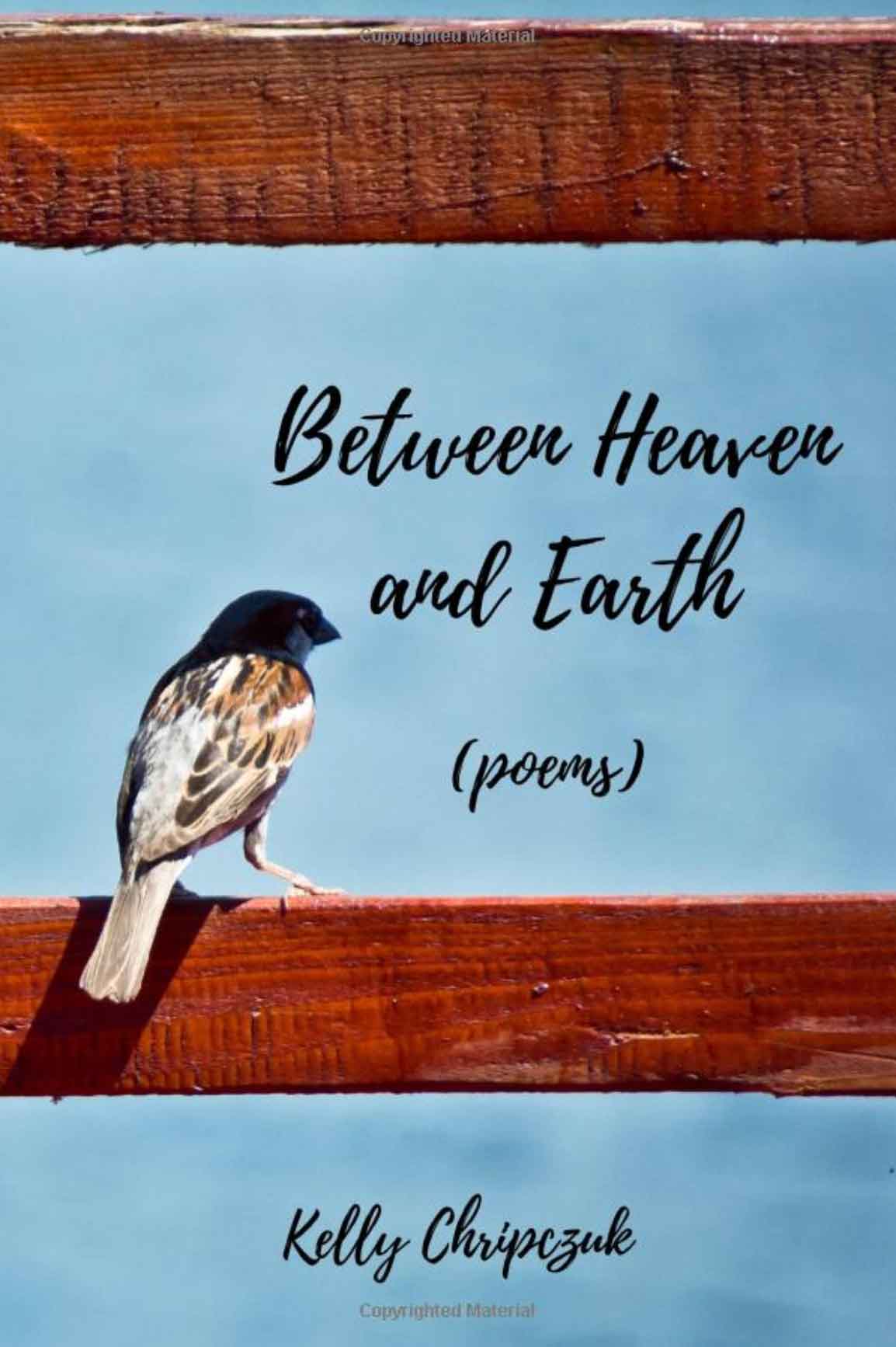
Between Heaven and Earth (poems)
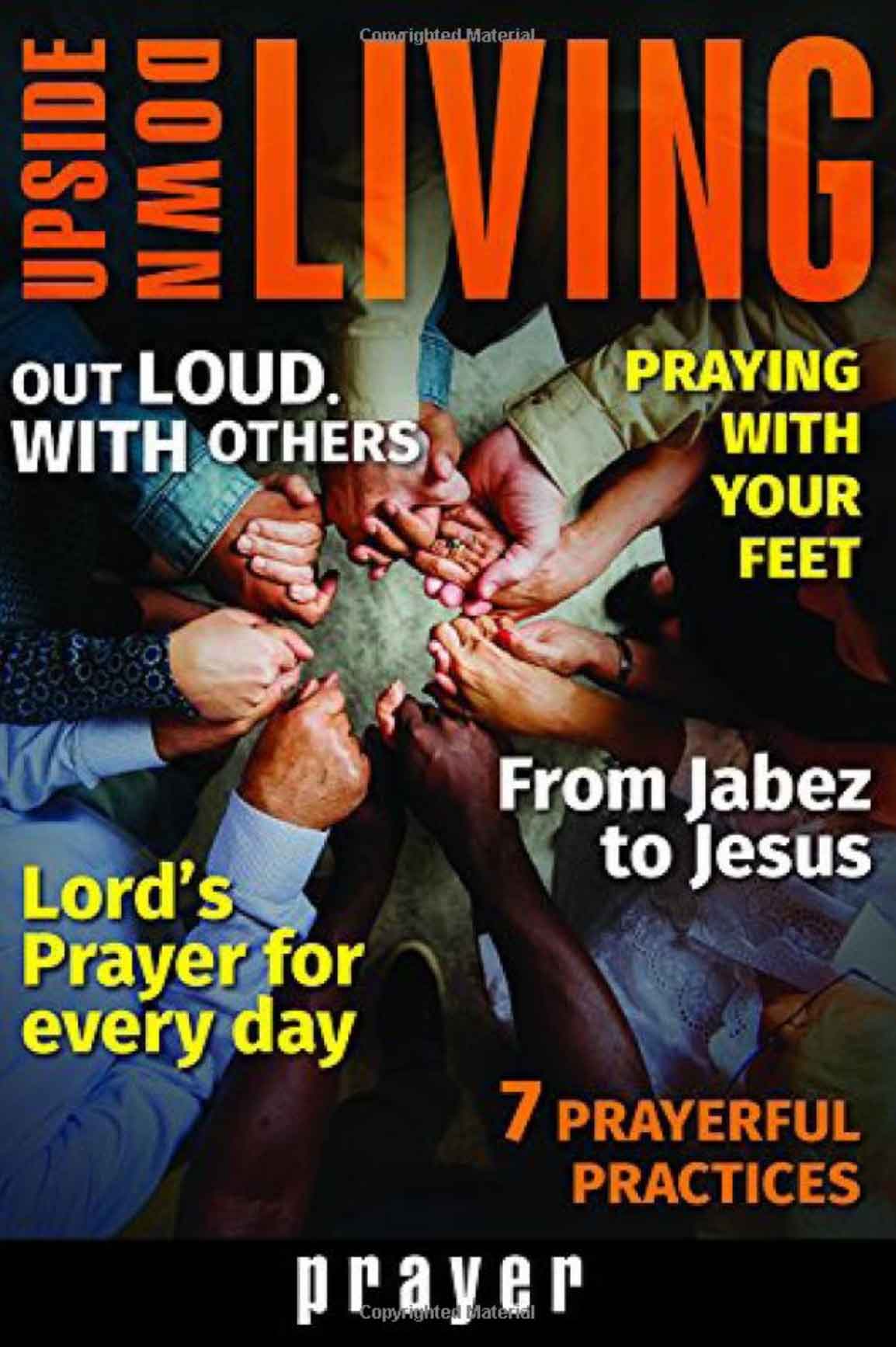
Prayer can easily become an afterthought, a hasty sentence, a laundry list of all the things we want. But what if prayer is a time to find out what God wants for us–and for our world? What does it mean to pray that the kingdom would come here and now as it is in heaven? Explore these questions in this study, and learn prayer practices that nurture intimacy with God and sensitivity to God’s dream for the world.

Follow this writer, spiritual director, and mother of four as she dives into the deep end of chicken farming and wrestles with the risks and rewards of living a life she loves. At turns hilarious, thoughtful, and always compassionate, Chicken Scratch will change the way you see the mess and chaos involved in living life to its fullest.

