
Essays
We Are In the Ninth Month and Groaning
We know that the whole creation has been groaning in labor pains until now; and not only the creation, but we ourselves, who
have the first fruits of the Spirit, groan inwardly while we wait . . . Romans 8:22-25
Anyone who’s been there knows how it is, trying to sleep in the third trimester of pregnancy.
Laying half upright, supported with an odd assortment of pillows, you drift off for a few moments or hours, only to be awakened by a pressing bladder. Returning to bed, you prop on one side, struggling to breathe and arranging the pillows once again.
But your hip is sore by now and, groaning, you launch yourself upright, faced with the question of how to roll over.
Through all of this, your soundly sleeping husband snores.
When I was pregnant with twins, we joked about installing one of those cranes they use for transporting large marine mammals in the bedroom ceiling to use for turning me in the night. Instead, I learned to use my husband’s back for leverage. Wrapping my arm around him, I shifted my bottom to the side and laid that giant belly gently down, emitting a weary groan with every movement.
We laughed about it during the day, but at night, I meant those groans with every ounce of breath I could muster and they helped me move, lifted me, and carried me through until the next time I woke to waddle to the toilet or ease another aching hip.
We had a pre-term labor scare at thirty-four weeks with the twins and from then on I was sure those babies were going to come early. This only made the waiting longer as we passed thirty-five, thirty-six, thirty-seven weeks. By the end, I could hardly walk more than a few steps at a time and I took to riding the motorized shopping carts on rare outings, my legs spread wide to leave room for that belly full of babies between my lap and the steering wheel.
I was desperate. I was done with waiting. I was groaning.
I don’t know about you, but this seems to be about the way I come into Advent each year – tired, weary and filled with longing as the long, dark days press in.
Maybe this is part of the reason I love the melancholy songs of Christmas best – the ones in minor key that beg for the coming of Emmanuel. Something in these songs, it seems, recognizes that underneath the shining lights and tinsel, the world itself, all of creation, is indeed groaning as it turns in the night, waiting for the gift that is to come.
This post is linked with Playdates With God.
What is Being Born (Nothing is Wasted)
Kneeling on the dirty living room rug, the twins swarm and climb on my back, my legs, my shoulders.
With focused determination I slowly piece together a ridiculously complicated floor puzzle. Over time a large smiling farmer perches happily atop a John Deere tractor. The man and the words, “John Deere” are easy, but the rest of the pieces – black and yellow tires and the plain green body cut in strange shapes and sizes – have me turning piece after piece in circles. I try and try for a fit as little hands and feet dislodge whole sections mere seconds after their completion.
It’s sheer chaos and the stress of focusing in the midst of it all rivals the near panic attack I have every time I try to put together our ridiculously complicated tree-house tent.
As a mother of young children, I’ve learned to focus like a ninja, because it’s the only way I can get anything done. There are always two or three people talking at me, no matter what I’m doing. Raising four children isn’t like walking and chewing gum at the same time, it’s more like walking and talking and building a miniature model of the International Space Station while humming a lullaby and taming wild shrews.
I am this mama on the floor doing the impossible day after day after day.
Kneeling there I feel the intensity of my focus, the intensity of this skill that’s being tested and forged every day and I wonder, what’s this capacity that’s being born in me, even here, even now?
* * *
Later in the week I sit typing at the computer, writing a sermon for the first time since the twins were born. I’ve preached in the years since their birth, but without manuscript, speaking from notes scribbled in colored crayon and marker on (I kid you not) pieces of paper towel scrounged from the bathroom at Panera.
My preaching style has relaxed, you could say, since my life exploded, but for some reason I’m sitting, typing, word for word, what I already know I want to say.
It’s a familiar passage, one I explored with my students every semester of every year I taught and I already know what God is asking me to do, but I’m scared.
What I believe is that I simply need to offer the passage and the people in it as a space where the congregation can enter in and encounter Christ, everyone receiving something different as we all gather together around the table of God’s word.
The passage tells the story of Jesus’ dinner at Simon the Pharisee’s house and, for years, I’ve had the idea of telling that story while setting a table. But setting a table as I speak, laying a table cloth, plates, napkins and cups, means no notes, no manuscript, just sheer presence as we all enter, together, into the meal.
I know that I know the story, but I’m worried about my ability to focus, to tend to so many things – the sermon, the spirit, the table – while speaking.
Then God stirs within me and I see myself kneeling on the floor with that ridiculously complicated puzzle in the middle of all of that Crazy and I hear my question anew even as I know the answer.
* * *
“What capacity is being born in me, even here, even now?”
Advent is a season that calls us to ponder, to wait and wonder, to listen for the stirrings of what new thing God might be doing in and through us.
God is always at work, preparing in us that which will be needed. All of
the moments of time that seem wasted – the detours, distractions, the
many, many pieces of the puzzle that simply seem not to fit – none of
these are without purpose, none without reason, none wasted.
My question was one born of frustration and curiosity, but to even ask the question, to wonder and wait for the answer to be revealed, is an act of faith. Because our inability to see or understand what God is doing, doesn’t mean that God isn’t actively bringing into being what’s most needed in us and in the world.
So let me ask you, as we enter the season of Advent together . . .
What capacity, what new thing, is being born in YOU, even here, even now?
Praying Mantises (for the Wonders of the World)
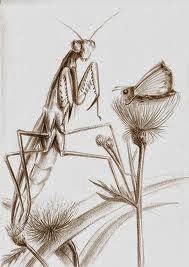
A few weeks before the snow started to fly my son found a large, brown Praying Mantis standing on the flecked and peeling paint of our back stairs.She was a good six to eight inches long.The kids captured her by walking her gently into a large see-through salad container.We stared at her, eye to eye, as she investigated captivity, her eyes and rotating head conveying keen awareness.
Later, the kids tell me, they fed her a pincher beetle.Grabbing it with both claws, she pulled off the head and tucked it away under her arm while eating the body. Finishing with the head, she saved the best for last.
They let her go to lay her eggs, to bestow one last gift upon the earth before surrendering the full weight of her being, giving-in to the dark winter’s night.
* * *
This past summer we stumbled across a Praying Mantis standing still in the middle of a spacious, green field of grass. Returning from a walk in the cool, dark woods, the six of us gathered round, casting shadows and the Praying Mantis tilted its head to meet our movements, watching us watch him.
Then we stepped too close and it rose, this large insect eight inches long rose straight up into the air like a helicopter. He was fifteen feet high in a matter of seconds and took off across the field to land some thirty feet away in a patch of wildflowers. Awestruck, we continued our way across the wide, open grass.
* * *
The Mantises are gone now, having fallen back to the earth like the leaves and grasses, the things too fragile for winter’s sharp turn. But I can see them still, the one that rose so suddenly, unhindered, like a prayer launched and the mother-bug plucking and tucking that tender morsel under arm. For these and so many other wonders of the natural world, I am thankful.
Growing New Leaves in Fall (We Are Practicing)
“…I can’t tell you how much I long
for you to enter this wide-open, spacious life…The smallness you feel
comes from within you. Your lives aren’t small, but you’re living them
in a small way. I’m speaking as plainly as I can and with great
affection. Open up your lives. Live openly and expansively!” ~II Corinthians 6:11-13, MSG
* * *
[Often, walking through the fields] I would see a man walking his four Kerry Blue
Terriers. These were amazing dogs. Bounding energy, elastic grace,
and electric speed, they coursed and leapt through open fields. It
was invigorating just to watch them. Three of the four dogs did this;
the fourth stayed behind and off to the side of its owner, and ran
in tight circles. I could never understand why it did this; it had
all the room in the world to leap and bound. One day I was bold enough
to ask the owner.
“Why does your dog do
that? Why does it run in circles instead of running with the others?”
He explained that before he had the dog, it had lived practically
all its life in a cage and could only exercise by running in
circles. For this dog, to run meant to run in tight circles. So
instead of bounding through open fields that surrounded it, it ran in
circles.”
This is a powerful metaphor of
the human condition. For indeed we are free …. but the memory of
the cage remains. And so we run in tight, little circles even while
immersed in open fields of grace and freedom’. – Martin Laird in
Into the Silent Land
* * *
“I’m not thankful for very many things,” he said.
Leaving my son’s room late one night – too late as always – I mentioned the Thanksgiving chain we had yet to start and my son said he didn’t want to do one this year. When I asked him why, he told me he just wasn’t very thankful and I replied, “Well, that’s why we need to do it.”
This is my boy who always wants More and who, every time he gets One Thing, notices the lack of Another. But he’s also the one who time and time again names that which I would rather keep hidden, whose voice so often puts into words the things we all feel, but dare not name.
You see, I’m in charge of the Thanksgiving chain at our house.
I’m the one who cuts long, thin strips of golden copier paper, who hunts down the stapler and markers, who remembers the way November sneaks up so quickly after the Mardi Gras madness of Halloween.
But there we were, seven, eight days in, paperless, stapler-less, thankless.
Leaving my son’s room that night I knew that if we weren’t giving thanks, it’s because I wasn’t feeling very thankful either.
* * *
The bible never talks about “feeling thankful” though, instead we’re told to “be thankful.”
There’s a discipline to gratitude, a discipline to opening this doorway to grace, to leaving behind the tight, familiar circles of our own making. Gratitude often doesn’t come easy, isn’t natural, especially in this life where we so often want and need More.
So we practice.
We bow our heads and pray it.
We write it, walk it, say it – out loud.
We practice opening this doorway to grace, precisely because it doesn’t come naturally.
And in the practicing our lives are changed, stretched, opened wide. The memory of the cage fades as we’re remade into something new, as we too learn the art and beauty of running, leaping, bounding through wide, open fields.
* * *
The next night, downstairs in the dim bare-bulb light of our dining room, I rolled out a long stretch of transparent contact paper. Taping it to the table to combat the curl, I told the kids to leave me alone, I was working on something, a surprise and they needed to wait.
Of course, this is exactly the kind of statement that sparks children’s curiosity and they swarmed as I cut and taped strange shapes all across the table top. Drawing with a brown permanent marker I made the outline of a sturdy winter tree, branches bare, reaching.
Piece by piece we lifted and carried that tree. Peeling the backing, we stuck it from the ground up, right onto the bare, white living room wall.
“What’s it for? What are you making? What are we going to DO with it?” they cried, circling me, leaping and bounding like puppies eager for a treat.
“We’re going to write the things we’re thankful for on leaves and put them on the tree,” I explained at last, cutting a few quick leaves from smaller pieces of contact paper.
Then I added, to my son who wasn’t very thankful, “Solomon, go get the permanent markers.”
If there’s one thing my son loves, it’s permanent markers. They’re the Holy Grail of craft supplies at our house. Standing on end in an old yogurt container on the kitchen counter, they’re off-limits, used only by permission. Second only to permanent markers on the craft supply hierarchy of a five year old boy, is contact paper. To be allowed to use both at the same time, to make and stick as many leaves as he wanted, was surely something to be thankful for.
Slowly, over the days and weeks, we’re watching that tree grow full and green with gratitude, while the trees outside drop wave after wave of leaves.
We’re growing new leaves in fall which, I guess is a little bit what gratitude is like, especially when it doesn’t come easy. The green buds and leaves of spring are no miracle, but these leaves, chosen in the face of winter, these leaves, surely, will give us shade in the days and weeks ahead.
We’re practicing gratitude together. Practicing opening these doorways to grace, practicing running and leaping, laughing and loving, in these open fields of grace.
This post is linked with Playdates with God.
The Little Birds That Leapt
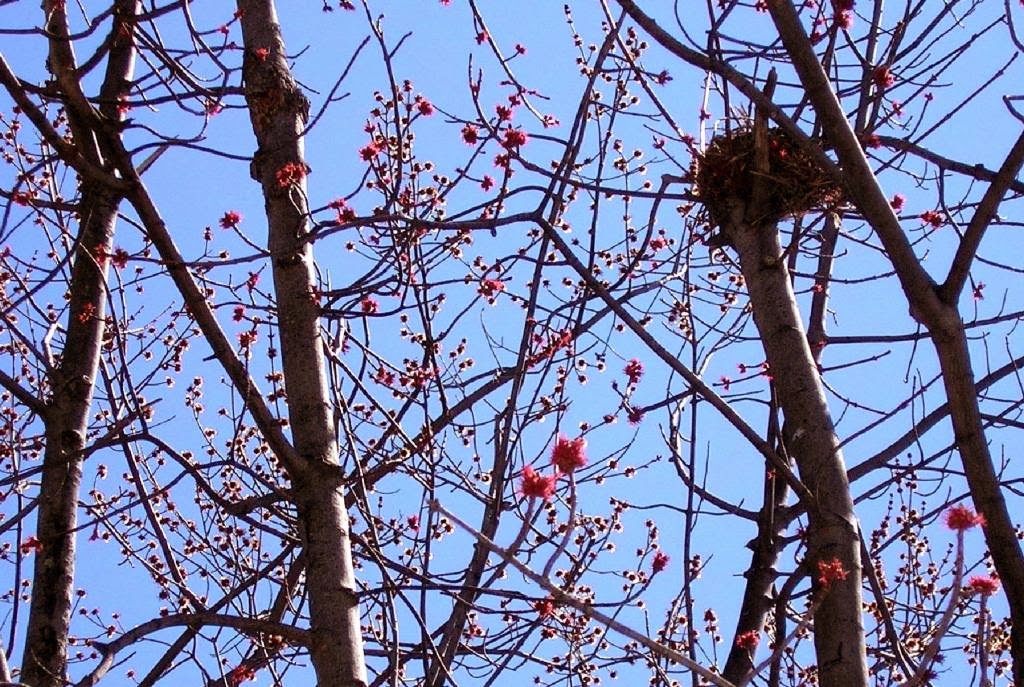
Driving by the old house at night
the windows glow on every side,
a warm golden yellow.
My eyes well up
with yearning for home
and I wonder,
do the little birds
that leapt so freely
from their nests
feel a pang of longing
days, even weeks later,
as they go winging by?
This post is linked with Lisa Jo and the Five Minute Friday crowd on the prompt “fly.” Click over to read more posts. To read more posts about our recent move, check out this link: Moving.
Yes to Every Moment In-Between
In the weeks
before closing on the sale of our house we packed truck-loads
full of everything deemed unnecessary and hauled them off to the basements of
two close friends. We didn’t know where
we would be living or for how long, so the climbing wall went and the wood
working tools, along with bin after bin of off-sized boys’ clothing.
Maybe it was
optimism that led me to send along a bag stuffed to overflowing with every hat, mitten and scarf we own.
Maybe it was denial. I was sure we’d be settled and our possessions re-gathered before snow started to fly.
But this
week, the temperatures turned. Flurries floated by, hurried bits of white, rushed along by the wind, eliciting gasps of excitment from children far and wide.
The
long-waning fall let go its dwindling grip on the world and I waited with
growing dread for the morning my son would ask for gloves before heading out
the door to school.
I drove
through the early darkness one evening, heading out of town to my friend’s house. Rooting through their basement I dug out the sought-after bag along with a pair of shoes, a binder
and a sermon I’d been hunting.
It feels, to
me, like another letting go, another surrender.
Yes, we’ll
be here for winter.
Yes, we’re
going to have to figure out a place to hang six coats or more.
Yes, we’ll
need to vacate a corner for a Christmas tree, here in this place where we never
planned to be.
Reading a
children’s bible with my son one morning, a short sentence giving instructions to Abraham and Sarah shimmered before me
the way a poem does, giving words to felt experience,
“But now you
must leave your house and live in a tent, ready to move on whenever I tell you
to.”
I’m not
blind to the hubris of comparing ourselves to Abraham and Sarah, but isn’t this
in a sense, what scripture asks us to do; to enter into our own adventure, our
own “wild dancing” with our untamed God, taking solace and courage in these
ancients who are at once both our guides and companions?
Reading
Barbara Brown Taylor’s chapter on the Practice of Getting Lost in An Altar in the World, her words stand
as a strange and much needed affirmation, an invitation to embrace, yet again,
the gifts of being lost and in-between,
I have decided to stop fighting the prospect
of getting lost and engage it as a spiritual practice instead . . . God does
some of God’s best work with people who are truly, seriously lost. Take Abraham and Sarah, for instance, the
first parents of the Hebrew people. The
bible gives no reason for God’s choice of Abraham and Sarah except their
willingness to get lost. By saying yes –
by consenting to get lost – they selected a family gene that would become
dominant in years to come.
Abraham said “yes” to God.
‘Yes,’ we’re saying, ‘yes.’
Yes to wandering and waiting,
yes to journey over destination,
and yes to every moment in-between.
This post is linked with Playdates with God.
The Kingdom of God is Like a Tree
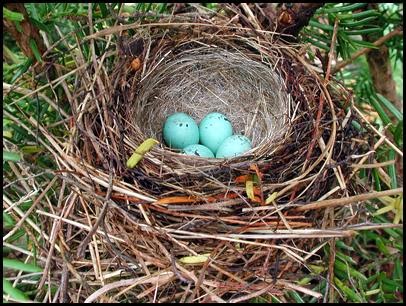
What is the kingdom of God like? And to what should I compare it? It is like a mustard seed that someone took and sowed in the garden; it grew and became a tree, and the birds of the air made nests in its branches. Luke 13:18-19
The large, brown seed sat in our cupboard for a good month or more. Sealed within a zip-loc bag, surrounded by moistened paper towels, it was my husband’s experiment, the result of a moment of possibility.
It seemed, at best, forgotten.
Then one day, after an Internet search for instructions, he planted it shallow in a white ceramic pot, watered it, and placed it on the window shelf.
Something maternal in me must have kicked in then, because I watered it faithfully along with my violets and ivies. I watered it too little, I watered it too much, and still, there it sat, half-buried, like a stone sleeping in the barren brown dirt.
I couldn’t tell you how long it took – weeks? months?
Watering, watching, waiting, forgetting to wait, while life stirred unnoticed within.
Then it split, cracked open down the middle and out curled a small green shoot, bent but rising, like a head bowed in prayer, now lifting.
The kingdom of God is like this, Jesus said, and then later also, “the kingdom of God is within you.”
So maybe we too are these seeds, these trees planted and growing, seen and unseen in the midst of a busy and barren world. We are watered, too much at times, or not, and the roots grow first, pressing down blindly like worms into the dirt.
Then comes the cracking open, the split right down the middle of our lives, that sends forth the shoot. And then it’s all hungry drinking in of light and water as we too are grown into trees and the birds of the air – those lonely, wandering, homesick birds – make their nests in our branches.
This post is linked with Five Minute Friday on the prompt “tree” although this did take a bit more than five minutes. Also linking with Imperfect Prose.
The Marooner’s Stone
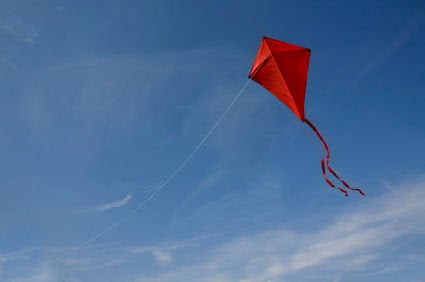
Wendy knew the story of Marooner’s Rock. It was named by evil captains
who abandoned sailors there. They would drown when the rising tide covered
them.
* * *
Soon after the dinghy was gone, two feeble cries drifted over the
lagoon. “Help! Help!” Peter and Wendy lay on top of the rock. Peter
was wounded, and Wendy was tired and weak. . . .
“We have to get off the rock,” Peter said. “The tide is
rising. Soon we will be covered.”
“I am too tired to swim or to fly,” Wendy said weakly.
“And I don’t have the strength to carry both of us,” Peter
moaned.
“Then we will drown,” Wendy said.
They put their hands over their eyes to shut out the horrible thought.
Something touched Peter’s cheek. He opened his eyes. A kite hovered over
the rock. Its lone tail had brushed Peter’s face. “Michael’s kite!”
Peter exclaimed. “He lost it the other day, but here it is!” He
pulled the kite toward him. “We shall use it to carry us home.”
–
from Peter Pan, by J.M. Barrie
It’s only Monday, but, already, I feel the water rising.
There’s too
little time, too little money, too little of me to go around and I’m stacking
sandbags in my mind, guarding against the scarcity of my own limitations.
There are days when it feels like I live on Marooners’ Rock, days when it
feels that the tide is constantly rising, slowly licking at the small space
I’ve secured.
But at least I’m in good company, because so many of us live this way, don’t
we?
Believing the lie of too little, we hold our breath, shrinking back from the
shrinking shore, moving from crisis to crisis as, surely, the water rises.
Like Peter and Wendy, we are tired, we are weak and many of us are wounded.
“We will drown,” I say with certainty as I seal the envelopes that
carry the checks to the electric company, the phone and natural gas.
“I am too tired,” I say as I climb the stairs again to face the
fussy child who will. not. sleep.
“I don’t have the strength to carry both of us,” I think, as I
look at the long and weary face of my tired husband whose head aches nearly
every night of the week.
Isn’t it illuminating that deliverance for Peter and Wendy comes not in the
form of increased strength or personal exertion, but rather in the playful and
gentle nudge of Michael’s kite?
Most often, when I grow weary of my self-imposed exile on Marooner’s Rock
and finally, at last, lay my head down in surrender, grace and deliverance
arrives disguised as the gentle voice of playfulness, the invitation to
imagination and creativity.
The more I tend playfulness through prayer and creativity, the more I’m able
to reject the lie of Marooner’s Rock. The truth is we’re not abandoned, we’re not alone, there’s always Someone waiting to carry us home.
Playfulness requires trust and surrender, a willingness to live openly and
unabashedly hopeful in the sheer goodness of the moment and it’s here that we
find deliverance, here that we find a wind strong enough, gentle enough to
carry us home.
Is there a practice of playfulness or creativity that helps you find your way home? I’d love to hear about it in the comments section . . .
This post is linked with Playdates With God.
Like Corn in the Night
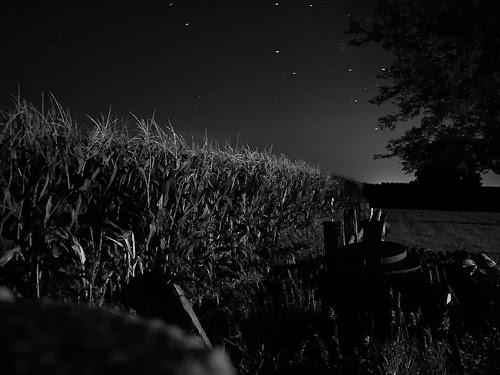
I grew in those
seasons like corn in the night . . . Henry David Thoreau
“At two, they’ve grown to half of their full height,” they
doctor tells us as our twin boys wriggle and squiggle through their annual
appointment. “It took them two years to
grow this much and it will take them the next sixteen years to finish
growing.”
In two years they grew like flowers blossoming in a high-speed video, unfurling, stretching out and up toward the light.
Lying in their cribs at night, they’re wrecked, passed out
cold in the strangest positions, half-covered, while stuffed animals and binkies flung into
the darkness lay scattered across the floor.
They sleep twelve hours a night and science
tells us that their growth is fueled in part by this surrender to the long, dark night.
* * *
The natural world is slipping into darkness now , the last
leaves are shaken from the trees with a stretch and a quavering yawn as life
continues, quieted, in the deep, dark, subterranean layers of the earth. Earlier and earlier every evening now, I walk
the perimeter of our house switching on the lamps that push back the
night. Strategically placed in every
corner, they stand tall and thin like toothpicks propping our eyelids
open. Outside the darkness grows, but
the bright yellow eyes of our windows glow because we believe there is more to
be done; we cannot rest, cannot embrace, willingly, the dark, still
silence.
Maybe we believe, as Parker Palmer suggests, that, “if we are
not making noise,. . . nothing good is happening and something must be dying”
(89). We have lost the sense of the value of darkness, lost an awareness that there may be good and important things
going on in it of which we are unaware.
* * *
The butterfly in its cocoon, the cicada asleep in the belly of the world, the child in the womb, all of these and more rely on darkness; in waiting and surrender they’re changed into what they will be. Isn’t it possible then that we too might grow in such a night?
Perhaps we too are only half of what we have yet to become and so let us go, peacefully to our rest, while the great God who spun the night across the wide expanse of the sky, like silk, and who whirled the stars out wide in their orbits, works quietly within us to bring all things into completion.
This post is linked with Imperfect Prose and #TellHisStory.
Putting Things in Things
When my husband and I were first married we had a microwave that we kept in a cupboard in our kitchen. It was a hefty old thing, brown and beige, with a large brown knob you turned to set the time. It must have a weighed a good twenty pounds and was a big as a medium sized TV. We kept it in the cupboard under the place on the counter where we used it and whoever pulled it out and plugged it in was responsible also for putting it back away.
Once in awhile one of us would ask the other, “Who left the microwave out?”
* * *
At that same apartment that we had a cat who played happily with rubberbands before carrying them off and depositing them ceremoniously into the toilet. String too, she loved, and grabbing a strand of my crocheting, she would run off to the bathroom, unwinding things as she went, dragging out a good twenty feet of yarn before she reached her destination. Following the trail through the house we would find the end dangling, dripping, over the toilet seat.
Once, when we accidentally left some Thanksgiving leftovers on the counter over night, the cat came along and found the zip-lock bag full of Turkey. She must have played with and chewed on the bag for a good while before tossing it too into the toilet, where we found it floating the following morning.
The biggest problem with that cat, though, was that she loved to pee on the carpet and in the shower. I wish she would’ve put that too in the toilet.
* * *
Later, a good ten years into our marriage, when we finally acquired a TV, we kept it in the attic and took it out on weekends or evenings for watching movies. Back then we would watch two movies back-to-back before lugging the thing back upstairs to the attic crawl space. Lugging it awkwardly up and down the stairs, my husband dropped it one time, breaking a large plastic piece off of the corner, but it still worked.
We thought that by making TV inconvenient we would watch less, turns out we were just inconvenienced more often.
* * *
Where we now live, we have three refrigerators. One is ours that we brought from the house we sold and the second is actually an upright deep freezer that we couldn’t get to fit down the basement stairs. The third is the fridge that came with the apartment. All three stand clustered together in the kitchen.
We have a lot of room for art work, which is good, because we have a lot of kids.
We kept the one unplugged and since our apartment lacks storage, I started storing things in the freezer – mostly paper goods and 2 lb cans of coffee.
Since then, my husband brewed beer and plugged in the third refrigerator for storing his kegerator.
So now our napkins and plates are nicely chilled.
* * *
My husband took this picture over the weekend.
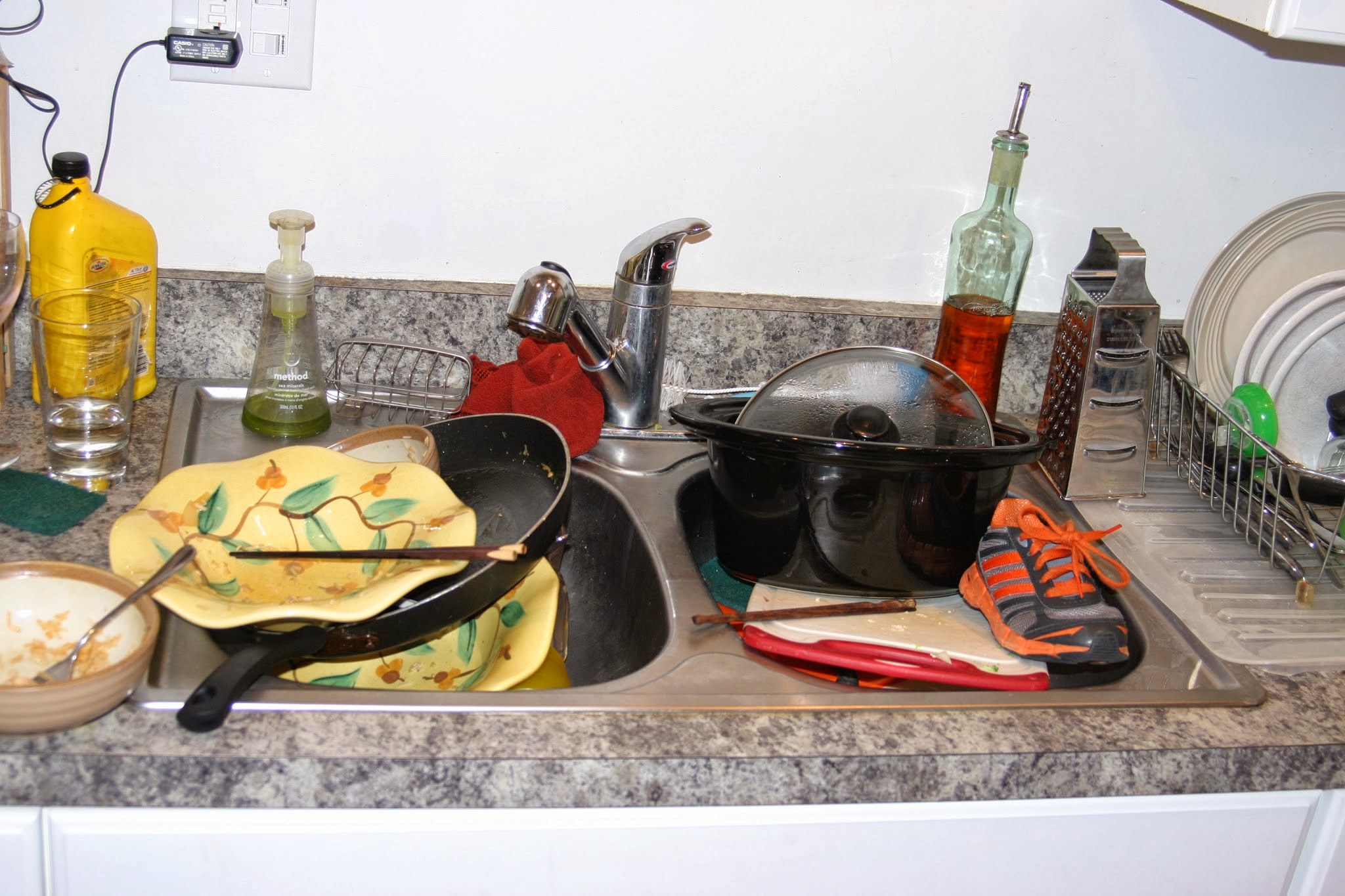
Yes, that’s a sneaker in the sink. (questions about the quart of oil next to the sink should be directed at my husband)
* * *
This morning the twins played quietly upstairs for quite awhile while I cooked up chicken and sausage to store in the freezer. Their quiet made me nervously grateful and finally I decided it was time to check-in on what they were doing. This is what I found:
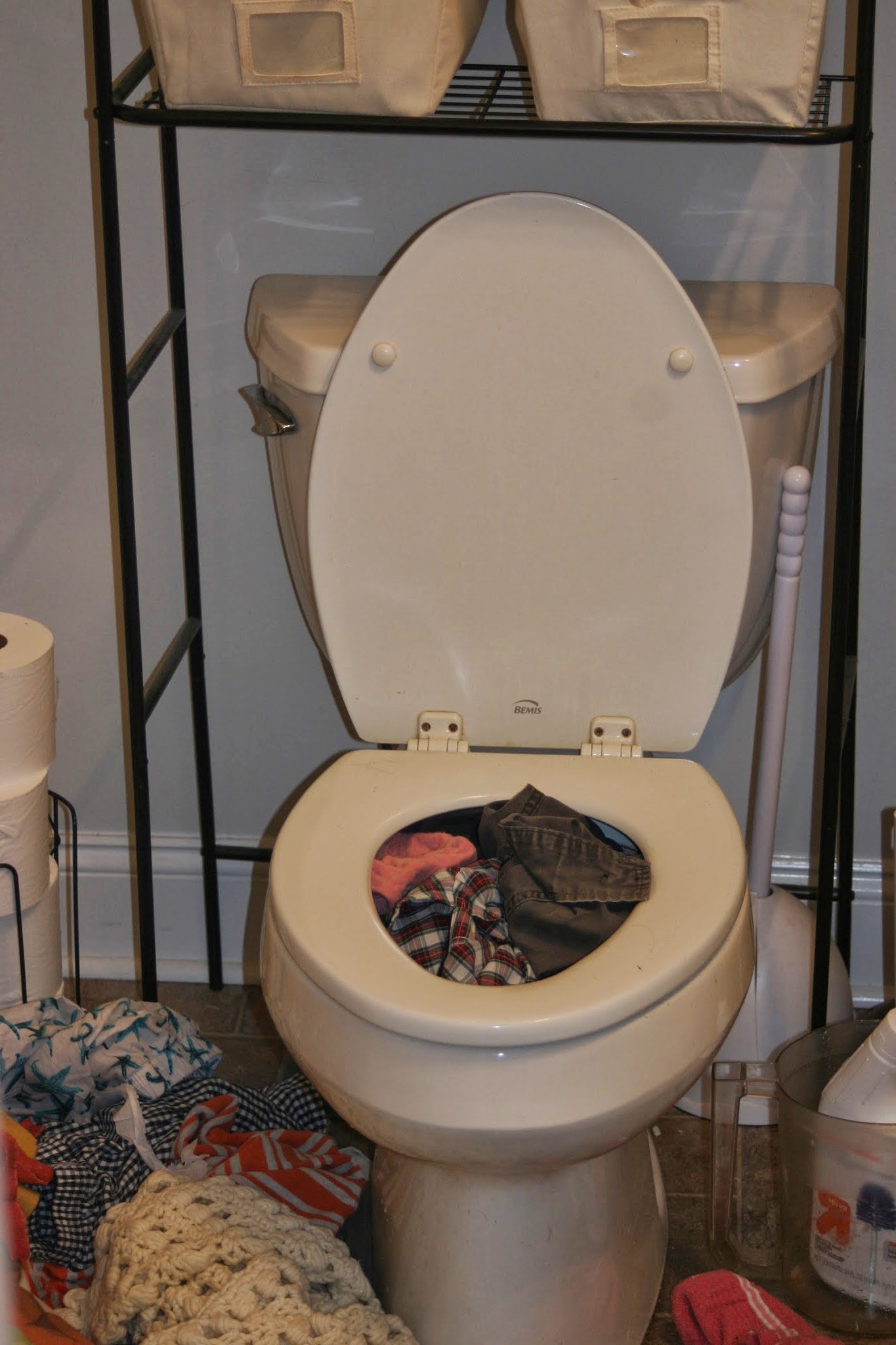
They took the pile of laundry from the bathroom floor and stuffed it all into the toilet adding, also, the blankets from Levi’s crib.
* * *
A microwave in a cupboard.
String and rubberbands in the toilet.
A TV in the attic.
Paper plates in the freezer.
A shoe in the sink.
Laundry in the toilet.
Putting Things in Things.
* * *
That is all.
The Golden Tree

Near the park a block or so
from our house, it stands – a golden tree,
its black spine and branches posing a stark contrast to the bright blue sky,
the shimmering yellow cascade.
Walking to pick-up my children
from school one day, I pass under and look up – Glory! and down to the blanket
of orange and yellow, covering the sidewalk.
I wade through with the stroller splitting the sea like Moses and when I
pass by on the way home, four kids in tow, I tell them, “Wait until you see,
the place with The Most Leaves.”
They’re doubtful, teasing,
until they see it.
Then the older two are off and
running and the twins slip out of the double stroller like two slippery fish
returning to the sea. Soon they’re all
splashing and diving, throwing up handfuls, gathering piles with rakes
improvised from sticks.
And I am standing there,
wishing for a camera to capture it all.
But these leaves are grace,
spread deep over the sidewalk and curb, laying light on the ground, like manna. I resist the urge to gather up more than can be stored and instead join in on
the fun, the beauty, surrendering to the ocean of grace at our feet, the shimmering gold of the grace-filled present.
This post is linked with Five Minute Friday on the prompt “grace.” Click over to read more posts.
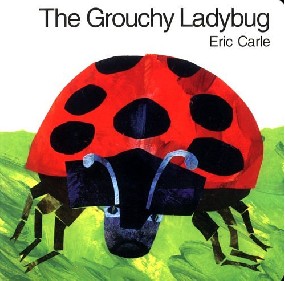
The Grouchy Ladybug (I Died a Hundred Deaths Last Halloween)
(This post originally appeared here last Halloween. It’s one of my favorites, so I thought I’d run it again this year. Enjoy!)
It’s rainy and cold and we’re all keyed up and worn out from being trapped indoors for two days by Hurricane Sandy.I wake up, too late, and squeeze in a shower while my one-year-old twins, still in dirty diapers from the night before, wander around the living room. Their whining amplifies to full pitch as my shower cues them in to the possibility that I’ll be (gasp!) leaving for the morning.The preemptive separation anxiety continues through breakfast and packing everyone into the van to take my oldest to school.
After drop off I cart the remaining three kids back into the house. We mull around, waiting anxiously for the babysitter who’ll be staying with the twins while the four year old and I head to his preschool’s Halloween party at a local nursing home. I have been dreading this event ever since the October calendar came home.
The twins seem to relax and almost simultaneously my son’s anxiety about the party rises. Peppering me with questions, he asks,
“Will there be people from the nursing home in the party?”
“Um, I’m not sure, honey.”
“Will they see me in my costume?”
“Yes.”
“Are you going to dress up?”
“No”
“I don’t want to wear a costume.”
I’ve been “against” this party from day one and I know that my son, so robust and cheerful at home, will be shy and clingy in a new place. So like a Good Mother I plan to accompany him, despite my own teeth-clenching, foot-dragging antagonism toward it all.
“Solomon,” I say, “what if I wear a costume too?”I emerge from the back room wearing the fuzzy black antennae from my daughter’s ladybug costume.
“Ok,” he says, brightening, “you can be a black beetle.”
Then, I can feel myself giving in, letting go a little more as the idea strikes and I say, “What if I’m a ladybug?I can steal Sophia’s costume.”
He approves and I have just enough time to gather the red and black-dotted wings and my camera before the babysitter arrives and the oldest twin dissolves into a raging stream of tears.I run in circles grabbing things, carrying the littlest one and nearly run out the door with him, before the sitter stops me and grabs him saying, “This one’s staying.”
Then we’re off to a party I don’t want to go to, but also don’t want my son to miss.We drive through the rain and find his friends in a large room coloring at a table while elderly people in wheelchairs sit in a wide circle around them. The residents watch, their eyes hungrily absorbing the beauty and innocence, the luxury of so much youth in one small space.
My son is clingy, shy and tired, overwhelmed it seems, by the noise, the crafts, the games.
I do my best to get into the spirit of things.
I help with glue and tear bits of tissue paper, I assure a fretful child that it doesn’t matter where he puts the eyes on his pumpkin.I laugh with the other Moms over the resident who rides in on a wheelchair, pretending to scare the kids with a mask, all the while giving a growing peep show as his robe slides further and further open. I take a smiling picture with my son, a little Iron Man snuggled up on a ladybug’s lap.
By the time we get home, though, I’m over-stimulated and frustrated at my inability to love Halloween, to love loud parties and candy.The twins are exhausted and hungry when we walk in and they’re drawn to me like magnets, pressing their tiny bodies onto me in desperation.It’s all I can do to untangle myself, causing more tears and desperation, as I head to the kitchen to make lunch.Solomon is sorting and dumping candy, dancing and singing and blowing the whistle from his party bag and the twins are screaming in their highchairs, desperate to make it clear how deeply my absence has wronged them.
Then I’m yelling, “Stop it” as I throw an apple-peel all the way across the kitchen. It bounces off of one twin and they both sit staring, shocked into silence and my son, that sweet four year old boy, offers to play his whistle to settle them down.
* * *
There are days when being a mother feels like dying a hundred tiny deaths.A hundred letting-gos, a thousand surrenders to more noise, more movement, more demands than I feel capable of handling. I’m not complaining, I simply want to be honest about the stretch of motherhood and how quickly, how fiercely, I shrink back from it.
I died a hundred little deaths this morning and will surely die a hundred more before nightfall on this, the day of the dead.But I know, thank God, that this dying, this surrender, makes me new again.I may die a hundred times a day, but I’m just as often made new, reborn in the face of a chubby, gap-toothed grin, a gentle hand seeking mine for reassurance. Just today I was resurrected by the voice of my son calling cheerfully from the back of the van as we made our way home, “I can’t wait to be old so I can go to the nursing home to live.”
* * *
Later in the day as I’m making chili for friends who’re coming to trick-or-treat with us and the twins again stand whining at the gate that divides them from me, my Dad calls. He wants me to know that my maternal grandmother has died in the nursing home where she’s lived for years now in North Carolina.
As I stand over the stove, stirring the chili, I find myself surprisingly grateful.
Grateful that, though I couldn’t be there with her, I was here, at a nursing home with my son, the very same morning. I think of my Grandmother’s life and the many little and big deaths she endured. I think of the ways I get so focused on what I’m giving up, that I nearly miss what I have right here, right now in front of me. It occurs to me that I live such a grace-filled life, full of opportunities for surrender, continually pressing me toward the edge.
* * *
The chili’s done, waiting in a pot on the stove and everyone’s home. I sit in the living room during the brief lull before company and costumes and the poor older twin, who just can’t pull himself together, sits crying on the floor.
I scoop him up in my arms, settle in the rocker and watch as he drifts into a heavy sleep. I love the moment, the rocking, the slow, calm hum of a sleeping child.
He stirs briefly and lifts his head, looking around in confusion before throwing up all over both of us. Then he leans forward, laying his head back on my chest with that pile of warm, smelly goo laying like a layer of glue between us. I died and rose again in that moment, hugging him tight until my husband came to help us both get cleaned up.
* * *
Every day of the dead, every Halloween, gives way to all saints day and I wonder if we too, dying in our little and big ways, aren’t also being moved, continually, from death to new life. This dying is a surrender, a stripping bare by letting-go until all that remains is love.
Searching for Home

I sat in the front seat of the van as it rocked and vibrated with the energy of four children who WAITED for a full twenty minutes or more as their Dad and I took turns touring a dingy apartment. Running through the rental with speed, all I remembered afterwards was the Dark and the Dirty and the teenage girl who huddled apologetically with two small dogs on the back porch.
I watched from the van as my husband, the gentle, slow negotiator stood talking with the landlord. The apartment was too much money and, in the long run, we couldn’t get a month-to-month lease.
We visited a second place, also dark and dirty, and stood talking with the owners while the twins clung to us, caught up in the anxiety of a New Strange Place. We were pitiful, all but pleading. We carried those boys through a damp and moldy basement, past a man who spoke no English and sat alone on a bed in one room. Then we stood in the kitchen making nervous small-talk, patting the damp sweaty heads of our sons, while we waited for the owner to tell us whether we could do a month-to-month lease.
The storm clouds that had gathered all afternoon broke on the way home and we four ran through a driving rain into the house we would soon leave. We were discouraged, disappointed. With only a few weeks until closing, we had no where to live.
Our realtor gave us a key to an apartment he owned and my husband and I walked through by ourselves, tentatively, not expecting much. And it wasn’t much, but it was better than what we’d seen, so we took it, but still, we had to tell the kids. There was no new house, just an apartment with a tiny yard and no swing set.
I worried what they would think, would they be disappointed?
I knew what I thought, I was disappointed.
* * *
A week later, on a Friday, we took the kids to see “the new place.” We warned them about the yard, we worried they’d think it was Strange and Lonely.
But when we opened the dingy old door, the kids poured in like sunlight though stained glass windows, filling the house with a rainbow of noise, laughter and excitement. Light and loud, they floated through the house like bubbles blown off the soapy tip of the wand on a windy day and it was then that I saw, I felt, I knew.
Home is – will always be – where these ones are. And though we’re hunting still for a better nest, what matters now is this home that lives and moves and breaths around us, this home made of hearts, hands, and dirty feet.
We try to get the whole family dancing to this song as often as possible. Check it out.
This post is linked with Playdates With God.
A Story With Dragons In It
He walks out from behind the tall stacks in the children’s library, holding each book like an offering. His brown eyes turn up to meet mine, searching for a verdict.
“Can we get this one?” he asks.
Somehow, despite being unable to read, he finds them tucked in among hundreds or thousands of books, the ones filled with dragons and swords, monsters and pirates. He pulls them randomly from the shelves, chapter books two or three inches thick and I receive each request with dread.
As resident bibliophile, I’m also the literary gatekeeper at our house and somehow the job seems so much more difficult, so much more complicated when it comes to my five-year-old son. He wants to read about adventure and conflict and I am worried about violence and magic and things beyond his understanding. I don’t want to shame his natural curiosity, but I want to be careful too.
He holds up a thick burgundy book with a heavily embossed cover. A fire-breathing dragon flies menacingly over a mountainous village. The title, “Dragonology: The Complete Book of Dragons” is scrolled in medieval script beneath the dragon’s wings. There are gem stones embedded in the cover and each page is filled with elaborate illustrations of maps, dragon lore, and even a detailed dragon “life cycle.” The well-made pages look aged and weathered and there are pull-out booklets filled with secret writing and spells.
I look at the book and I look at my son.
I see his longing and curiosity, he will absorb this book like a sponge.
“Yes,” I say, “we can get it.”
He responds immediately, roping his sister into reading aloud right there in the library.
During the two week borrowing window, he pours over the pictures and we print page after page of dragon coloring pages from the internet for him to color. He practices drawing dragons of every shape and size. My husband and I discuss the book and the difficulty of choosing boys’ toys and books that are interesting but wholesome. We consider the fact that we both loved “The Hobbit,” which centers around a quest to slay a dragon and wonder whether it’s too early to introduce the “Chronicles of Narnia.”
Mostly I wonder if I should have said no, if other parents, more Christian ones perhaps, would’ve said no. I think about the fact that my yes came from a desire to bless, not the dragons and spells, but the curiosity and hunger for adventure the dwells so naturally within each of my boys.
Then, one Sunday at church, the older kids sit drawing while the adults sing and I look down to see my son drawing the outlines of dragons on his plain white paper. I wonder what the people around us will think; I wonder what I would think if it was someone else’s son.
Pushing my worries aside I sing and pray. Looking down I catch him watching the man to my right who’s singing with gusto. His open face absorbs the man’s singing in the same way he absorbed the dragon book, then he bows his head again to his drawing.
When the singing stops I sit and he eagerly pushes his paper toward me.
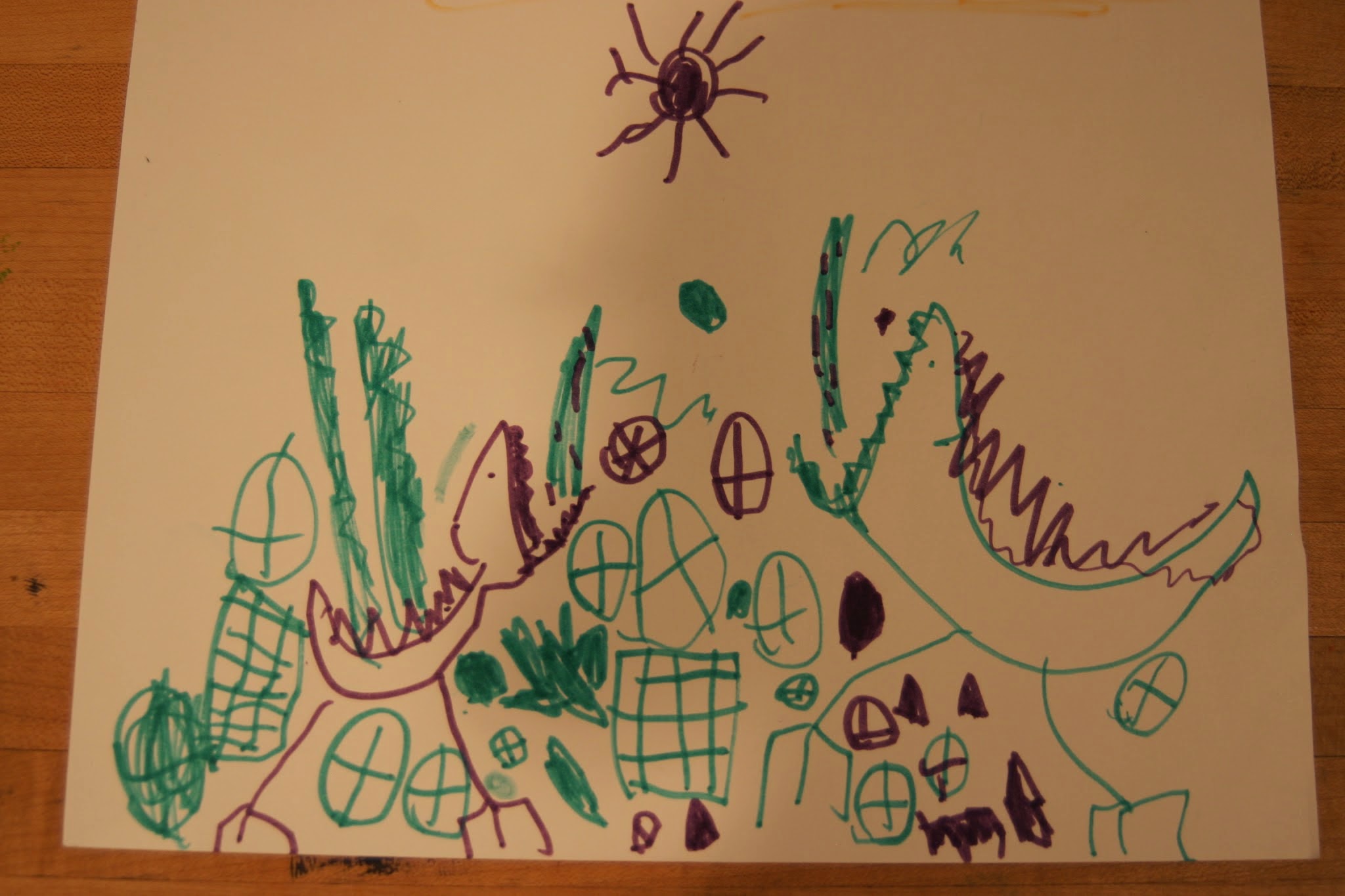
There are two dragons, one on each side of the page. They stand with their heads raised to the sky, toothy mouths gaping as fire pours out and up. One boasts a pair of jagged wings and both are covered in scales, surrounded by piles of jewels.
“Are they dragons,” I ask, “and are these their gems?”
“Yes,” he says with pride, “They’re singing their songs to God and giving him their gems.”
* * *
We watch and wait and worry our way through parenting, like poorly trained refs working a Championship Game. Convinced that every call we make matters in some way, we wait and wonder how it will all add up.
In her book, The Cloister Walk, Kathleen Norris, a poet, describes the book of Revelation as “A Story With Dragons in It” and says the following,
“Dragons within, dragons without. Evil so pervasive that only the
poetry of apocalypse can imagine its defeat. And to do that it takes us to the
limits of metaphor, of human sense, the limits of imagining and understanding.
It pushes us against all our boundaries and suggests that the end of our
control–our ideologies our plans, our competence, our expertise, our
professionalism, our power–is the beginning of God’s reign. It asks us to
believe that only the good remains, at the end, and directs us toward carefully
tending it here and now. We will sing a new song. Singing and praise will be all
that remains. As a poet, that’s a vision, and I promise, I can live
with.” (emphasis mine)
In Norris’ words, apocalypse sounds a lot like parenting to me – a challenge so extreme that it pushes us beyond all knowing to a place of trust. Trusting and tending, we nurture the good and bless it and in so doing, we write the song across our hearts, across our lives that we will all one day sing.
And, who knows, maybe the dragons will be singing too.
This post is linked with Jennifer Dukes Lee and Imperfect Prose.
The Laundromat (and Self-Pity)

The only condition necessary for this state of self-surrender is the present moment in which the soul, light as a feather, fluid as water, innocent as a child, responds to every movement of grace like a floating balloon. – Jean Pierre de Caussade in The Sacrament of the Present Moment
I stood in the sunny back room squeezing soapy water out of the final load while flies buzzed in lazy circles. The washing machine was dead, so I wrung the legs of my husband’s jeans until my hands burned from the soap running out, then sent at text to my husband to tell the landlord.
Laundry never stops for a family of six, so while we waited for the repair man to pronounce it dead and the landlord made up his mind about replacing it, the piles and baskets crept slowly higher until finally, I was forced to take matters into my own hands.
I lugged two baskets, “pressed down, shaken together and overflowing,” out to the van and filled my pockets with quarters from the change jar. I remembered the laundry detergent (miracle!), my journal, and a copy of The Sacrament of the Present Moment, by Jean Pierre de Caussade.
It was a beautiful day, sunny, bright and cool after summer’s last stretch of heat and nap time to boot and as I drove off with a van filled with enough dirty clothes to clothe a small army, the temptation to self-pity welled up within me.
The laundromat sits in the middle, two blocks from the house we sold and two blocks from the apartment we’re renting and though I’ve passed it a thousand times driving and walking, I’ve only been in it once.
I pulled up and parked, popping the trunk and made two trips hauling everything in through doors that stood propped open. A mild breeze mingled with the smell of fresh, clean laundry and everything hummed with the steady breath of washers and driers. I tested my knowledge and technical skills to get the machines running, then settled at a wide low table that stretched across an enormous window at the front of the shop.
The view was beautiful – crisp fall perfection framed by bright leafy trees that spread out before me, wide and expansive. It was heavenly and I relished the silence, with my journal and reading laid open, cast in autumn’s natural glow.
I tried to take a picture, I texted my husband, “I found my new office,” and I settled down to dine on a moment of unexpected delight.
Self-pity can be a pleasure, a pleasing meal for the unhappy heart, but it requires a condemnation of the present moment. This almost always cuts us off from the possibility of finding pleasure, joy and gift in places unexpected. By absenting ourselves from the present, we absent ourselves also from God’s presence there.
I turned my heart on purpose that day, away from desire for what wasn’t and into the moment that was. Or rather, I should say, the tug of that blue sky and spacious window filled with the low hum of silence, turned it for me. Looking into what was, my heart was tuned to the “movement of grace” and lifted along “light as a feather, fluid as water, innocent as a child . . . like a floating balloon.”
This post is linked with Playdates With God.
Laundry (Folding Prayers)
“So, how do you pray right now?” she asks, “Mostly prayers on the fly?”
“Yes,” I say, thankful to hear that my repetitive refrains of “please, please, please” count for something.
“Laundry can be a time for prayer,” she offers, “holding each person in prayer as you fold their clothes.”
It’s not a new idea and based on the basket-fulls at our house, has the real possibility of moving me toward sainthood.
“I’ve heard of that,” I say. Then I add, “When I fold the kids’ clothes, I think of them and I can feel my compassion for them welling up inside of me. I feel like that’s something like prayer, do you think so?”
“Yes,” she says, “that is prayer.”
This post is linked with Five Minute Friday. Click over to read most posts on the prompt “laundry.”
Hopes Deferred (a Prayer)

God of the summer rain,
send us each
a moment
of shaking laughter or tears
to crack open
the dry, barren land
of our hopes deferred.
This post is linked with dVerse Poet’s Pub.
Life is a Field (this is not a Detour)
Out beyond ideas of wrongdoing and rightdoing
(or wrong turns and right turns),
there is a field. I’ll meet you there.
-Rumi
* * *
If life’s a highway, then I’m in trouble.
I felt good when I turned 30, knowing I had checked off enough boxes on my
to-do list. I was trucking right along.
But then things changed, life started taking strange turns.
I forgot where I was headed and why. I started to notice little things on the side
of the road, signs pointing in different directions.
I had children . . .
and then more children.
We filled a sedan and then moved on to a van (it’s full now too).
* * *
When I was in graduate school I had the definitive sensation that life was a
race (an academic one to be sure, no sweating involved). Success demanded that
we perform like those inconceivably tall, thin runners who win Olympic medals –
stripped down to a tiny pair of running shorts and the lightest of shoes,
pressing on toward the prize, forsaking all else.
I was good at running that race, it came naturally to me and the rush of
running, of living like that, was amazing. It was like a drug.
We lived just outside of Princeton, within a block of Rt. 1, a major
four-lane highway with cars rushing endlessly in both directions. But when we headed West on Route 1, away from Princeton and onto the PA
turnpike, traffic slowly began to lighten. The view along the side of the
road changed from gas stations and box stores to woods and open fields.
Sometimes there were deer grazing and, if we looked closely, we might see a cat
out hunting or a hawk resting in a tree.
Driving along a change would come over me as the space around me opened up.
I could see the horizon in the distance and seeing it, knowing it was there, I
found myself less compelled to rush endlessly after it.
* * *
The college I attended had a trail that ran through the woods with paths branching
off to a creek and an old farm field. There was a tree in the middle of the
field, as there often are, where farmers used to tie their horses to stop and
rest at mid-day or enjoy a picnic lunch.
I used to go lie in that field on a blanket beneath the sun and breeze.
When you lie down in the middle of a field time and space open up around
you. There’s no highway, there’s only the present – weeds and flowers, bugs and
air, sun and sky – and you are small and in the middle of it all and it’s not a
bad feeling.
There’s no one path through the middle of a field that’s lain fallow for a
long time. There are many paths. Some made by deer or mice. Places where the
grass is pressed down for resting or the earth is dug up for a home or hideout.
There’s no end and no beginning, there are many sides; no from and toward, only
here and not here.
This isn’t to say there’s nowhere to go, only that the pressure to go or
stay disappears and exploring the field becomes a joy rather than a chore to be
checked off of the eternal to-do list.
Let me tell you something else – I have found God in that field.
Now don’t get me wrong, he’s in the highways too, traveling with you in your
car or van, but I most often find God in the fields.
He likes to hang out there on off days. I’ve seen him sprawled out on
a blanket with a book in hand or just staring at the sky (God’s especially fond
of looking for pictures in the clouds). Or sometimes flying a kite, enjoying
the tug and pull of the string as the kite swoops and glides.
* * *
Man, I keep thinking about that field more and more these days.
I don’t live by the highway anymore, just on a small side street in a
semi-quiet town. I’m trying to let myself believe my life isn’t a highway.
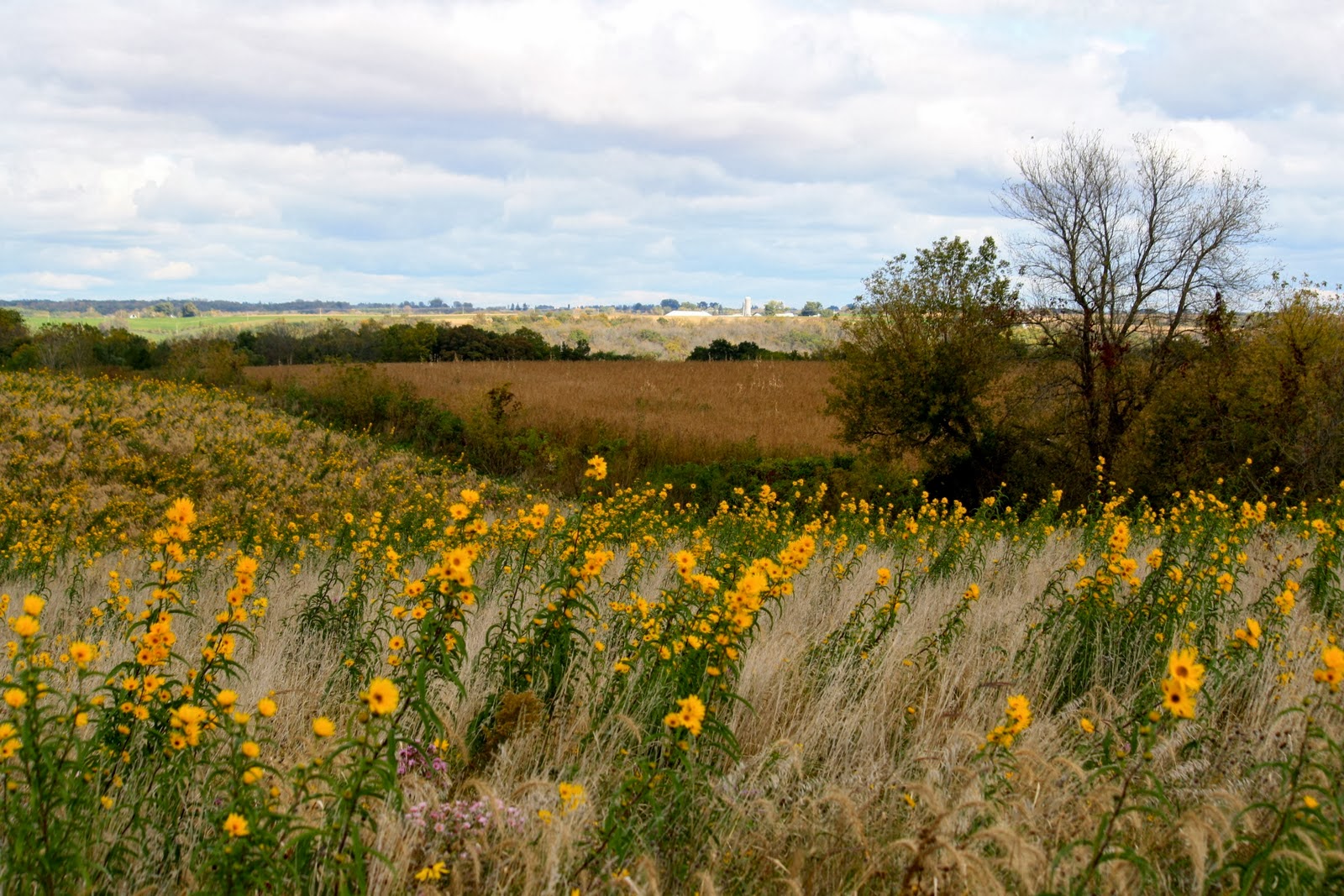
Maybe it’s a field.
Maybe all of the blessings that keep cropping up in my life, the ones that
don’t fit into the plan and seem like distractions, are like wild flowers
popping up scattered in a field.
I’m starting to believe it.
Maybe there’s nowhere else I have to be.
If you feel the need to keep on trucking, Godspeed and traveling mercies to
you, but if you get tired and need a break, don’t forget about this field – I’ll be here.
There’s plenty of room, feel free to pull over and rest for awhile.
This post is linked with Playdates With God and #ConcreteWords.
Ordinary (Five Minute Friday)
To see the world in a grain of sand,
and to see heaven in a wild flower,
hold infinity in the palm of your hands,
and eternity in an hour.
William Blake
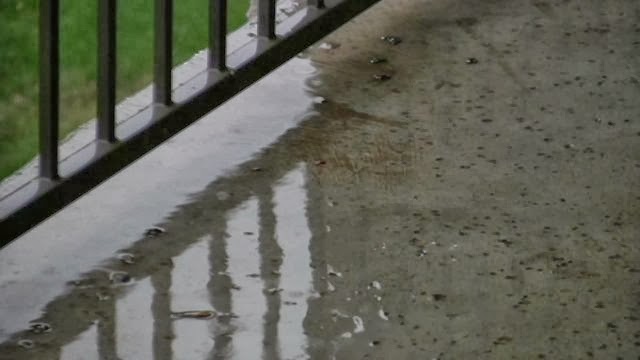
The whole world is dripping, gray, water running through the streets and pooling in the Quick Stop parking lot.
In this light, the apartment walls are dingy, ashen, crisscrossed with shadows.
And, everywhere, piles, so that it seems as though the stuff in our house is pooling together like the puddles outside.
The twins put noodles down the vent, noodles from a box they scrounged from the pantry and tore open like the little wild things they are. Laying on their bellies, peering through the grate that leads to the basement below, they’re pleased and excited to recall where the noodles have gone.
“Hot-hot,” they exclaim, “Noodles!”
Everything, to them, is an exclamation point. Everything extraordinary – the sun, the clouds, the rain, the discovery of a shadow moving as they do.
All the world a miracle, the finite infused with the infinite and to us, they are the miracle, these little beings whose minds see no clear divide between the ordinary and extraordinary.
All our lives are spent seeking an awakening, a return to that same unity of vision.
This post is linked with Five Minute Friday. Click over to read more posts on the prompt “Ordinary.”
Conversion (A Poem)

The way a snowflake melts
into a river,
this is one way to explain it;
the way everything is changed
and yet what was remains,
now part of something more.
This post is linked with dVerse Poets Pub.
Photo credit: HERE.
Books
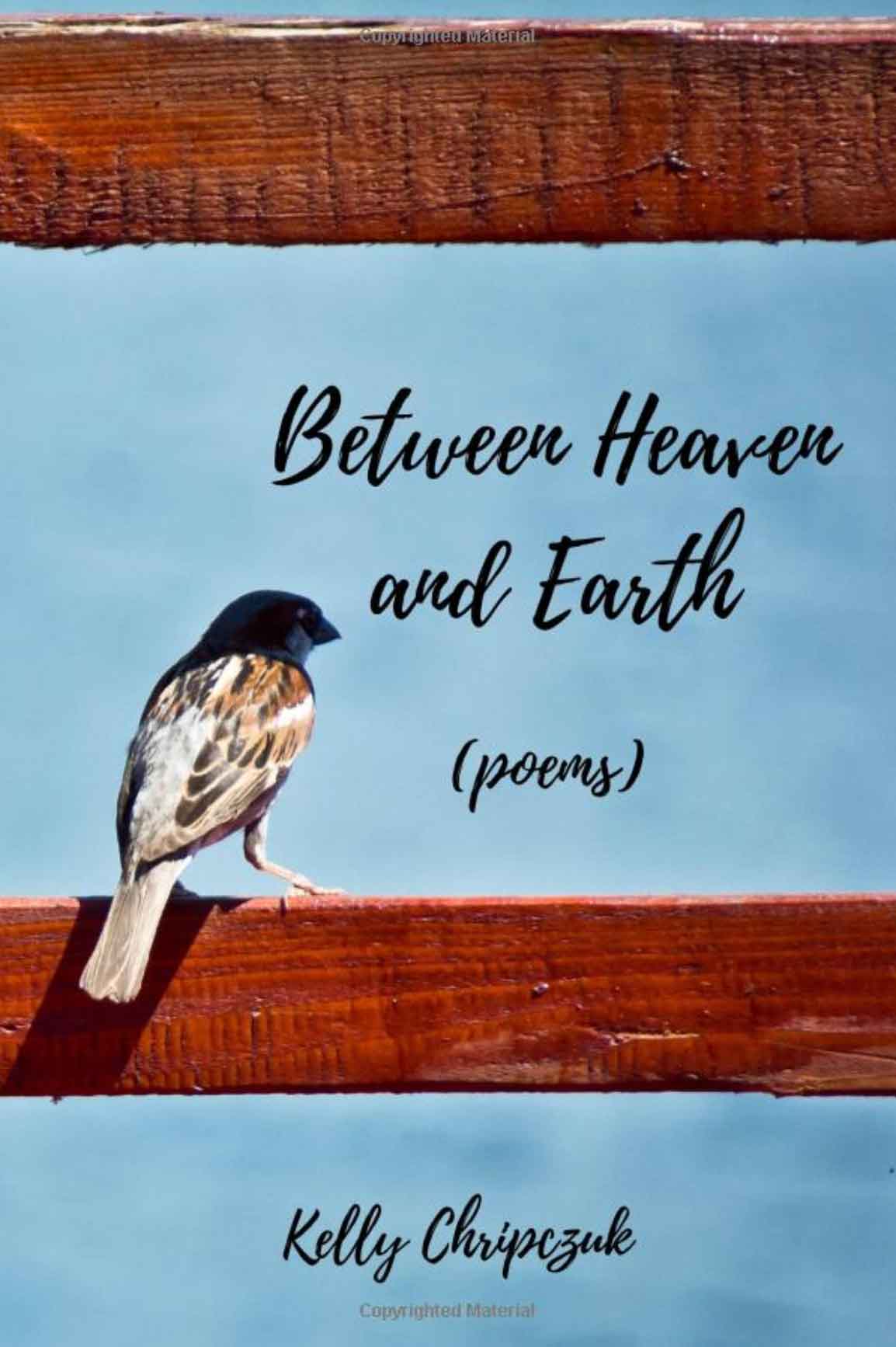
Between Heaven and Earth (poems)
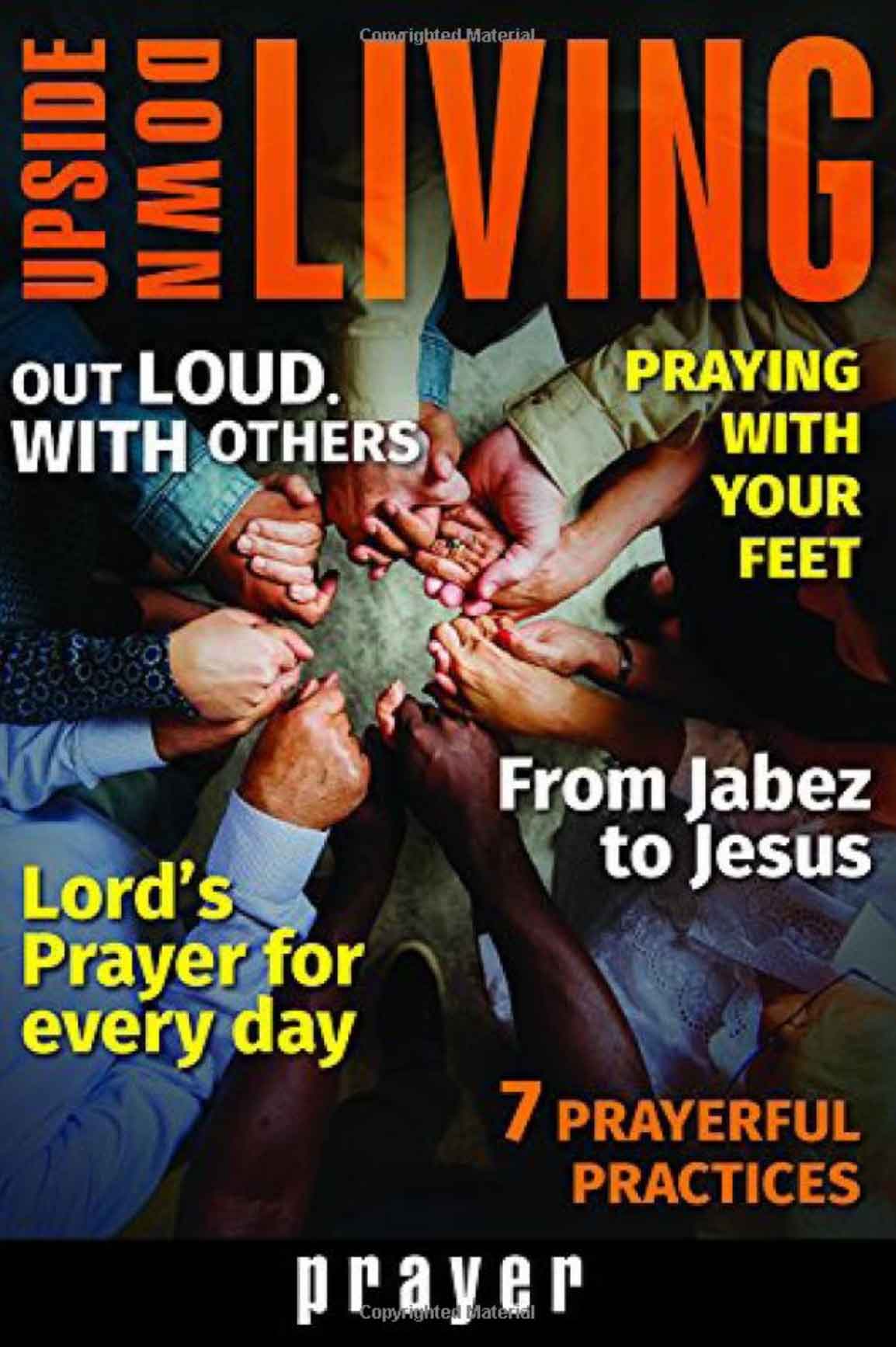
Prayer can easily become an afterthought, a hasty sentence, a laundry list of all the things we want. But what if prayer is a time to find out what God wants for us–and for our world? What does it mean to pray that the kingdom would come here and now as it is in heaven? Explore these questions in this study, and learn prayer practices that nurture intimacy with God and sensitivity to God’s dream for the world.
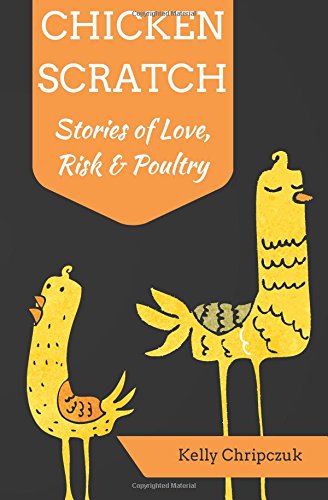
Follow this writer, spiritual director, and mother of four as she dives into the deep end of chicken farming and wrestles with the risks and rewards of living a life she loves. At turns hilarious, thoughtful, and always compassionate, Chicken Scratch will change the way you see the mess and chaos involved in living life to its fullest.
