
Essays
God Sews
The following post was accepted for publication by Sheloves/Magazine, where the voices and stories of women from all over the world are published every day. You can start reading here, then click over to read the rest of the post. Enjoy!
* * * * * *
The Lord God made garments of skin for Adam and his wife and clothed them. Genesis 3:21
* * *
My maternal grandmother was a garment worker. She worked at a dress factory in North Carolina sewing on heavy, noisy machines, working so quickly that she sewed over her own fingers at times. She also sewed at home making clothes for my mother, things they couldn’t otherwise afford on my grandfather’s share cropper income.
I like to imagine her working late into the night, piecing together bits of beauty and love, making out of scraps what could not be bought, clothing over, as best as she could, the shame of growing up poor and female on the edges of society. Her sewing machine was kept cloistered in an unused room that housed other valuable items like the good dining room table. This room was a holy of holies that I dared only to enter with caution. I didn’t touch the heavy machine that, with the help of one women’s creativity and strength, could create something out of nothing.
She made dresses for me too . . . [click here to continue reading . . . ]
Doing the Foolish Thing (Choosing Oasis)
He is no fool
if he should choose
to give the thing he cannot keep
to buy what he can never loose
to see a treasure in one’s soul
that far outweighs the brightest gold
he is no fool.
– He Is No Fool, Twila Paris
I don’t remember when I first laid eyes on it, maybe mid June or July? All I know is that it glimmered light and refreshment, like a distant mirage in the middle of a barren dessert. “Journey into Silence,” a nine month pilgrimage in community and contemplation, offered through Oasis Ministries. My soul lept within me, like John the Baptist in his mother’s womb when she came face to face with the one who’s womb carried the One.
I quickly scanned the details, seeing how they matched up or not with the details of my life. My hopes grew a little with each discovery, it’s local and held on Saturdays. Travel costs – both time and money – would be low and my husband could stay with the kids, saving us from needing to pay for childcare. I continued reading the pamphlet, taking it in in long cool gulps until, near the end, I came to the cost: $ 1000. Gulp.
I went to the website, shared it on my facebook page, suggested it to friends, sent emails back and forth and had phone conversations trying to convince others it was a worth-while addition to their schedules. Meanwhile that soul that had lept was impatiently waiting, banging on the bars of my heart, calling, “hello, hello, what about me?”
Ah, that soul. I started to notice the old warning signs of anger and resentment seeping out, welling up, like contaminated well-water. First in tiny drips you’d hardly notice, the picking up to a steady stream. “What’s this,” I thought, “anger again? And why am I so mad and fearful?” These were followed by the usual temptations, the temptation to hide in work in particular; work as an escape, a salve, a drug, to numb the need for real beauty, real life, real refreshment.
I listened to my soul, then ventured to share, first with a friend, then finally with my husband, “I keep telling everyone else about this program, but I think I’m the one who needs it. (pause) Do you think we can afford it?”
Thus begins the same long circuitous conversation about what I need that I’m not getting, the space I don’t have, the community my heart flourishes in and my concerns about the anger and resentments I see sprouting, spreading all around like the crabgrass in our flower beds. “I want to make it work,” he says, “but I’m just not sure.” I beg, I bargain, volunteering to give up my once a week childcare that’s costly, but necessary. We bring it to the dinning room table, sit down with the calculator, the bills, the budget sheet, the checkbook and savings. It doesn’t look good.
* * * * * *
In high school I owned about five well-worn cassette tapes and a sweet see-through walkman with wires in neon and day-glow colors. During my forty-five minute bus ride to school I sat hunched down between the hulking green slabs of pleather seating listening to Michael W. Smith and Twila Paris over and over again while others around me listened to Phish and Grateful Dead.
I slid down into the seat, my long legs folded, knees pressing into the back of the seat in front of me, staring out the window at the passing world. In the mornings I watched the sun rising over distant fields, the clouds low and heavy reflecting a reddish glow. I couldn’t help but repeat to myself the rhyme, “Red sky at morning, sailors take warning. Red sky at night, sailor’s delight.” I learned to read the signs.
I feared the tapes would break as they sped, forward and back, coming to an abrupt halt when I pressed stop. I nearly wore them out, fast forwarding, rewinding, listening, trying to convince myself beyond a doubt that I wasn’t a fool. Trying to believe that what I wasn’t getting then was what I couldn’t keep anyways, trying to believe there was treasure in my soul, to convince myself I was not the fool I feared myself to be.
* * * * * *
I wrote my spiritual director and asked whether she thought the program would be a good fit and explained my financial concerns. She replied, “Maybe you should think about whether it’s something you can afford NOT to do.”
It was a question I was already asking myself, a question who’s answer I already knew.
* * * * * *
I’ve done a foolish thing. I signed up for a program I can’t afford. I don’t know how it’ll turn out, but I know what I need and I’m sticking to it and waiting to see how God will show up. Within a day of deciding to apply a friend approached with a childcare opportunity, it fell through, but her asking was enough to remind me God always knows more ways to forge a stream in the desert than I can possibly imagine. Since then I’ve had at least four opportunities for extra income come my way and this reminds me to make my plans based on abundance, not scarcity, and then lean my back into the labor and waiting.
I’ve made my choice to give the things I cannot keep to buy what I can never lose. Don’t tell anyone, but I’ve found a treasure in this old field and I’m running off, high-tailing it to go and sell everything I have so I can buy it. And when I do, I’ll dig a well there that reaches down into the depths of the cool, dark earth where the streams of life flow, hidden. And there I’ll drink in long steady gulps and be filled.
When your soul starts banging on the bars of your heart, when it’s parched and dry and withered, please do stop by, there’s water enough to share. Drink deep, gulp if you need to, let it run down your chin and neck and chest. This water will never run out.
Post Script: Since applying and writing this, the cost of this program has been more than covered. I’m so thankful. I hope to continue to write about my journey at Oasis, please do stop back to read more and consider visiting their website to see if their programming might interest you!
Bugs (BONUS!): Learning to See
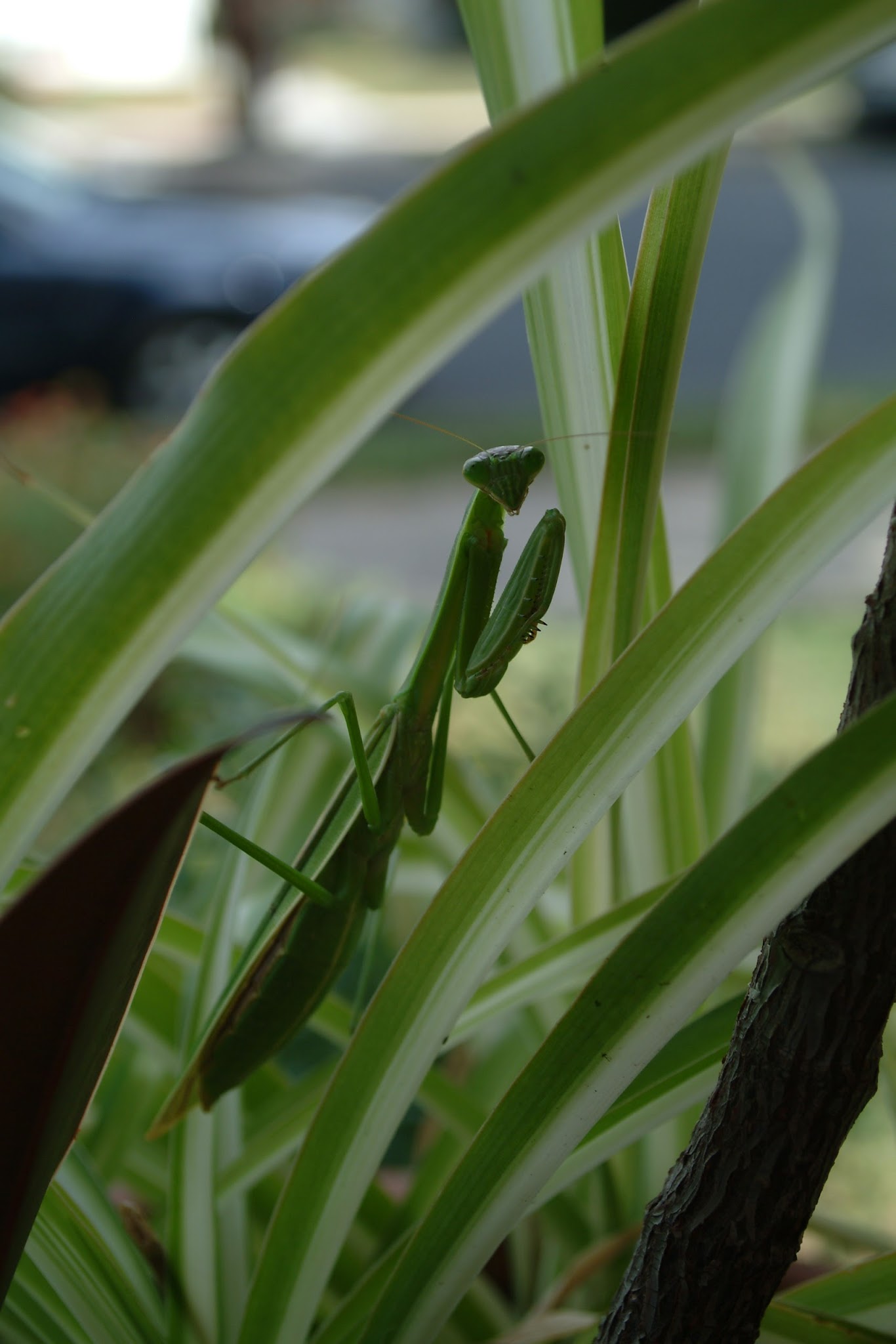
This fellow lived on a potted plant on our porch one summer.
The husband and four year old have been desperate to catch a Praying Mantis, so much so that I was praying we might find one on our walk after lunch today (my ulterior motive was that I wanted to be the one to find the coveted bug, not Daddy, so perhaps there was good reason for God to neglect that prayer). But, alas, nothing was found, except this little poem . . . Enjoy!
The Blind Receive Sight (along the edge of a field)
You cannot find a Praying Mantis by praying for it,
believe me, I’ve tried.
It’s not that they aren’t there, I suppose,
but rather, I lack the eyes to see them.
Before today I couldn’t have found a grasshopper
unless it sprang across my path, brushing against my arm or leg.
But today I spent an hour looking, with my son,
and soon I was seeing them too,
brown or green with hints of yellow,
clinging to a blade of grass in a field of grasses.
I trained my eyes to look
and they began to see
(not to mention that I was
in the company of an expert seer,
as all children are known to be).
Tonight on our walk after dinner, guess who finally found a praying mantis?! That’s right! And, my reward is that it’s now living in an aquarium in the kids’ room, at least I hope it’s still in the aquarium . . .
Want to read more posts in this series? Click here and scroll down.
Bugs (pt. 3): Cicadas Sing and I Listen
This is the third in a three-part series of posts on bugs. Don’t miss the first two!

This is a picture of a cicada that’s just emerged from its old
shell. It’s one of the freakiest things you will ever see. (Posting
this made me want to throw-up a little.)
[Deep sigh. Here’s the thing – the bugs are beginning to speak to me too. And I’m starting to listen, starting to pull up my chair to watch as they perform their dance of living and birthing and dying all the while joining their song to the on-going song of creation. (from Bugs pt.2)]
Here’s what the cicadas have shown me through their crumbly shells, their large silvery-green winged bodies, their desperate pulsing song. These bugs are formed in darkness, their eggs buried deep in the dark, cool belly of the earth. It’s a necessary darkness, a fruitful one, like the womb in which we are all formed and grown. These bugs, like the psalmist says of us, are “made in secret, intricately woven in the depths of the earth” (Ps 139:15).
It’s there in dank darkness that they wait. Waiting, some for as long as seventeen years, as they’re being formed into what they are not yet, but will be, with time. Do they get antsy waiting, I wonder? I know they’re not sentient beings, but it’s worth consideration, how they endure the wait. Maybe something in them, something ancient, tells them that waiting is what’s needed, like the child in the womb who doesn’t begin to push and strain downward until the time is right, who knows nothing but the present.
One day as I’m reading to my kids about these terrible-wonderful bugs the words grow large on the page, ripe with meaning, a line of poetry in the midst of all the scientific details, “they feed on the roots of trees.” Cicadas are nourished in the darkness by the deep, web-like roots of the trees their parents mated in. If you didn’t already believe God’s a poet, surely this one fact would in and of itself convince you.
They’re formed in darkness, knit together and fed by the deep roots of others until the time comes for them to crawl, push, climb upward, outward toward the light and air and sun. Picture them, these ancient skeletal beings poking out of the green blades of grass, the crumbling dark dirt alive with its own ecosystem. They emerge and continue climbing up trees and fenceposts, up anything that will continue their ascent for their desire, their drive, is to move upward toward light and life and the multiplication of life.
They climb, intuitively straining until the straining causes a cracking, a pulling open as their new life becomes too much for the old shell, the old protective husk, to bear. Then they break free, burst out, shedding the skin that held them, formed them, in the belly of the earth. The new rubbery green body hardens. The wings unfurl and they take flight. And this is when the singing begins as they add their voices to the chorus; the humming, buzzing, rising and falling on-going song of light and life that comes from death. The song of roots that feed, the song of waiting, the song of breaking through to the light.
Who would’ve thought that a creature borne in darkness would grow wings, take flight, lift their voices to join the on-going song of creation? But isn’t this the reality? Isn’t this what the lives of cicadas tell us and the butterflies too that kindergarteners everywhere observe in their sticky, smelly classrooms, the worm that becomes the beauty?
How can I watch this, hear this song all around me and not be changed by it? How can I help but be convinced of its truth? To me the cicadas speak hope, sing hope. Hope for the ones who willingly and unwillingly have fallen to the ground and died, like the grain of wheat, as the gospel admonishes. Hope for those who wait in darkness and wonder if, when, they too will emerge like Lazarus. Like Lazarus who heard an ancient voice calling, “Come forth,” and who came out wrapped in those old heavy, smelly clothes, that old skin that could no longer hold the new life within.
* * * * * *
By some miracle of chance and perseverance, my son catches a monarch and holds it in his hands while dancing and running and shouting for his sister to get the trap so he, so they, can keep it, this prize of nature. Then, just like that, as she runs and he glows and my husband and I stand slack-jawed with joy and awe, the butterfly breaks free and floats off into the puff-clouded blue sky. As we watch it fly, as we watch all of them flying, crawling, spinning, buzzing, we are changed. How can you not be changed, how can a boy not be changed by holding, even for the briefest moment, a bit of the fluttering, flitting glory of God in his hands?
Bugs (part 2): I Do That Freak-out Dance
This is part 2 of a three part series of posts on bugs. Click here to read other posts in this series.
* * * * * *
I’m not a fan of bugs, by which I mean that I would have nothing, and I mean nothing, to do with them that doesn’t involve the underside of my shoe or a folded newspaper or so much wadded-up toilet paper or tissue that I can be sure not to feel the crunch and squish as I press down. But here we are in August, the one season of the year in which the creepy crawlies, spiders in particular, make their presence clearly known. Starting in the forgotten corners, the under sides of things they threaten to take over. Gaining confidence they stretch their webs across frequently used doorways and drop on me unbidden as I walk or write in the park. Oh, how they must delight in watching the strange freaked-out dance their webs evoke every. single. time.
I’m not a fan, but my children are and for months now there’s been an endless parade of crickets and caterpillars, moths and butterflies, rollup bugs and ants, ladybugs too, in and (mostly) out of my house. And oh, the cicadas. At first the empty, crusty, crunchy shells seemed a novelty, a prize to be found and collected hanging on the bark of a tree or laying on the sidewalk as we passed. It was cute to see their excitement as they hung them on their clothes like a rare beastly broach. But now, oh God, we cannot pass without picking them up, collecting, not just the shells, but the bugs too, the shiny silvery bodies making a stark contrast to the dull brown discarded casings.
These, the casings, my children pile onto the back of the jogging stroller, behind the sunshade where they inevitably get lost in the folds as I heave it into the back of the van. And then, days later when I get the stroller out and unfold it with a bit of force to get it to snap into place, those same bugs and their shells come flying, crackling out at me, evoking again the same freak-out dance that arises intuitively, a dance I’m certain can be traced back through the lines of evolution to the very first people who stumbled across the very first spider’s web.
It’s August and the bugs are invading my every waking moment including the books that we read, since the children’s librarian so nicely (sarcasm here) directed my children to the place where the bug books reside. So now I sit, morning noon and night, holding down my breakfast or lunch or dinner as I read about the mating and birthing and eating habits of the insect world all the while staring at incredible, nightmare-inducing close-ups of every body part I didn’t want to know about.
Deep sigh. Here’s the thing – they’re beginning to speak to me too. And I’m starting to listen, starting to pull up my chair to watch as they perform their own dance of living and birthing and dying all the while joining their song to the on-going song of creation.
Bugs (part 1): A Spider Speaks
This is the first in a three part series of posts on bugs, which have ended up being a suprisingly big part of my summer.
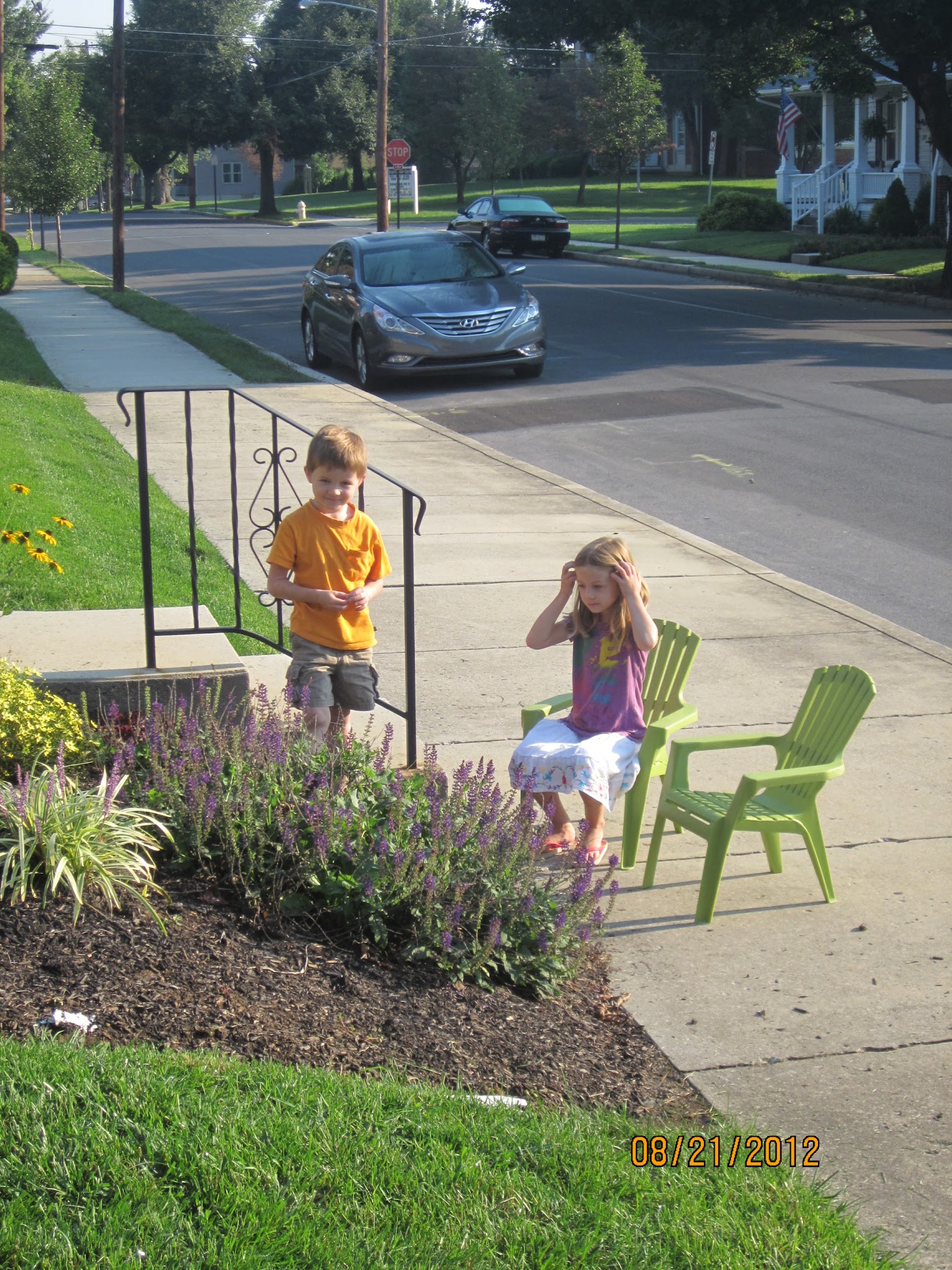
For the past five days our older kids, six and four, have set up their little plastic Adirondack chairs down on the sidewalk near our neighbor’s house, right in front of her flowering purple salvia bush. The bush sits at the bottom of her garden looking like a large flowering octopus, its tentacles waving in the breeze. It hums with bumblebees, swooping and stopping to seek and drink from its dainty, purple flower-cups.
My children’s chairs are set up there, every morning, like matching lazy-boys in front of a TV. What they’re watching is a spider – a grotesquely large, beautifully black and yellow garden spider that my son discovered this past Saturday morning while my husband and I rushed in and out of the house setting up for a yard sale.
This spider, and the others bugs they’ve found this summer, have given my son a new lease on life (as though he needed one at four and a half). Every morning, as soon as he’s awake enough to remember, he dresses himself and runs out the front door to “check on the spider” or caterpillar or whatever else they’ve managed to collect in their odd assortment of baby food jars and Tupperware.
After learning that the spider remakes her web each night, my son made plans to wake up as early as he could and wake his sister too so they could catch the spider in her own little glorious act of creation. When this failed to work, he and his sister declared over dinner one night that they would have to become nocturnal.
They watch the spider, their interest in her dwarfing their fear of the bees buzzing round her webby home. They feed her rollup bugs painstakingly captured from beneath our own purple-flowered cat-nip bush. My son loads his t-shirt pocket with several bugs and stands in front of the web, perfecting his pitching arm as he works at flinging the live bugs into the spider’s net. They come running, thrilled and shouting into the house after watching the spider wrap-up one that landed, pitch-perfect in the web. They describe how the spider tucked it away for a midnight meal then returned to her roost sitting on the zig-zagging line of silk that runs through the middle of her web.
I wonder what that spider is telling them that they so desperately need to hear? What is so important that they tune-in to her channel every morning with the same faithfulness with which I check facebook and email and my parents before me checked the evening news?
Ten Tips for taking TWO babies to the Doctor (by yourself)
What are you, crazy? Common sense should tell you to make every effort to avoid taking two babies to the Doctor by yourself. But, should your other two children fall ill, thus requiring quarantine and throwing a wrench in your carefully laid plans involving one adult to go with you and one adult to stay with aforementioned older children, proceed with the tips below . . .
1. Dress as you would for an athletic event.
Wear loose-fitting, comfortable clothing. Short sleeves are recommended.
It will inevitably be cold in the Dr’s office, but once they pack you, your two children, their car seats, a 10 lb diaper bag, a nurse and a Dr into the closet-sized exam room, it will start to warm up. When both children’s crying reaches a fevered pitch the simultaneous effort of jiggling one in your arms, rocking the other in their seat with your foot, and straining to listen to the Dr’s droning questions and advice will cause even the coolest parent to break into a sweat.
2. Dress your children in one layer of one-piece clothes.
This isn’t the time to pull out the stops with cute three-piece outfits, matching socks, shoes, etc. No one wants to wait for you to wrestle them back into that adorable outfit while they’re screaming after receiving shots in both legs!
3. Bring a blanket for each baby.
You, as a reasonably responsible parent, would never leave your child undressed in a 65 degree room under any circumstances. But the first thing you’ll be asked to do is to strip your child down. You’ll then wait for 15-20 minutes with two near-naked babies. The purpose of this is to prevent the Dr from having to wait the 2 minutes it might take you to undress your child. (Although, in my experience, the 5 or so minutes the Dr usually takes to figure out how to use their newly acquired laptop would be a perfect opportunity to undress baby while avoiding exposure.)
So bring a blanket to wrap your baby in. Even though you’ve been explicitly TOLD to leave your baby undressed you will feel like the worst parent ever sitting there with a tiny freezing infant. Fortunately the stress of this will cause your own body temperature to rise helping to raise the temperature of the aforementioned freezing room.
4. Regardless of your political views, be thankful that the government is now paying the co-pay for your well-visits.
Not spending ten minutes at the check-in window rooting for your wallet which is inevitably at the bottom of your diaper bag will save precious pre-meltdown minutes, as well as money.
5. Strike a balance between “responsible and capable parent of multiples” and “slightly overwhelmed and pitiable parent of twins.”
Casually let it be known that the only reason you dared approach a well-visit single-handed is because your house has been hit by a tsunami of illness, yet you prevailed to make it to the appointment bearing a child in each exhausted arm like a phoenix rising from the ashes. Absorb any pity, praise or help that comes your way in response to your “situation.”
6. Nurse or bottle-feed one baby while the Dr examines the other.
Not because they’re hungry or food solves everything, but because it greatly increases the likelihood that at least one baby will spit up all over the Dr. This can be highly amusing, especially if it happens to directly coincide with one of the Dr’s off-handed comments about how big/small/pale/ or otherwise unattractive your baby’s head/ears/nose, etc. are.
7. NEVER ask unnecessary curious questions.
Throughout the appointment the Dr will repeatedly ask if you have any questions. This is code for, “Can we keep moving along and get this over with as quickly as possible.” BUT, a new parent might accidentally mistake this to mean, “Are you observant enough as a parent to be able to formulate educated questions about your child’s development?” This misinterpretation may lead the parent, in an effort to show their concern and deep knowledge of baby development, to throw out a random question about an issue that you already know isn’t SERIOUS, but none-the-less find interesting.
“So, is his fontanel still supposed to be so big?”
“Is there any reason to worry about that small rashy spot on his neck?”
While such questions may seem harmless when brainstorming with your spouse pre-appointment, actually raising them is a mistake. These questions are like bait for Drs who’re tired and bored from seeing hour after hour of relatively healthy children.
At best, your Doctor will seize onto your question and launch into a five to ten minute explanation of the development of the fontanel from zygot to adolescent while you are frantically trying to calm, soothe, feed, or change two crying babies. In a worst case scenario, the asker of such a question will find themselves carting two healthy, exhausted, crying babies off to one or another lab for extensive blood work, x-rays or “testing” just to “make sure it isn’t anything.”
Trust me, this is a path you don’t want to start down.
8. Try to keep a straight face when the Dr asks you things like, “Do you wipe their gums with a washcloth every day?”
Refrain from responding sarcastically, “Lady, I’m lucky if I brush my own teeth everyday.” Simply nod your head and smile, “Oh yes, the gums, we do that several times a day. We’re very big on infant gum care.”
9. When you finally leave the office with two crying babies, hold your head high
(though your back may be bent from the combined weight of babies, car seats and diaper bag).
Smile graciously at the parents struggling to calm, carry or coax their own children. Accept their looks of wide-eyed wonder at your parental prowess as you use alternating infant seats to bump open heavy doors and waddle with tiny penguin steps to your mini-van.
You and your glowing off-spring have conquered yet another office visit.
10. Schedule your next visit for two to three months from now and begin immediately aligning a support team (and two or three back-up support teams) so that you will never, ever, have to do this by yourself again.
Losing It
Seems like so many people I know, Mom’s in particular, are feeling close to the edge these days. Maybe it’s the change of seasons, the impending change of schedules, change of wardrobes, one more mind-numbing round of pulling bins in and out of tiny spaces, sorting and hoarding and purging. Anxious to get on with it all and at the same time suppressing the emotions, the “how can he possibly be so big already?” in favor of getting by, getting through.
The kids are off the wall, smelling the scent of change in the air, senstitive like canaries in a coal mine to the first whiffs of stress and tension and anxiety. And their stress and activity and neediness double back on you at the same exact moment you’re thinking you could make it through if you could only find a brief moment of quiet, a tiny square of space where no one was wanting or needing or pressing in. Then, as they’re grabbing, pushing, running by you find yourself yelling, adding your own foot-stomping, finger-pointing, tantrum to the mix. Oh, please tell me I’m not the only one.
The following is a poem I wrote one week this summer, when I found myself close to the edge. Thankfully I had a babysitter coming that morning and I was able to send myself off into a little corner of God’s beautiful creation for a much needed time out. This poem plays with a line that caught my attention while we were reading Little House in the Big Woods; it comes in a scene where Pa is getting his heavy metal traps ready for hunting season.
SO ANGRY
“There were small traps and middle-sized traps
and great bear traps with teeth in their jaws that
Pa said would break a man’s leg if they shut onto it.”
Little House in the Big Woods, Laura Ingalls Wilder
Tight,
wound like a steel trap
ready to spring
loaded for bear
the weight of it could break a man’s leg.
Oh God, please help me,
for the sake of my children –
lest they somehow, playing too close,
trip the spring and
find themselves crushed
beneath the weight of
my anger,
my fear,
my pain.
The weight of it could break a child.
What to do with this anger, God,
but to write it out, pray it out, breathe it out.
Help me, God, not to be afraid to
drop down,
sink down,
to the deeper places
where the pain and loss reside.
For there is where
I find You, again, with me.
If this is where you are, where you have been, where you fear you’ll be sometime soon, all I can say is, give yourself some grace. Beneath it all is the ever-present, undergirding love of God. Stop fighting, stop trying to be so good, so calm, so smooth and LET GO. Go ahead and loose it, not your temper, but your endless need for control and perfection and the smoothness of things going RIGHT. Break the rules and turn the TV in the middle of the day, get out the ice cream, the cookies, the Christmas music, whatever it takes. Run outside, yell and dance and scream if you need to, find an old stick and bang it on the patio til your spent.
Then go back in and hug your needy frightened children to you. Apologize if you need to. Tell them you know how it feels, tell them it’s going to be ok even as you listen to and feel the One who holds you and tells you it’s going to be ok. Stop trying so hard to hold it all in, hold it all together. No one wants that much perfection, that much goodness from one person. All they really want is to know that you are with them in the middle of it all, just like the One who is with you in the middle of it all too.
Not Dead yet
Our nine-month-old twins are sick and the batteries in the swing are dead. No one’s going to get any sleep at this rate, so I volunteer to run out for batteries. On the way I to the store I call a friend whose father was recently diagnosed with a deadly form of cancer. She tells me her father believes he’s dying; all of his relatives, save one sister, have at one time or another had cancer.
I called this friend because I wanted her to know I care, but also because parents with cancer are right up my alley. My Mom is 4 years into remission from non-hodgkins lymphoma and I have several other close friends whose parents have died from cancer.
Died. Dead. Like my swing batteries. I think about it as I hang up, get out of the van and head toward Walmart to buy some more “life” for my machine.
Cancer. “His whole family,” she’d said. I think about my own family as I cross the parking lot. My family littered with cancer, diabetes, high blood pressure. I wonder how long it will be until I’m diagnosed with something? Until John and I drop everything to head to the nearest teaching hospital hoping, praying to buy more life for our “machines”?
Crossing a dirty mound of mulch in the barren parking lot I suddenly feel the urge to run, jump, skip. It occurs to me that I’m not dead, not dying. I’m alive and the bleakness of my friend’s father’s diagnosis makes the joy of my own life incredibly clear. My heart-pumping, blood flowing, running, jumping life surges within me and I wonder how I can live so unaware of it so much of the time?
* * * * * *
I remember a similar thing happening when I worked as a chaplain. One of my first on-calls found me sitting with a woman and her deceased husband. His body was covered with a sheet, his head exposed. He was recently dead. Enough so that his wife still caressed his hair, his face and kissed his lips as she talked about his life. I had a difficult time staying in that room. It was one of my first experiences with death. I don’t remember being scared or weirded-out, but I do remember wondering, “How long do I have to sit here? How soon can I leave without seeming impolite?”
There’s so much in us that keeps us from wanting to linger with the dead. It was a discipline for me to stay at that bedside. But as I sat and took in the reality of the lifeless body I felt the same surge of joyful energy that I experienced in the parking lot the other night. I sat there quietly as my whole being shouted, “I’m not dead! I’m ALIVE!” It was all I could do to keep from jumping up and running out shouting for joy.
* * * * * *
I’m part of a young church. A community of 20 and 30 somethings who live far from our extended families. Gracefully, thankfully, death has been far from our little community. I wonder though, if we aren’t missing something in our isolation from the dead and dying?
Maybe we should simply be thankful to be spared this difficult detail of life for the time being. But I wonder if the absence of death in our lives doesn’t somehow leave our lives a little less, well, alive. Many of us spend most of our lives only partly alive. Maybe a simple encounter with death is what’s needed to help us see that. To help us embrace the gift of life.
When our second twin, Baby B, was born there was a moment during which he didn’t breathe. My husband told me later that he stood listening, waiting for the cry of life as Drs and nurses swarmed around the tiny body. How long did he wait? Minutes, seconds? All the while wondering, is he dead or alive?
The line between life and death is so frighteningly thin, like ice on a lake in early spring. Only a fool would venture out onto the shifting, creaking mass. But no one could blame you for feeling a surge of joy at having made it across if you do.
* * * * * *
I hurry on into the store. Past the young man crouched down in his hoodie smoking outside the door. Past the Mom with two kids, pausing at the soda dispenser. I have to ask for help to find the batteries. D batteries. Big ones. Expensive. Our swing goes through them like crazy.
I get my butt in gear and hurry home to the babies who’re not yet asleep. Isaiah is ba-ba-baa-ing to beat the band in a voice that can be heard throughout the house. The older kids are half-pajamad swarming around the living room dropping clothes and papers and toys as they pass. My house is full of life, “teaming with life,” I like to joke.
The only thing dead here is the swing and soon, thanks to the batteries, it’s running again. It’s not dead yet and, thankfully, neither am I.
The Difference a Few Boxes Made
Whew, we’re exhausted! We finished up our cardboard collection for Project Share this Thursday and invited our neighbors to celebrate (read about how it all started). We’ve been talking about having a neighborhood block party for over three years now and this project finally gave us the excuse we needed to invite everyone over. All in all nine of our neighbors stopped by for hot dogs and home-brewed root beer floats. Our “Soup Night” friends joined in and several neighbors who didn’t come for dinner stopped by with last minute additions to our pile.
We ended up keeping the older kids up until 9:00 helping to bring cardboard up our creaky basement stairs and heaving it onto a growing pile in our back room. Sophia nearly wore herself out trying to out-pace me. Solomon ran back and forth from the upstairs to the basement in his heavy black garden boots, laughing and exclaiming with his hands over his face as though it was Christmas morning.
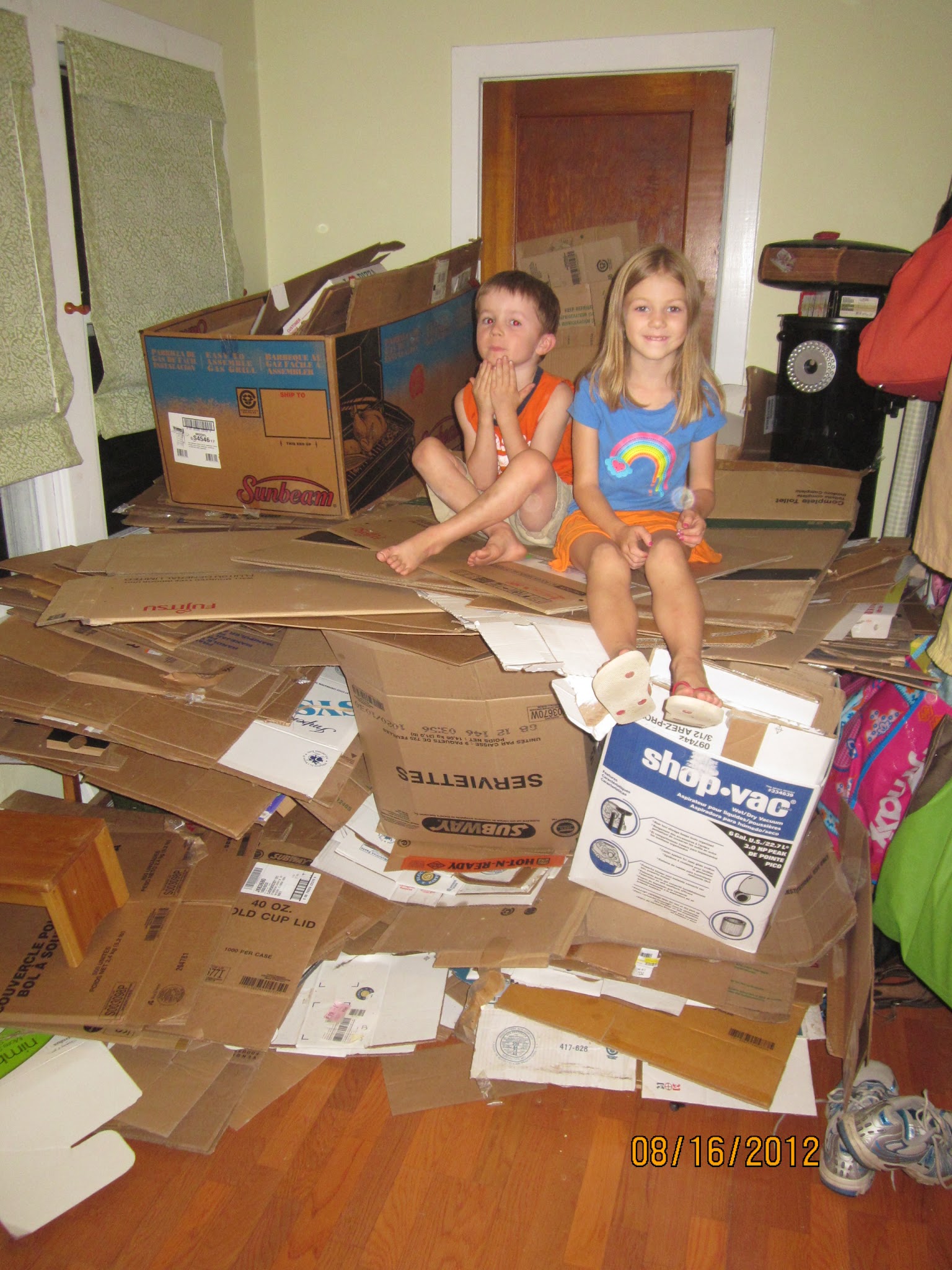
In the end we filled our back room at least half-way full of cardboard, a pretty good accomplishment if you ask me. Here’s a few pictures of our collection and a some thoughts about the difference this project made:
When I think about why we did this project this summer, with 4 kids six and under, I know it had a lot to do with a desire to get outside of ourselves and do something that might have a larger impact than we were capable of on our own. Ever since the twins were born, and before that for several months, we’d been doing all we could to simply “get by,” so this project was one way for us, for me, to reclaim a sense of connectedness to the world outside of and beyond our little family. I also wanted to give our kids something to participate in that wasn’t wholly centered around them and their enjoyment that would help them see that they can make a difference in the world in very simple and tangible ways. When I see the look of pride on my daughter’s face in the picture below I know, full room or not, that we accomplished what we set out to do.
Our neighborhood is situated between the beautiful and ever-expanding campus of Dickinson College and what locals refer to as “Carlum,” a low-income area that is unfortunately the center of Carlisle’s growing drug trade. There have been drug related shootings and stabbings within a block of our house and having your car broken into is a regular occurrence. Ours is one of the only houses on our block with young children and several of the people who came to our party were in their 80s.
As a stay-at-home Mom, I know what it feels like to sit in your little house peering out the windows with your doors locked when the sirens are blaring and the police cordon off part of your block. I know what it’s like to call the police because people are fighting in front of your house and to see drug dealers counting money in a mini-van as you walk by with your swarm of strollers and bikes. And I know that the way I feel in those times – helpless and vulnerable – is how my elderly neighbors feel as well. So I’m thankful that our little project brought some much-needed hope and light to our little corner of what can sometimes feel like a battered and weary world.
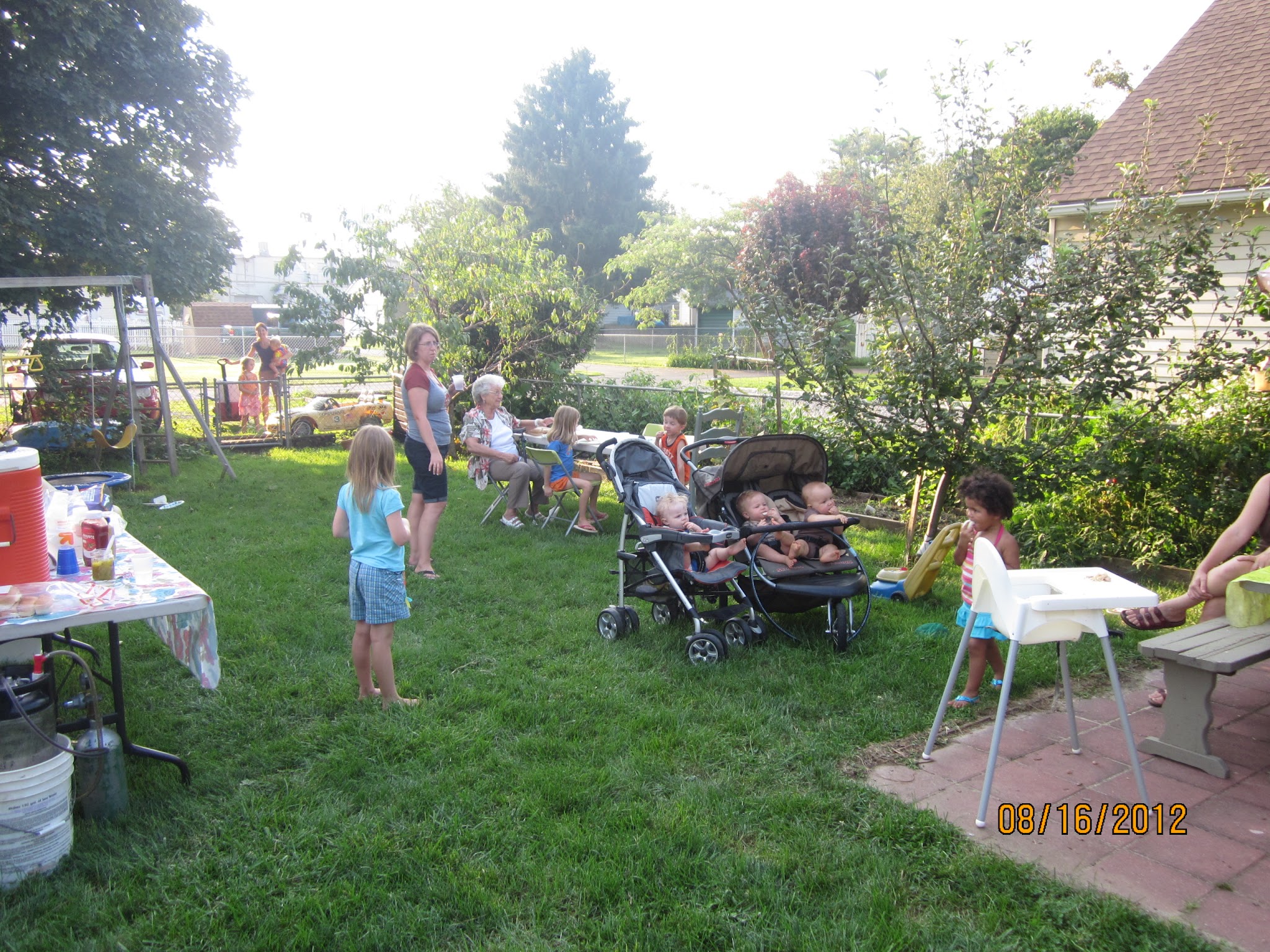
Our elderly neighbors made their way into our pot-holed backyard, canes in hand, to celebrate and I could see their eyes brighten with hope as they caught sight of all the kids in our yard. One neighbor suggested that we should’ve called the newspaper and when I asked why she replied, “We get so much bad news all the time, we need to hear about the good things that’re happening too.” In my mind, I looked at our little gathering and thought, “Good news, really? It’s so small.” But for her, it was enough.
The same neighbor left us an envelope with the following note and a twenty dollar bill:
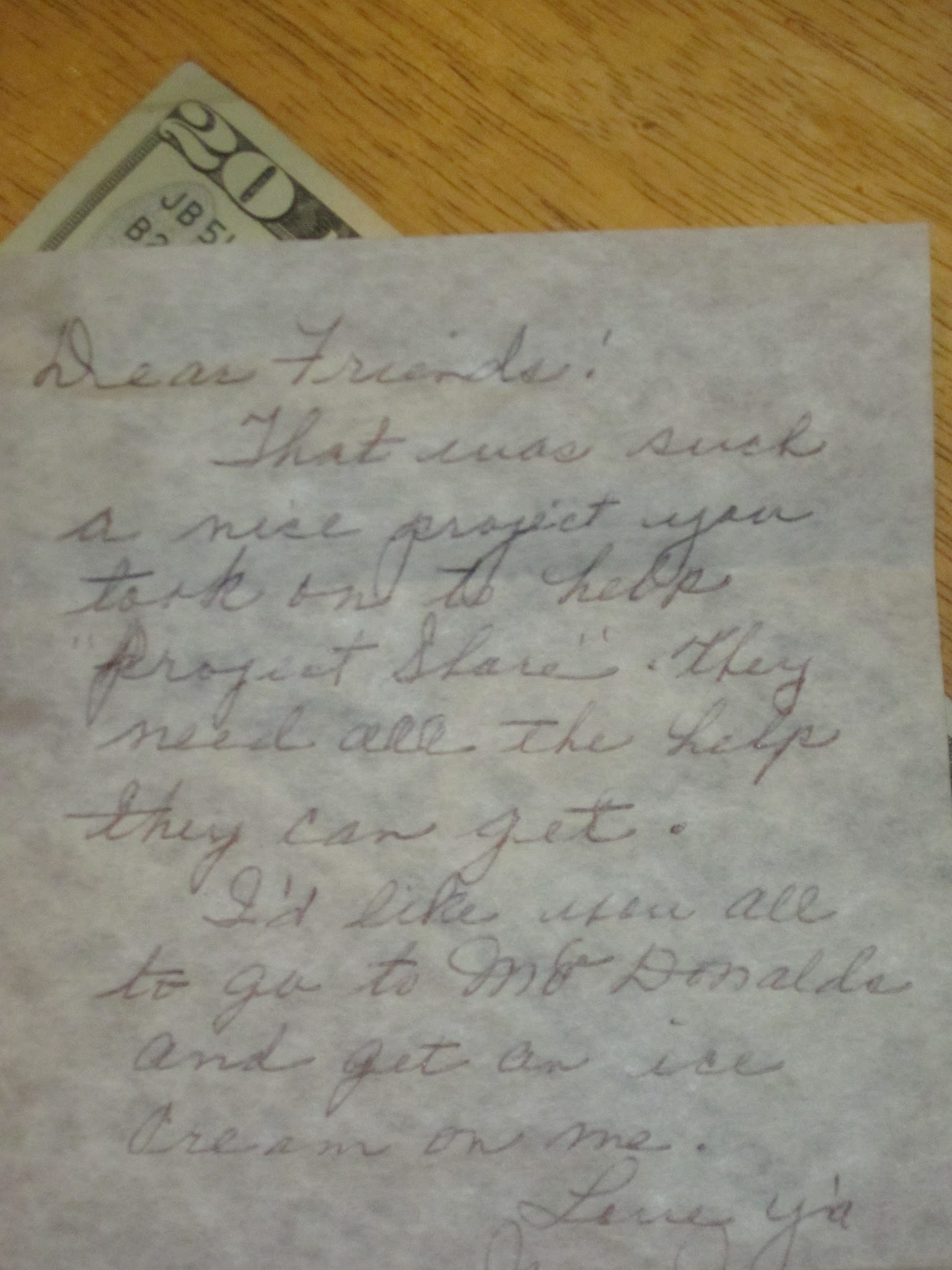
“Dear Friends! That was such a nice project you took on to help “Project Share.” They need all the help they can get. I’d like you all to go to McDonalds and get and ice cream on me. Love ya.”
Here we are getting ready to say good-bye to our collection. I’m really proud of my kids and all the work they put into this and I’m grateful for my husband too who put up with lugging all of this into and out of the basement and stayed out too late on multiple occasions getting the word out to our neighbors.
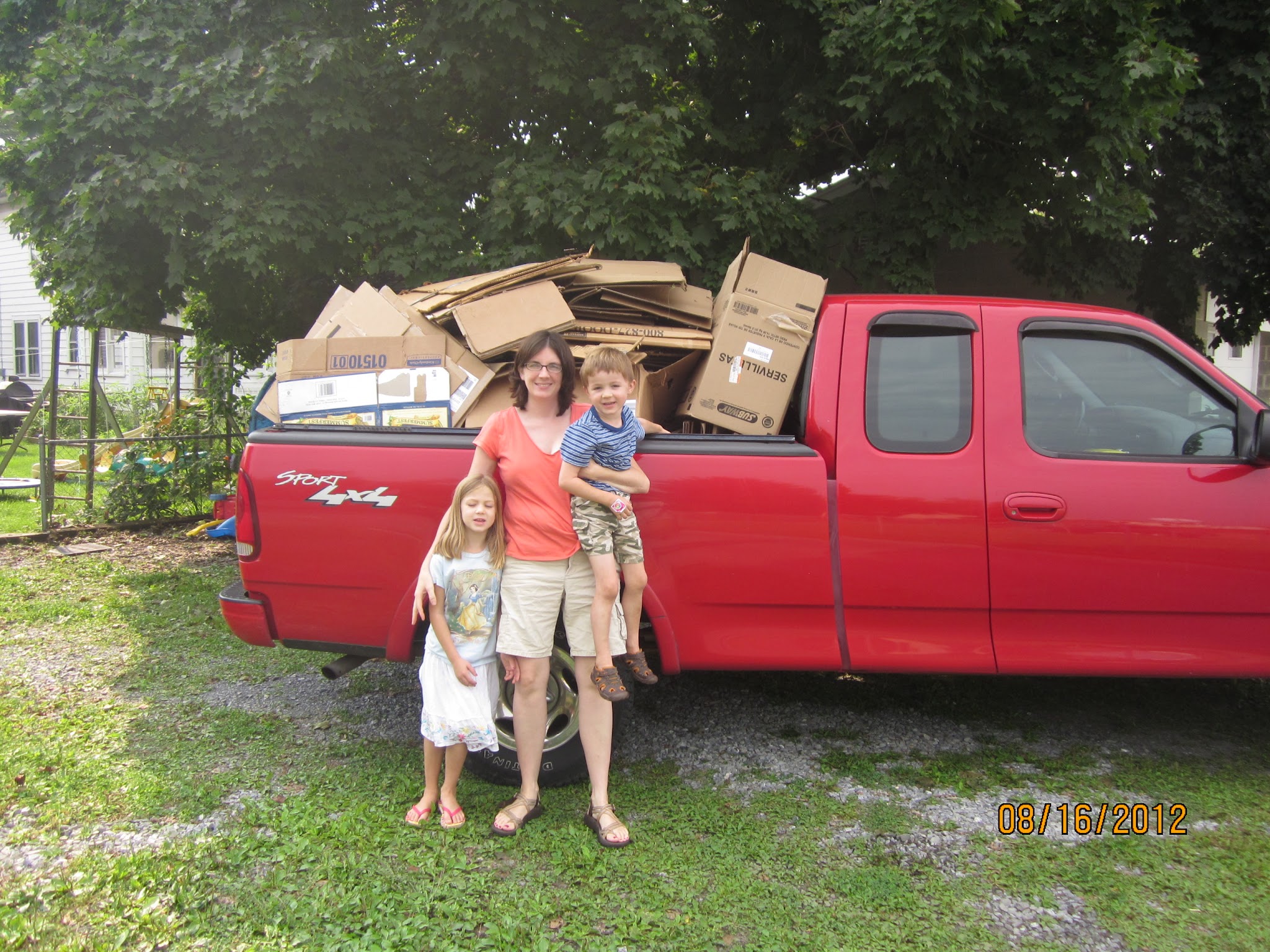
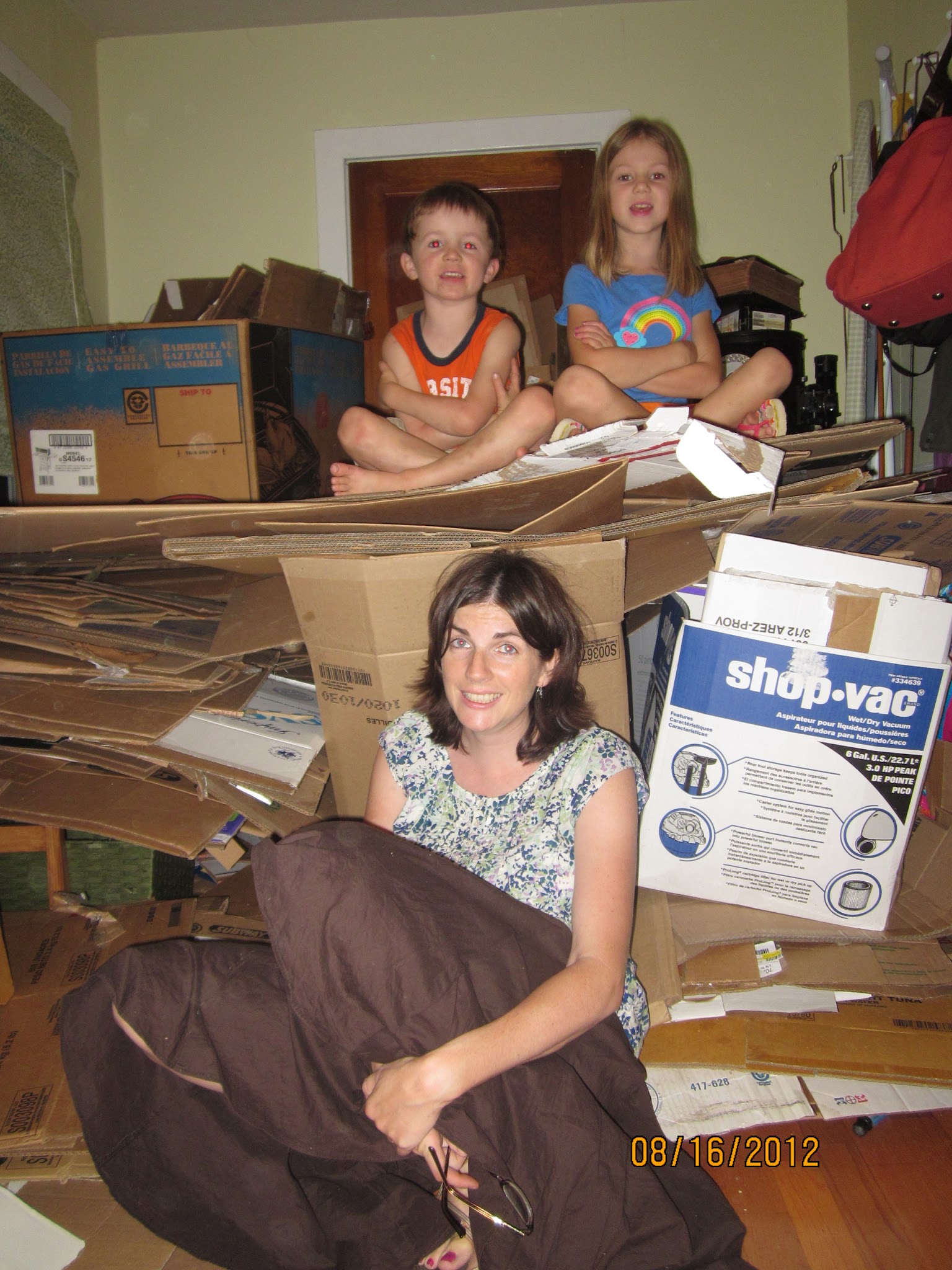
So that’s it, friends. Thanks so much to everyone who helped, encouraged, donated and believed in our little project. It meant more than you could’ve possibly imagined. Now . . . what’s next??
Enjoy! (Tales of Chaplaincy, Waitressing and Motherhood)
After graduate school I worked for a year as a waitress at the Olive Garden. Dressed in black pants and a pressed white shirt with requisite greasy necktie, I carried heavy trays of dishes to my waiting tables, taking care to place each meal with precision before its corresponding diner. I liked waitressing in the same way I like online arcade games like Big Money and Bejeweled. It was, once you knew the menu and wine list, fairly mindless work.
One of the easiest ways to increase your income as a waitress is to increase your speed, cycling as many diners through your allotted tables as possible during your given shift. The litany at the Olive Garden went: orders, drinks, salad and bread, entrees, dessert, check and repeat. Since we were limited to three “open” tables at a time, some servers I knew took things a bit further by slapping down the check and cashing the customer out as soon as the meal was served so they could pick up other tables. With typical bawdy restaurant humor we jokingly referred to this practice as “pre-mature echeckulation.”
Every time I served a meal I ended my delivery with a cheerful, “Enjoy!” I said it often and repeatedly without thinking until one day I noticed the phrase as it slipped from my lips, “Enjoy!” From then on I heard it every time I said it, an open invitation.
* * * * * *
After my stint as a waitress I worked as a Chaplain at Penn State Hershey Medical Center. The job required considerably more mindfulness, though here too there was a litany to follow which, when paired with my own self-imposed pressure to increase productivity, kept the days moving along at a rapid clip.
One morning in the midst of a conversation my supervisor, who was nearing retirement age, said something like, “Now that I’m getting older I find myself wanting to, trying to, savor life.”
Savor. The word sat there on the table between us like a tempting morsel, something invitingly heavy and rich. I picked it up and bit into it, rolled it around in my head for weeks, months, years, savoring it, I suppose.
Now I held in my hands, my heart, two invitations, “savor” and “enjoy,” that seemed utterly opposed to the way I’d learned to play the game of life. These words offered a time-out in the midst of the litany of run, run faster, run harder, run until you don’t know where you came from and can’t recall where you’re going.
* * * * * *
The litany has changed again, but the feelings haven’t. Now I’m at home most days in a job that involves an endless list of coffee-fueled cleaning and carrying and ferrying of people and things, from dawn until dusk, then repeat. There are days, of course, where it becomes a game, where I make it a game in order to survive. Days that I push my children through with the efficiency I learned as a waitress, the productivity I learned from my time working in the medical system.
Still, everywhere I go, people call out, “Enjoy it, it’ll be over before you know it.” and “It goes by so fast!” These are usually passing strangers, grayed and bent with age, looking longingly, hungrily at my bouncing, bopping, hopping children as we pass on the sidewalk or in the aisle of a store. Their carts hold the humble needs of a household of one while I struggle to push a veritable Big Mac filled with as much food as we can afford.
When my oldest was an infant these comments annoyed me to no end. Those were days that I struggled, seeing no future but only a ceaseless unsavory present. Like the waitress waiting for her big break and the chaplain struggling to believe that offering presence in the present was enough, I pushed through my days barely daring to pause for fear of what I would find.
I get it now or, I should say, I get it more than I did then. Or maybe it’s more that I hear a voice in my own heart echoing that of those around me, “Enjoy!” and “Savor.”
* * * * * *
These are the last days of summer, the heavy days, slow and fast at the same time, the fleeting ones. These are the days before my oldest is off to first grade and my preschooler will be gone three mornings a week. The days before the twins will be really walking, then running, in opposite directions from each other. These are the days before whatever comes next, be it welcome or not. These moments that come and go with the slamming of the screen door. These are the days to savor, to enjoy.
Ah, God, still our souls, awaken our senses to these days. Help us to sit down, sink down into them in all of their blessing and struggle, for this day, these days, are the days that the Lord has made.
The Blessing: On the Eve of Your First Birthdays

Walking out onto the dock, I feel it welling up around me. It’s not the first time I’ve felt it.
It’s the last day of our summer vacation at the bay and I’m distracting the kids while my parents and husband load up all our gear. The big gate’s packed away and there’s no safe “pen” for the twins anymore, so I’ve loaded them into the double jogging stroller and am walking them around the yard in wide circles. The morning’s cool and fresh with dappled sunlight casting moving shadows on the ground as tree leaves tremble in a gentle breeze.
I call the older kids for one last walk on the dock that extends far out into our little piece of the bay. The land all around is flat and open with a gentle slope leading from house to shore. We march down in a grand procession – me leading with the stroller and the older two following behind in the wiggly, bouncy dance that’s passed for walking ever since we arrived a week ago.
Just as we step out onto the dock, I feel it. It lasts only a moment and feels like space falling open around me, a heavy fruit falling from the tree. All I can say is that in that moment I can feel the blessing of my children rising up around me. I feel the blessing of this tiny parade, me the momma duck with her brood waddling along behind.
It’s so clear to me in that moment – the blessing that’s there whether I choose to receive it or not.
* * * * * *
I wasn’t ready for a third pregnancy, in fact I was quite sure I had miscarried by the time we got around to scheduling the first ultrasound. But there they were, two hearts beating side by side, tiny legs and arms already forming. Baby A and Baby B.
We struggled to absorb the information. We drove around in circles for an hour doing the math – multiplying every part of our lives by two more. The surrealism and the worry of how we would do it was overshadowed by the fact that I didn’t want twins. I didn’t want to be a mother of four, didn’t want to make room in my already full life.
I told my employer in a pile of tears. I let John tell our friends, I wasn’t ready to. When I saw some at the store a few weeks later I couldn’t talk about it without crying.
People are quick to label most pregnancies a blessing and to name God’s hand in the matter. But it’s taken me awhile to come around. Months into it all I tell my spiritual director, “This is not the blessing I would have chosen.” I think of the writing, teaching, graduate school, my job at the church, the training program in spiritual direction, all the things I had in mind for myself.
There are blessings that feel at first blush like dying. Blessings that take us through the shadow of grief and loss before making their light known. I’m so thankful for the friends who listened without judging as I passed through this shadow.
* * * * * *
Standing on the dock, I wonder again at this blessing that’s dropped unexpectedly into my lap, my life. For some reason Leah from the book of Genesis comes to mind, the spinster sister who’s given in marriage to Jacob by her father’s sleight-of-hand. Leah longs for Jacob’s love, but he only has eyes for her sister Rachel. Leah doesn’t receive the blessing she would’ve chosen and it takes her years to come to terms with it.
At first the children God gives her seem like poor consolation for the blessing she wants so dearly. It’s not clear how many years pass, but the names she gives each son reflect her journey as each birth moves her from hope, to despair, to one last bit of hope. For her, the mourning process is long and she sees the children only as a means to that which she cannot have – Jacob’s love. Finally, with the birth of her fourth son, she turns a corner saying, “This time I will praise the Lord.”
I wonder when it happened for her. When were her eyes opened to the blessing that rose up all around her? Maybe it was watching those boys running in from the fields or listening to their heavy breathing as they lay sprawled all around her in the quiet of the night. Leah moves from mourning a loss to seeing, feeling, accepting the blessing she’s given and her response is to “praise the Lord.”
* * * * * *
There’s a scene in the movie, Stranger than Fiction, where Will Ferrell’s character, Harold Crick, is given a plate of warm cookies by the girl he’s beginning to fall in love with, Ana. Harold argues with Ana, refusing the cookies, though they’re warm and gooey, fresh out of the oven. Harold explains that he doesn’t like cookies and further conversation reveals that Harold has never had a homemade cookie.
Ana refuses to take no for an answer and slides the plate in front of him despite his protests. Harold eats, at first with caution, then with growing enjoyment. After he finishes Ana asks, “You like them?” to which he replies, “I do . . . thank you for forcing me to eat them.”
* * * * * *
“This is not the blessing I would have chosen.” I can see now how large the “I” in that statement looms, the “I” who chooses, the “I” who knows best without having tasted, without daring to imagine something beyond what’s familiar and known. Over time, over conversation, the prayer continues and grows in wisdom, “This is not the blessing I would have chosen. But who’s to say that I would’ve chosen best? And, it is a blessing none-the-less. Please, God, help me to receive it.”
These babies are my cookies and God has placed them on the table before me. “Sit down, now,” God says, “Taste and see that the Lord is good.” And I do like them, I love them in fact, and I can say nothing more, but “Thank you, and thank you, and thank you.”
Baskets of Leftovers
I’m continuing a series of short pieces on abundance (this is the fourth, you can find other posts in this series here: Scarcity and Abundance).
* * * * * *
After all of this, I come downstairs one Sunday morning and am greeted again by the same pile of leftover baby food that sits on the floor in the corner of our dining room day after day – only this time I finally see it for what it is.
Every day, three times or more, I gather up the large pile of leftovers that accumulates beneath the twins’ high chairs. Smashed peas that bear the prints of pudgy fingers. Canned green beans that missed a mouth and tumbled from fist, to lap, to floor in a flurry of consumption. Crushed cereal pieces, bits of banana and pears. Eleven-month-olds eat with abandon, not worrying if there will be enough, so much so that the more you give them, the more they waste.
Three times a day I sweep up this pile. It’s bigger than even I can believe. My husband and I marvel at it and joke about renting our neighbor’s dog to walk-through and eat up the scraps each night. But until today I’ve not been able to see it. Today is when it hits me. The scales fall from my eyes and I smile in recognition and wonder how long God has been holding his breath, suppressing a giggle, waiting for me to get this cosmic joke.
Every day I’m gathering up baskets of leftovers. Every day.
Mark 8 tells the story of Jesus feeding the four thousand with seven loaves of bread. Just after this the disciples get into a boat with Jesus and we’re told that, “they had forgotten to bring bread with them, except for one loaf they had with them in the boat.” Later, the worried disciple sum up their view of the situation saying, “We have no bread.” These are the same people who’ve just seen Jesus feed four thousand people with seven loaves and gathered up seven baskets of leftovers. They go from swimming in a sea of bread, to drifting anxiously in a sea of fear and doubt and worry.
Isn’t this the way it goes? Every day Jesus is feeding the four thousand, the widow, the orphan and the man who’s out of work and his family too and we, his people, are picking up the leftovers. Yet all the while we grumble among ourselves like the disciples in the boat who look at the one loaf they do have and say, “We have no bread.”
How would our world change if we really believed and lived the truth of the kingdom of God where abundance is the norm? I think of the surprised smiles on the porch as we watch the cardboard being unloaded. The thrill of half-price chicken, of partaking in a meal that’s pure gift. The shouts of exclamation in the garden, “Any time we get hungry, we can come and eat.” Would we really have time to fight over resources if we were busy gathering up the harvest that comes and comes and continues to come if only we have eyes to see it?
I am so prone to hoarding, so firmly do I believe the lie of scarcity. Oh, God, my faith is but a tiny mustard seed. But here it is, take it, because with you less is more and, small as it is, it’s enough.
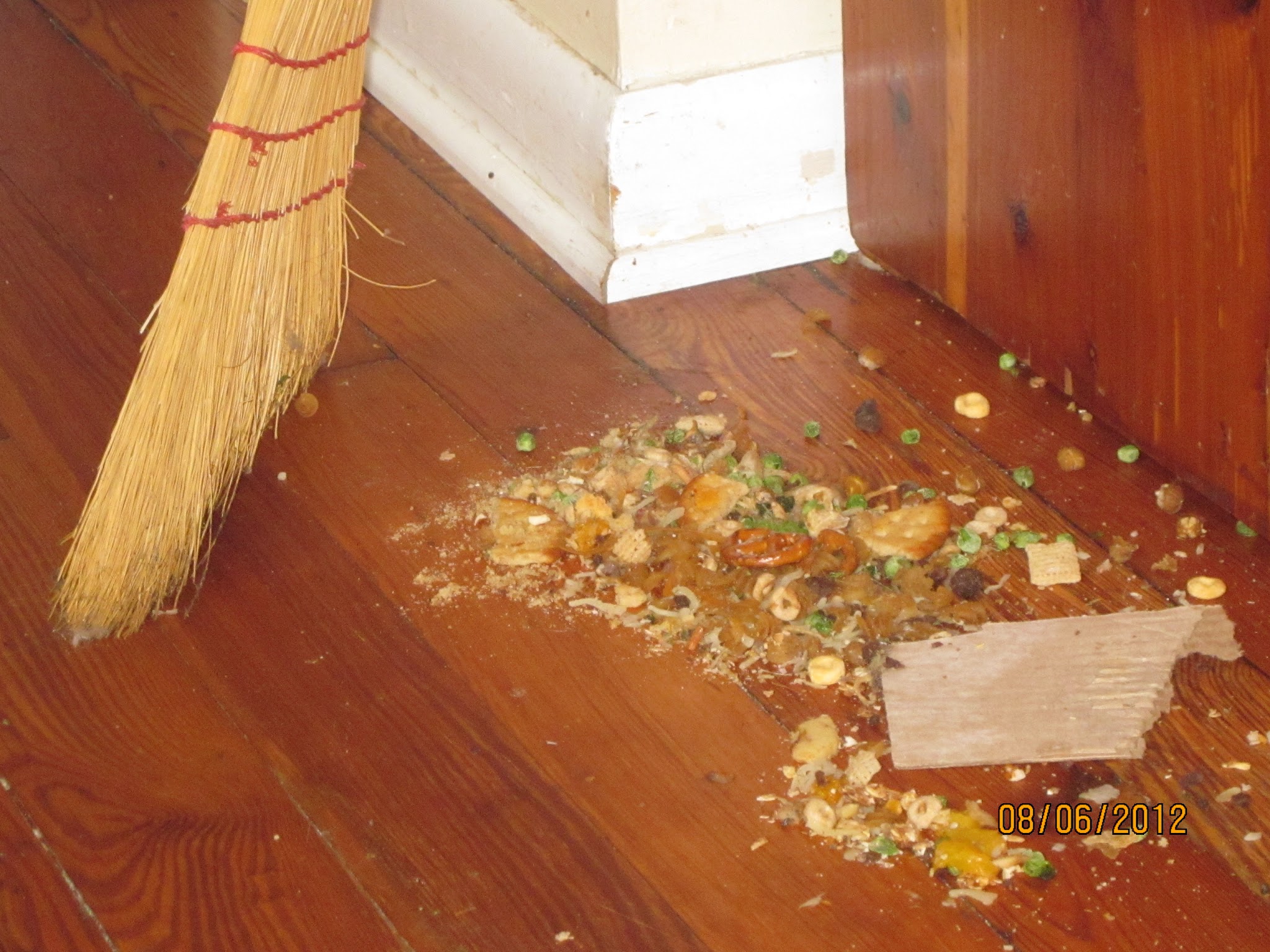
Ok, so this is more than a day’s worth. What can I say? It was a busy weekend!
Dinner for Six
This past month I had the opportunity to write a post for my friend Matt Tuckey’s blog, Y Thoughts. Matt is a good friend and the Associate Executive Director of our local YMCA. You can start reading the post here, then click on the link to continue reading on Matt’s blog. While your there, read around and leave a few comments. Matt writes thoughtful pieces on the intersections between faith and culture and how the many decisions we all make on a daily basis effect both our social and individual well-being.
* * * * * *
It started in a moment of frustration as so many things do when I find myself home alone with four young children during the “witching hour” of 4 to 5 pm. I was buzzing around the house tossing cereal in front of the twins in their highchairs and ferrying snacks to the older two who were camped-out in front of the TV while also trying to make dinner.
Chop, chop, chop, . . . scrape go onions into the pan. Grab another handful of cheerios for the babies. Turn, and chop, chop, chop, . . . scrape go carrots. Then the call from the front room, “Can we have some more snack . . . and some juice, please?”
Click here to visit Matt’s blog and read the rest of this post: Y Thoughts.
Here’s what the kids made:
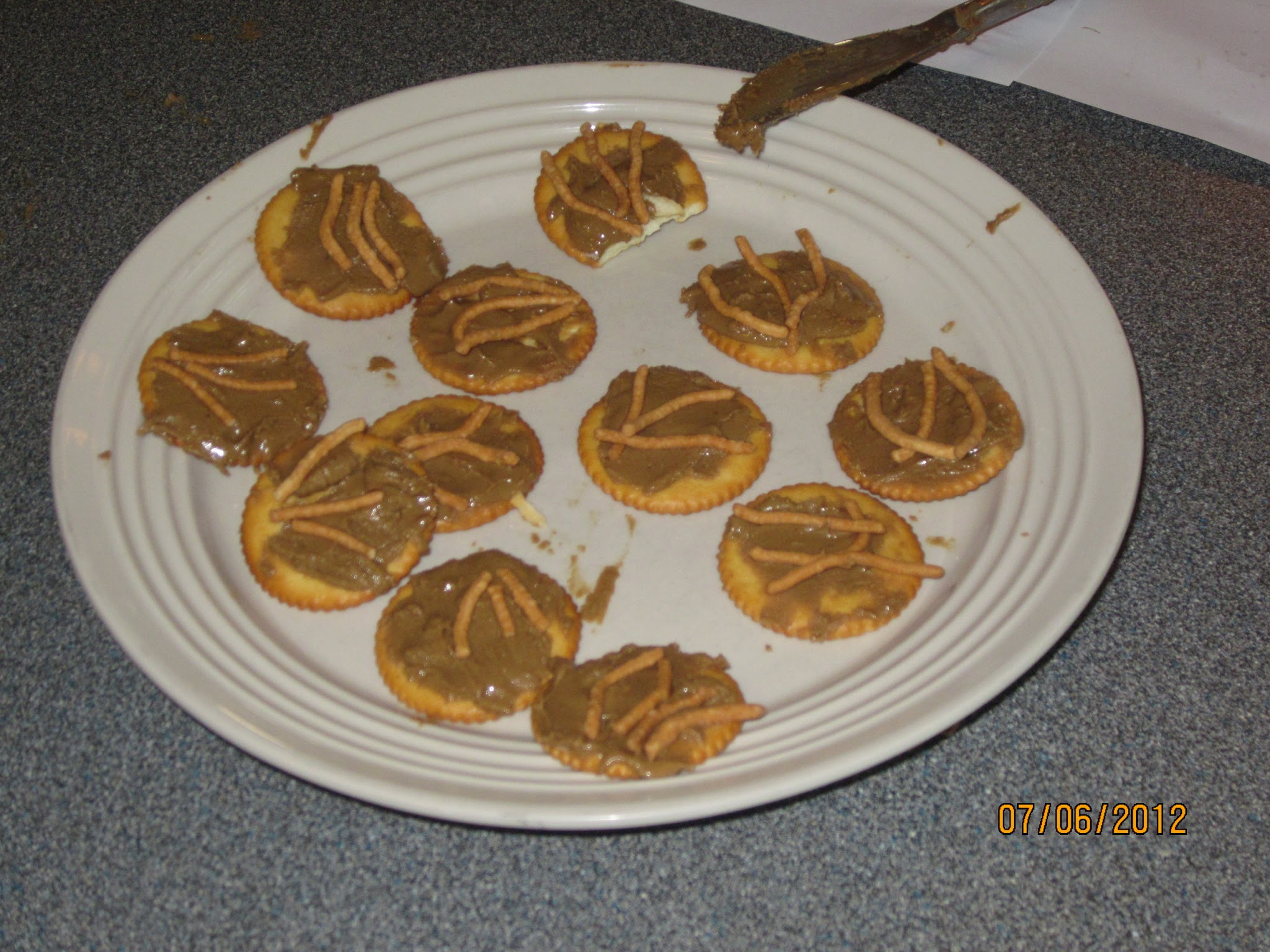
Solomon made “Dinosaur Tracks”
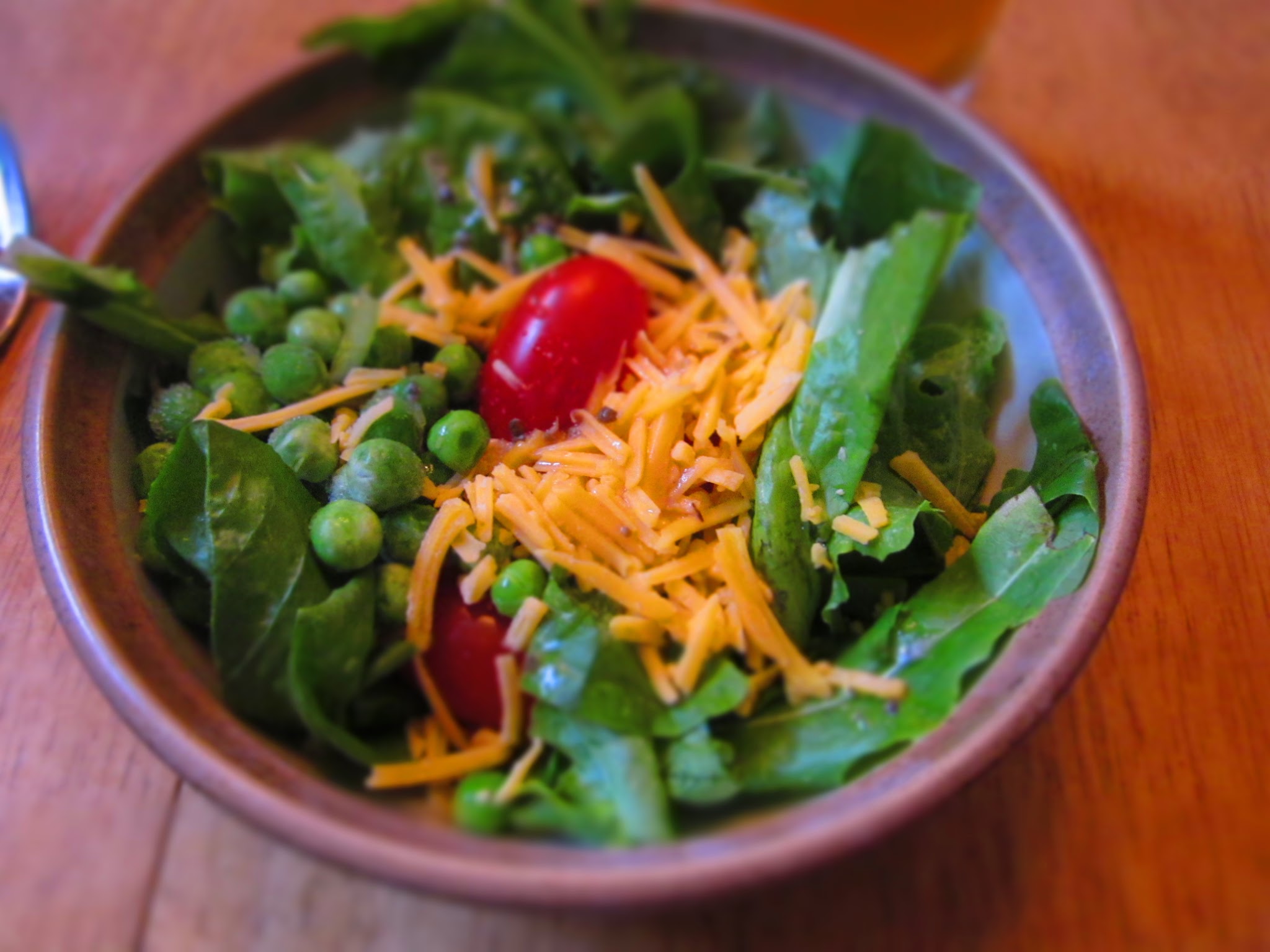
Sophia’s “Princess and the Pea Salad”
Stories of Abundance: Feast or Famine?
I’m continuing a series of short pieces on abundance (this is the third, click through to read the first two: In the Garden and Sowing and Reaping). Sunday evenings and Monday mornings can often be a time of anxiety for me as I worry that I, we, won’t have what we need for the week ahead. What are you needing as you head into this week?
* * * * * *
God has given us another crazy idea for the summer – the idea of hosting a meal every week in our home, providing a main dish and, more importantly, a place for people to be. This is the seed.
But I worry so and fight against planting it. Money feels tight this summer as we whittle down through our savings, each withdrawal advancing the date at which I’ll need to return to paid work. I argue with God endlessly.
“There won’t be enough,” I tell God. “How can we feed others when I feel, weekly, the pressure of feeding my own?”
But God won’t be cowed and keeps pushing the seed of the idea gently and firmly into my palm. “Just plant it,” God says, “See what happens. Isn’t it possible there’s more to this than what you can see?” I finally let go and drop the seed into the ground to see what will come of it.
* * * * * *
I head out to the grocery store to prepare for our first dinner. I am resolved to make a sweet potato and black bean dish, minus the chicken to cut the cost. Despite having consented to plant the seed, I am distracted by the weeds of doubt that crop up dense around it and remain unsure that I’ll have what’s needed to water it.
As I rush through the store, pinching my pennies, my little white envelope of cash labeled “groceries” peaking out of my purse, I kid you not, I hear this over the loud speaker, “Hello, Giant food customers, Rotisserie Chickens are now buy one get one free, that’s right, buy one get one free, as long as supplies last.”
The message is so clear, it might as well have been the voice of God.
I stop where I am in the aisle, still counting the cost of chicken, then turn and head toward the rotisserie stand. There are two other women there, pulling in their harvest of half-price chicken, their unexpected good fortune. I’m trying hard to hide it, but I know God’s laughing at the fun of it all, at my exasperatingly slow ability to get the message that abundance, not scarcity, is the norm in God’s kingdom.
Stories of Abundance: Sowing and Reaping
Over the next week or so I want to offer a series of short pieces on abundance (this is the second, if you want, you can start by reading the first: In the Garden). All of these events occurred over the course of a few weeks. As these stories echoed around, bumping up against each other in the periphery of my life, it became clear that this was a message I needed to hear and hold onto. Maybe you do to? I would love to hear your stories of abundance if you have time to share!
* * * * * *
We all sit on the porch eating our ice cream cones on Sunday evening, the first day of our cardboard collection project. A neighbor has already dropped off two incredibly large boxes filled with cardboard in the less than 12 hours since we started the project, and yet, I worry. I worry that there won’t be enough. No one will put anything out for my kids to pick up. Their hearts will be crushed. The project I’d hoped would teach them (would teach me!) about the way God shows up and turns the little we have into more than enough will backfire and lead to difficult questions and disappointment.
I’m busy tending my own little garden full of the weeds of fear and doubt and failure in my heart, my head, when I notice a car pull up across the street. A woman gets out and pops the trunk of her car and proceeds to pull out enormous flat pieces of cardboard and pile them on the side of the road. Someone from within the house jogs out to help as we sit staring in disbelief. These are neighbors we don’t know, I don’t even know their names, but John had stopped by the day before with the kids to hand out our flyer and explain the project.
We sit and stare, mouths practically gaping, as they unload and we process what it means. We talk excitedly amongst ourselves, “Could it be? Is that card board meant for us? For our little project?” We look at each other and laughed at our bewilderment, at our excitement, at the wonder of it all.
We planted the seed of an idea God gave us and it sprouted in the imagination of our neighbor. Our neighbor remembered a friend with cardboard to spare. A phone call was made, a seed planted in someone else. Card board was loaded and keys placed in the ignition. And here we were to harvest a crop of abundance that we had neither watered nor tended.
And yet, when the kids went out a few hours later on their collection route, I paced the house in anxiety. Still not believing in the miracle of seeds and planting. Still not believing God’s strange math of multiplication whereby Elijah and a widow and her son can survive on a few drops of oil and flour, or a crowd of four thousand can eat and be filled from seven small loaves of bread.
Gentleness Saves
The following is a brief and quickly written post in response to Barbara Brown Taylor’s question, “What is saving your life right now?” Explore other bloggers’ answers to the same question at Sarah Bessey ‘s blog. For me, this was a good prayer experience. What would your answer be? Consider commenting, journaling, or posting the question on your facebook page. Here’s my response:

All I can say is that we are in transition again. It’s presence hangs like a heavy cloud just over the horizon. The twins turning one in two weeks. School starting, a first grader and a four year old gone three mornings a week now. And me, on a precipice again, or at least it feels that way. Barreling down a river toward a waterfall, I can feel the current gaining speed and we’re not ready, I’m not ready. So I am lashing things down to our little raft, holding us all too tight and making everyone miserable in the anticipation and not knowing.
A friend stopped by this morning and pushed it all back for a few minutes, spoke over the roar of the waters, made space for the flood I was holding back.
After she leaves and I am standing doing last night’s dirty dishes an old verse comes to mind:
Do not remember the former things,
or consider the things of old.
I am about to do a new thing;
now it springs forth, do you not perceive it?
I will make a way in the wilderness
and rivers in the desert. Isaiah 43:18-19
Maybe. Maybe this is what’s saving me in the wilderness and desert of my unknowing and fear. The promise that God is always, always, always doing a new thing, that there’s no turning back with God, that what lies beyond the fall is better than what came before. And that maybe the ride is for enjoying. This, saves me.
But then, when I forget again and fight and struggle and cling to my raft counting down the minutes to my own sure demise, there’s another voice that saves me. This one whispers beneath the roar of the waters, “Be gentle with yourself. Be gentle. As gentle as you are with your shaking son who’s dreamed a dinosaur in his room at four am. Gentle as you are when you lay down the other two who’re dancing and jumping and yelling in their cribs. Gentle because you know they’ve simply forgotten how to let go and stop fighting the steep fall into sleep. Be as gentle with yourself as I am with you.”
I write these words that are saving me in black ink, going over it three or four times so it stands out bold and place them in the center of my refrigerator,
“Be gentle (for love and for joy).”
Stories of Abundance: In the Garden
Over the next week or so I want to offer a series of short pieces on abundance. All of these events occurred over the course of a few weeks. As these stories echoed around, bumping up against each other in the periphery of my life, it became clear that this was a message I needed to hear and hold onto. Maybe you do to? I would love to hear your stories of abundance if you have time to share!
* * * * * *
I head out into the yard in the heat of the morning – the green beans need to be picked. We’re not good gardeners, my husband and I. He plants with the kids in a flurry of hopeful expectation and I reap with the kids with a weight of obligation to the fruit which has grown of its own accord amidst weeds, harsh sun and a lack of water.
I squat beside the garden; the bean plants paint a chaotic picture of our inattentiveness. The leaves are half-eaten and the beans hard and overgrown. But I pick them out of duty and compulsion, “waste not, want not” and, plunk, plunk, plunk, they fill the spaghetti strainer by the handful.
The kids are elated. “Can we eat them?”
“Sure,” I say as I pop one into my own mouth.
“Any time we’re out here and get hungry, we can eat them!” they exclaim.
The kids pick haphazardly and I can see they’re invigorated by it, by finding there a harvest that they played so little a roll in producing. And I too can’t help but join in and be moved by the wonder of it all. It’s then, as my mouth is open that my spirit is open too and I see here, yet again, the message of God’s abundance. The picture here in my poorly tended garden of what God insists is the truth of the world, the truth of God’s kingdom, despite the voices arguing against it.
* * * * * *
“We need not hope for Grace, we merely need to open our eyes to its abundance. Grace is all around us, not just in the hopeful future but in the miracle of now.” Richard Paul Evans
Easy Affection?
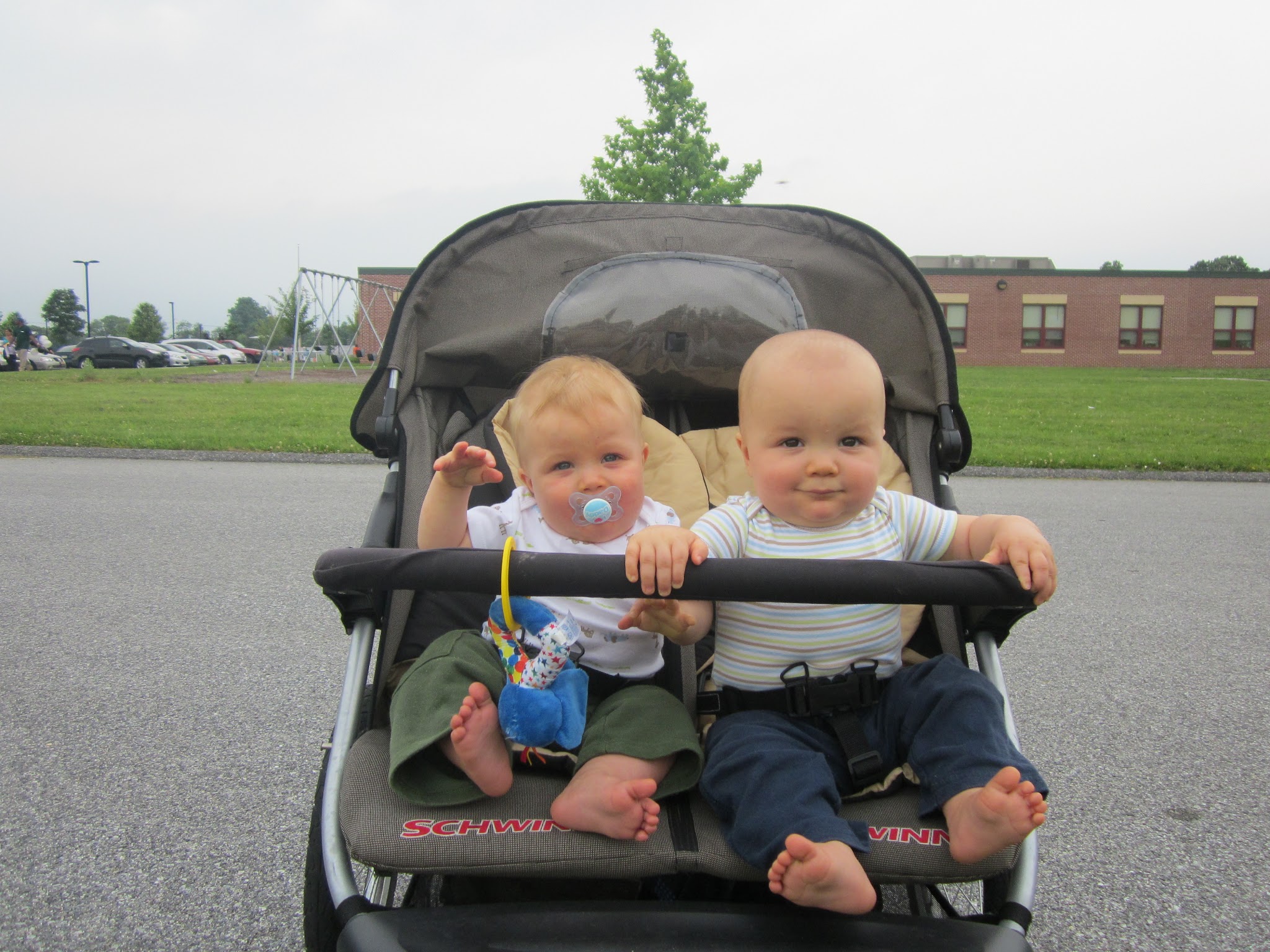
Sometimes ten month old Levi rests his little hand on his twin brother Isaiah’s pudgy thigh when they ride side-by-side in the jogging stroller. It looks like an adorably casual gesture of affection. Occasionally they even appear to be holding hands as they ride along taking in world around them.
People, of course, love this. It’s probably the number one thing that people enjoy about twins and what they comment on the most. They’re fascinated with the easy acquaintance they imagine between twins, the bond that existed from before birth. “Imagine always having a friend,” they say or “How special, that they’ll always have each other.”
For the most part I try to hold my tongue at these remarks. I don’t mention how desperately Isaiah enjoys pulling Levi’s hair or the deep satisfaction he finds in stealing the coveted pacifier. How he frequently and painfully explores his brothers ears and eyes and nose with detached curiosity. I refrain from citing the numerous times one crawls over the other, using his brother’s head as a hand-hold to get to a toy.
I’ll confess. I love it too. “Look, they’re holding hands,” I say to my husband. In the early weeks we took picture after picture of them tangled together sharing a stroller and pressed up against each other in a deep sleep when they shared a crib.
I’m sure twins share a unique bond that’s deeper and more complex than I’ll ever understand. But I also think of Jacob and Esau, Cain and Abel, and the other scores of brothers, biblical and secular, for whom brotherhood was, perhaps, their biggest challenge.
Maybe people believe strongly in the bond of twins because we so long to believe in the possibility of such relationships. Relationships based on acceptance and love that are rooted in something beyond time and space. Beyond the individual particularities of our lives that are so often the roots of our warring and strife.
I hope these boys, and my other children as well, grow a deep affection for one another. But I want to remember the reality that it won’t be easy to do. That affection worth sharing is never easy, but instead is hard-won despite the hair-pulling and competition. And that true love is often, if not always, rooted in something greater than the self.
An Empty Box Can . . .
We’re three weeks into our cardboard collection project. Our goal is to fill our back room from floor to ceiling with cardboard that we will then donate to Project Share. My original question was, “Can an empty box make a difference?” Here’s what I’ve noticed so far:
An empty box can:
1. get your neighbors talking (in a good way!). Since starting our project we’ve had more opportunities to connect with the very quiet, highly elusive people who live around us.
2. give people ideas. Several of our neighbors and friends have really been thinking about where they can find cardboard. One neighbor manages a local Sub Way and mentioned that his landlord won’t pay for a recycling bin, so they THROW AWAY all of their boxes. Since we started our project he’s been bringing them to our house once a week and he’s planning to call Project Share to see if they can arrange to send a volunteer to pick-up in the future.
3. make it more than a little difficult for door-to-door sales people to get to your door. Ok, so when someone drops off a big slippy-slidey pile of cardboard we don’t always get it brought in right away. So the night that two men from Comcast came, yet again, to ask why in the world we didn’t have Comcast they found a bit of a “barrier” between themselves and the irate woman answering the door. (hmmmm . . . I guess cardboard worked both ways in that case, to their benefit and mine!)
3. teach teamwork. The little cart we made for toting cardboard broke on day 2, so we’ve been hauling it awkwardly up and down the street since then. Last week John sent me a text from work to tell me he saw some cardboard on his drive in. I sent Sophia and Solomon running down our back alley to beat the recycling truck to a pile. I loved watching them struggle down the street half-dragging, half-carrying it together.
4. live a little. We’re proud to be loaning several boxes to some close friends who’re moving across town this summer. This gives our boxes a chance to see a little more of the world before heading to the big recyling bin in the sky, er, I mean, Project Share. Plus, we look forward to getting all of these boxes and more back when our friends unpack in August!
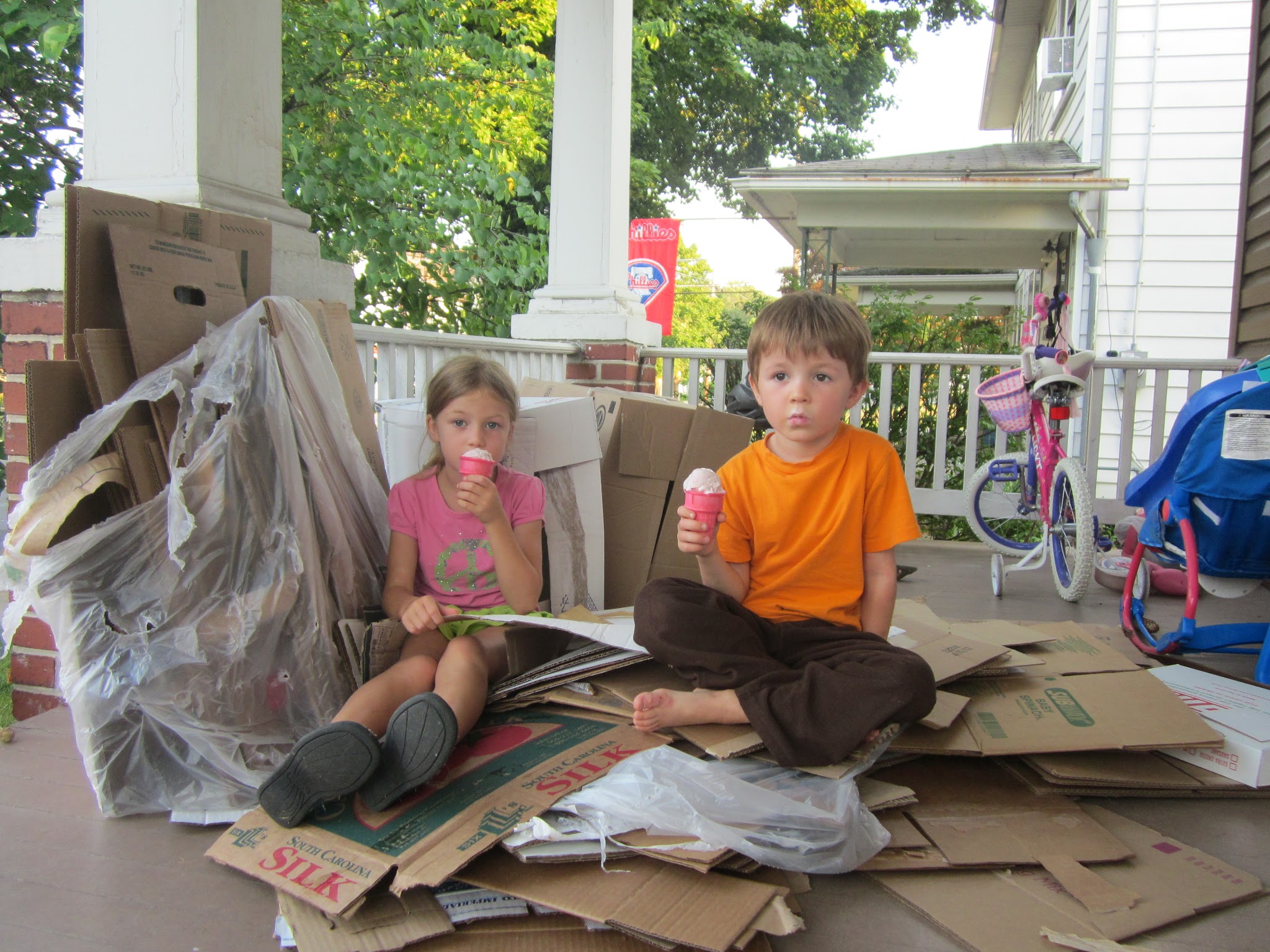
5. make eating ice cream cones on your porch more interesting:
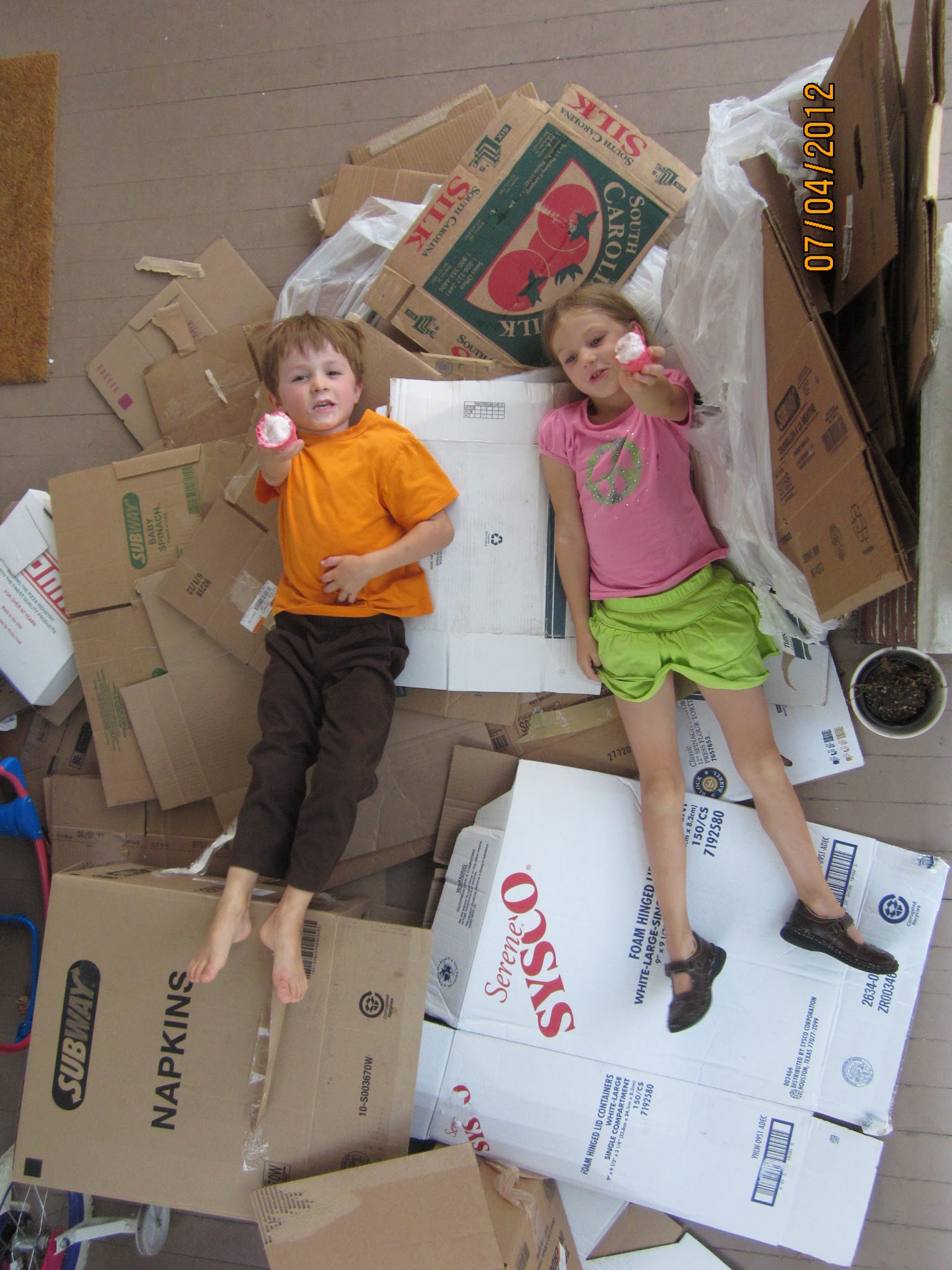
We’re about 1/2 way through our alloted time for collection and figure we’re about 1/2 way to filling our back room from floor to ceiling. Stay tuned for updates and keep your eyes peeled for cardboard, we can use every little bit!
Books

Between Heaven and Earth (poems)
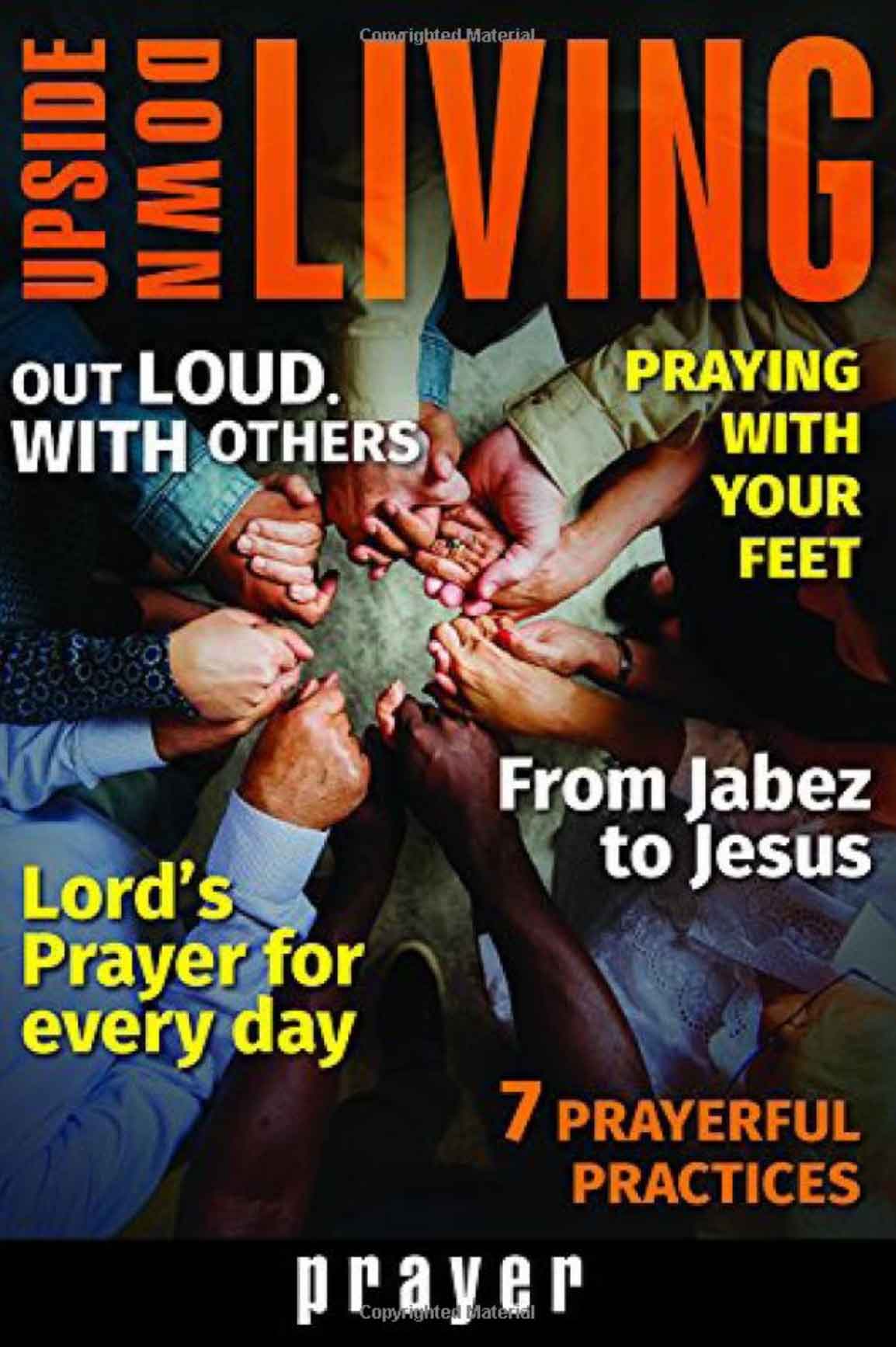
Prayer can easily become an afterthought, a hasty sentence, a laundry list of all the things we want. But what if prayer is a time to find out what God wants for us–and for our world? What does it mean to pray that the kingdom would come here and now as it is in heaven? Explore these questions in this study, and learn prayer practices that nurture intimacy with God and sensitivity to God’s dream for the world.

Follow this writer, spiritual director, and mother of four as she dives into the deep end of chicken farming and wrestles with the risks and rewards of living a life she loves. At turns hilarious, thoughtful, and always compassionate, Chicken Scratch will change the way you see the mess and chaos involved in living life to its fullest.
