
Essays
In Silence, they Whisper
Then a great and powerful wind tore the mountains apart and shattered
the rocks before the Lord, but the Lord was not in the wind. After the wind there was an earthquake, but
the Lord was not in the earthquake. After the earthquake came a fire, but the Lord was not in the fire. And after the fire came a gentle whisper.
I Kings 19:11-12
Gather any
group
together in
silence
and before
you know it
bodies will
start talking.
The strange,
“gallump”
of a
stomach, not hungry,
but vocal.
The clicking
of an ankle
every time
he takes a step.
Or share a
meal ,
break bread,
in the
absence of words
and notice
how a swallow sounds
and the
great,
grinding
work of teeth.
In the
volume of everyday
we hear
nothing
above the
roar
save the
most incessant shouts
of “More!”
and “Comfort, now!”
But, in the
absence of noise,
our bodies whisper,
“Live!
Breathe!”
and we are
tuned to their
subtle motions.
Linking with dVerse Poets Pub and Love Dare.
Laughter and Tears (for Mother’s Day)
“We’re thinking about having another baby,” I said, keeping my hands at two and four on the steering wheel and glancing over at my mother
who sat holding her purse in the passenger seat.
We were a little over a month into her diagnosis and several
weeks into chemo. Instead of our annual
birthday visit filled with fourth of July parades and fireworks, we were
driving North, into unknown territory, following vague directions to a wig shop we hoped would be open.
I explained how we would like our kids to be close in age
and so were thinking about a second pregnancy soon and my Mom offered her blessing, but looking back, that wasn’t what I
was really looking for.
“I’m afraid I’m going to be nine months pregnant and you’ll
be in the hospital somewhere and I won’t be able to be with you,” I said, asking
without asking what I really needed to know – did she think she was going to be
ok? Was it safe to go on living
life?
The wig shop was closed but we stopped anyway, leaning and
peering in the windows like children outside a candy store. Wigs hung on the far wall of the darkened room,
including a huge head of wildly curly hair several feet long that we joked
about as we drove to the second shop on our list, Elvira’s.
Elvira’s was clearly an African-American hair salon, but we
went in undaunted and Elvira herself served up the compassion we
needed, showing us several styles of wigs and color swatches. It was funny, the thought of my mother
wearing a wig prepared by a woman named Elvira of all things and we laughed as
we drove home, joking, because it was the only way to avoid crying.
She told me you never know what’s going to happen in life,
she could walk out in front of a truck tomorrow and be killed, any of us
could. She hoped she would survive,
hoped the cancer would be cured, but she didn’t know and couldn’t know for sure.
It was a true answer, truer and braver than the one I’d
wanted.
* * * *
“Is she going to make it?” she asked in a stage whisper
after my Mom left the room to use the bathroom.
That same weekend we drove an hour to a “Look Good, Feel Better” session
suggested by the oncology center. We sat
alone in the wide, empty parking lot of a large gray school building waiting
for someone, anyone to arrive. Disappointingly,
there would be no class of women gathering together, bonding to fight cancer
with beauty and self-esteem, just my mother and I and a middle-aged woman who
showed up late and apologetic and, later, her friend.
We sat in a cramped dressing room that reminded me of my days
in theater and a woman in tight, revealing clothes gave my mother a makeover –
my mother who grew up in the conservative south and bought her first tube of
lipstick late in life. We both sat
submissive, desperate, as this young stranger kept up a steady stream of chatter,
applying layers of makeup while explaining the effects of chemo on skin and
lips and hair.
We practiced tying scarves to cover the hair-loss that was
imminent and my Mom tried on a wig or two.
The stranger gave her scarves and hats and a complimentary make-up bag.
Her question left me speechless and I stared at her blankly before
mumbling a diagnosis.
“A lot of them don’t, you know,” she added, as if by way of
explanation and I quickly arranged myself in a hopeful posture, coloring the
situation beautiful even if it wasn’t.
* * * *
I shaved my mother’s head on her birthday, as best as I can remember, though it may have been a day or two before or after. Her hair dresser had offered to, but I convinced her to let my husband buy a set of clippers from the pharmacy and we shaved it in her upstairs bathroom.
She sat on the old computer chair under the bright light and whirring fan. She hadn’t wanted me to cut her hair and when I asked her why she said she was afraid it would be too upsetting for me.
There’s no sparing the upset, though, when cancer’s involved and I said I knew it might be upsetting, but that it was better than thinking of her getting it cut without me in the back room of a beauty parlor.
This is what love does, I guess. It travels with, even through the vallies of darkness and death, using laughter and tears to crack open and water these most dry and desolate lands.
We joked and cried our way through cancer and I did get pregnant and bore that baby on the same day my mother received the stem cell transplant that saved her life in a hospital some five hundred miles away. April 12, 2008 we each lay in hospital beds in separate states nursing new life that had already been nurtured through laughter and tears.
I didn’t know then what I do know now, that laughter is the
seed of hope and tears the rain that nourishes the fragile seed. If we will but wait, hope grows into a tree
that bears us in its leafy shade through every moment of joy and sorrow.
Happy Mother’s Day, Mom, You’re one of the strongest and bravest women I know! I’m so glad you “made it!”
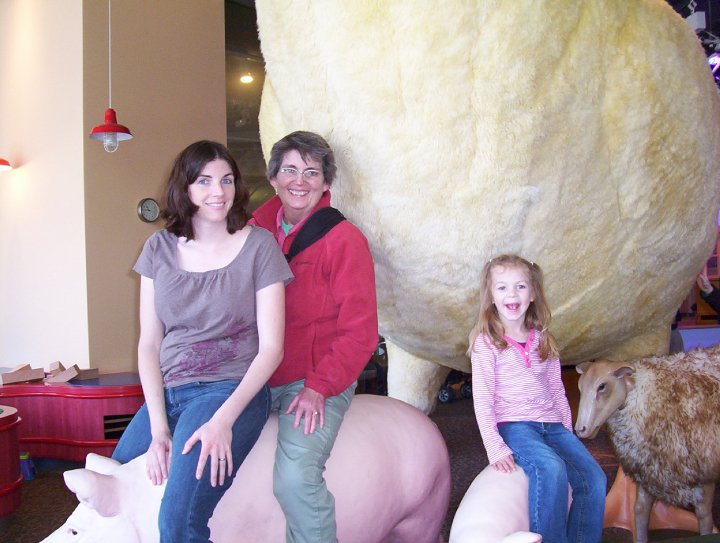
My Mom, my daughter and I two years post transplant.
Linking with Laura and Jennifer.
Abraham and Judas
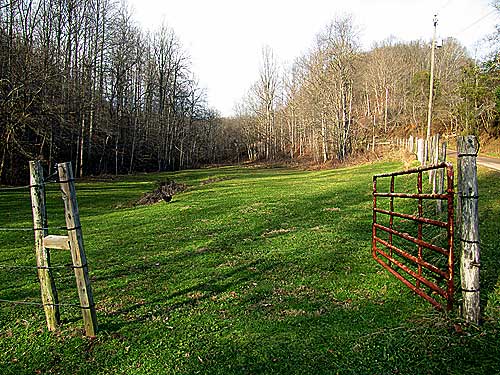
Abraham and Judas
How often
have I exchanged
the promise
of a good and spacious land
for something narrower
or betrayed
the possibility of freedom
for the certainty
of thirty pieces of silver?
Photo rights: here.
Risk
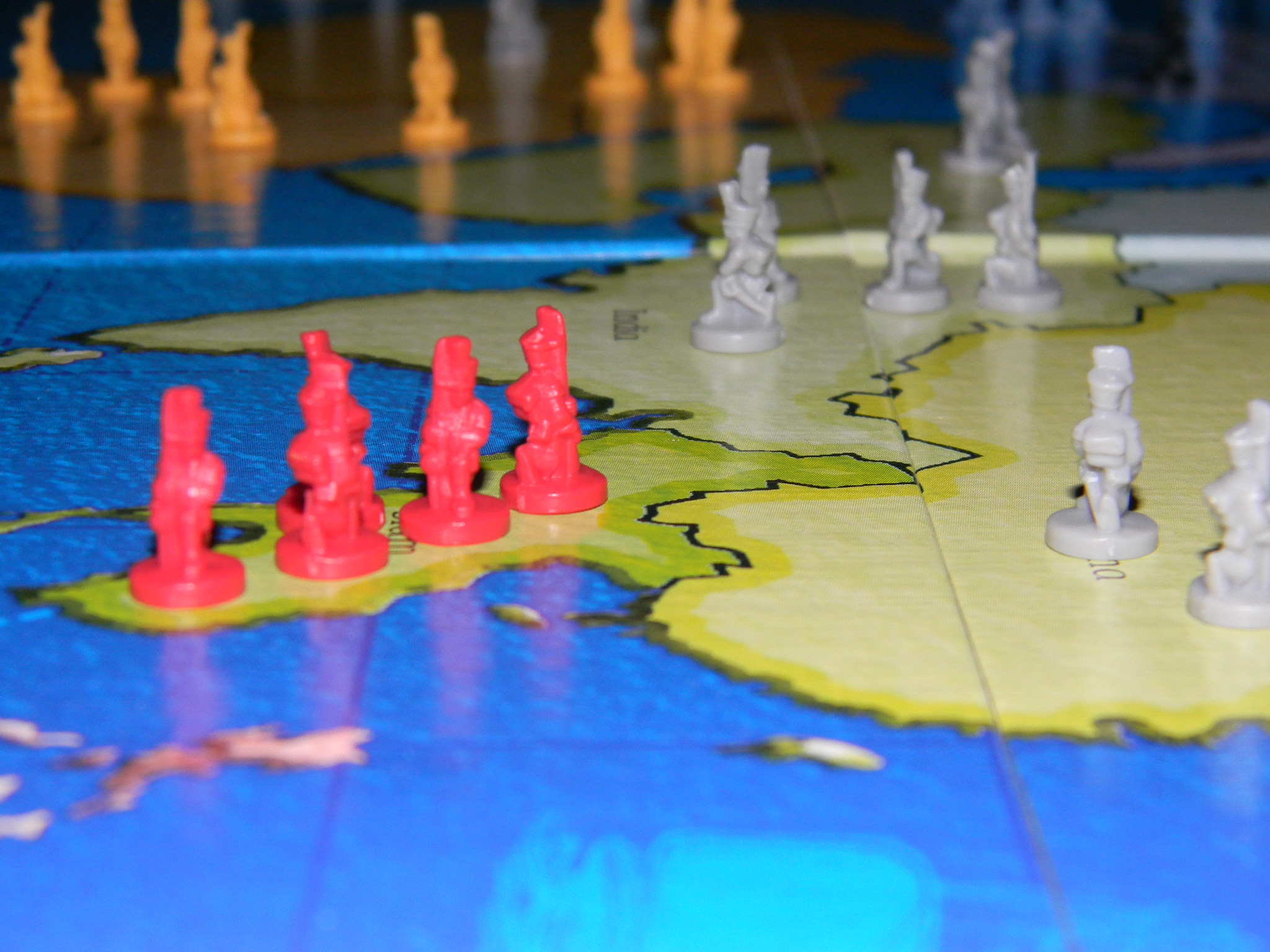
Early in our marriage it became clear that too many
one-on-one game nights would ruin us, since I’m terribly competitive and an incredibly poor
sport. Being poor newlyweds, we didn’t own a TV and
couldn’t afford to go to the movies, so we decided to keep playing our games with
one crucial change – we would play on a team together against any number of
other friends who were also played by, well, us.
Though we still skewed the score from time
to time to make sure we came out winners, we enjoyed ourselves and my poor
sportsmanship was kept under wraps until the fatal day that we stumbled across
Risk: The Game of Global Domination.
Risk is a game of dice, slim on strategy and high on chance.With every roll of the dice fortunes turn from certain triumph to definite defeat and few are the relationships that survive it. During one particularly intense game I shoved the playing
board hard enough to make it slide across the dining room table. Strategically arranged soldiers, tanks and cavalry men scattered wildly over various
continents and oceans. I was losing
badly and my husband was gloating and it was more than I could bear.
After the
“incident” we banned Risk from our
household, selling it to an unsuspecting customer at a yard sale. We stuck to
Trivial Pursuit, preferring the absurdity of teaming up together against ourselves over potential relational disaster.
* * * *
Fast forward a good ten years and here we are in the midst
of selling our house and the process feels surprisingly similar to the game of Risk – on any given day we vacillate between
dreamy elation and devastated despair as we circle frenetically around to-do lists
and strategies, Internet searches and realtor listings.
“This is crazy,” we say, looking past each other with wild,
dilated eyes before turning back to scroll with obsession through the same
listings we’ve seen for the past month or more.
“Are we crazy?” we ask, standing cornered in the kitchen
planning, weighing our next move, rolling imaginary dice as we add up the possible
weeks it will take to list, sell and buy a new home.
When it comes right down to it, there’s risk involved in
selling one house to buy another and I, the poor competitive sport that I am,
find myself torn between ratcheting up my efforts to control the uncontrollable
(and making my family crazy in the process) or resigning to devastation (and
making my family crazy in the process).
Too often, I find myself picking fights with my husband in subtle ways,
as though our house is the playing board and my fingers run lightly along the
edge, poised to shove it all into disarray if only to relieve the tension of
enduring the unknown.
* * * *
Occasionally, in a rare moment of grace, we see each other in the middle of it all and our arms open as if by instinct. “We’re crazy,” we say, leaning in and shifting our weight just the slightest but changing our posture
radically, from against to together.
If you like this post, you may also like We Have No Maps.
Slowed to the Taste of Blue (Wonderstruck)
We sweep through the big red-framed doors into Target, into the coolness and light and open space that smells like newness and popcorn mingled together.We stop for a cart and I take off long-striding into the belly of the beast, pushing, pulling my daughter who’s half-walking, half-riding on the cart, half-child that she is.
It hits me as we charge past the dollar bins that I’m going to have to slow down if I want to be with this girl.This girl who takes so long to answer a question that you begin to wonder if she heard you, so slow that I’m often tempted to answer for her.This girl who I too often push and hurry along, my hand on the small of her back.This girl who is so like me at her age.
Near the end of our trip we stop by the pharmacy to pick up a prescription for her brother.The pharmacist pulls a large hot-pink plastic platter of dum-dum lollipops out from under her side of the counter and sets it down.My daughter stands in front of it, her face less than a foot away from the wide spread of sugary sweets.She stands motionless apart from the slight shifting of her head as she gazes at the bowl.Time pauses.We wait.I shift my feet, make eye contact with the pharmacist, and shift my weight again.My daughter stands still, lifts her right hand toward the bowl as if having decided, then drops it again.I meet the pharmacists eye.We wait some more.
I’m tempted to interject, to offer a question to prod the moment along and suppress the urge not once, not twice, but three times.The time that passes feels like an eternity to me and the pharmacist finally does interject asking, “Is there are certain kind you’re looking for?”My daughter doesn’t reply, except to raise her head slightly as though the pharmacist has startled her awake somehow.Her eyes remain fixed on the bowl.Finally, slowly and specifically she chooses two lollipops, both green, one for her brother at home and one for herself.
As we head for the exit and the parking lot beyond I wonder what she was doing during all that time.Then I wonder when it was that I stopped seeing the bowl of lollipops, really seeing it, in all of its color and variety and options. I wonder what I’ve lost in the incessant stream-lining and fast-forwarding of my life.
* * * * *
I have long legs, impossibly long strides and life has taught me to run while walking.I don’t know when I became so fast, but I think it had something to do with the never-ending to-do list of motherhood.The weight of family life pulled on me like so many people drowning and I learned to kick and paddle quicker and quicker, treading water to keep us all afloat.Or maybe it has to do with the fact that our culture doesn’t put much stock in slowness.We want a quick fix, we pay for speedier service, fill ourselves with fast food and divide and shuffle our time like cards in a deck trying through every slight-of-hand imaginable to add one more moment to an already full day.
I find it strange that the addition of the twins has proven to be an invitation to slow down even as it increases the already whirling pace of family life. We have a large, double-wide jogging stroller and since I can’t carry two children for long we take it almost everywhere. Surprisingly, I’ve had several moments of awakening, of slowing while pushing that stroller, like the time I felt the blessing of my children rising up around me, as well as other times I’ve yet to write about.
When I wonder why that is, how it is that I’m somehow more attuned to the realities of the world within and around me when pushing that great, wide stroller spilling over with children, I can only conclude that it’s because of the way it slows me down. It’s a big stroller, easy to push, but wide.At the grocery store I joke that I’m pushing a Big Mac and it takes the help of several parents to open the doors in our path as I plod my way in to preschool pickup.Added to this is the slowing weight of the hands of my four year old and six year old, each perched on the opposite sides of the stroller’s handle so that our width is extended by two more bodies, our pace slowed by the addition of two more souls.
I wonder, though, if this slowing doesn’t somehow also involve the hand of God resting gently, heavily on my life, awakening me to the voice that says, “Slow down. Life is a meal too rich to be choked down in the back of your van while running from one thing to the next. Savor it, my child, like the slow melting of a sweet treat on your tongue.” Tradition often describes God’s touch as a “quickening of the spirit” but more often I experience God’s presence as a slowing and deepening that stretches and broadens the moment, expanding it in beauty and breadth until it resembles a small and fleeting taste of eternity.
* * * * *
Just yesterday we were back to the pharmacy, this time for my daughter who also tested positive for strep throat. We again faced the platter of dum-dums. As I waited and the pharmacist sifted through the lollipops, I found myself awakened to the moment, my eyes widening in the space my daughter’s slowness creates.The platter of lollipops stretched out before us like a rainbow, inviting me to stop, slow down and see.
My eye caught on a blue and white wrapper, a picture of blueberries in a day-glow color and my hand shot out of its own accord as if in answer to a question posed by that blue wrapper.My fingers closed around it just as my daughter finished picking hers and I looked up as if awakening from a dream and met the pharmacists eye.
“I’m taking one today, too,” I said as we pushed off from the counter and headed toward home, grateful to be slowed, grateful to be awakened to the taste of blue on my tongue, tangy and sweet, that lasts the whole way home.
This post originally appeared in Sept., 2012. This edited version is being reposted and linked with Wonderstruck, click through to read more posts.
We Have No Maps

“We have no maps, nothing but the inner directions
that seem to emerge as we engage the questions and
risk moving toward the dream. Together we will
learn where we’re going.” – Judy Cannato
The man I now love
invited me on a walk
that first spring.
“Why don’t you go
in front?” he offered,
as we wandered
without a trail
down a wooded slope.
Inwardly I bristled,
“How should I know
where we’re going?”
But his joy
was simply to be
in the woods with me
and I, alone,
could not feel it.
We’re walking again
this spring, moving
without a map
toward shared dreams,
down a hill no less
wooded or sloped.
But now I see,
together is the key
not where or how.
And when fear
causes me to stumble,
I find myself turning,
not to anger,
but to love.
This poem is shared with dVerse Poets Pub for their open links night.
Perfectly Imperfect (a mostly true story)
It was the end of the academic year, spring ripening toward
summer.
She circled the small dorm room, two, three, four times, her
eyes pausing to measure each object before passing on to the next. Her long hair was wrapped in a floral
bandanna, her face hot and dusty.
Finally she saw it, the last piece, long and rectangular, just
the right size to finish filling the box she was packing. Tucking it into the waiting space and folding
the lids shut, a small sigh, almost imperceptible, escaped her lips, “Perfect.”
* * *
Just over the hill, on the other side of campus, he strolled
into his room, leisurely, with the air of the sun and woods about him.
He began by piling one thing after another onto his unmade
bed, flinging them haphazardly into the middle of the sheet. Books, clothes, shoes, odds and ends, he
tossed them together onto the bed like someone making a pot of soup out of a week’s worth
of leftovers. Later, he would lift the sheet, gathering it in the middle and carry it all out to his car, slung over his shoulder like a hobo.
Having emptied every drawer, he finished by tossing himself
onto the bed and laying back to stare at the ceiling. A small, almost imperceptible sigh escaped
his lips, “Done.”
* * *
Stuck again, she picked up the phone to call and he answered,
of course.
“What are you doing?” she asks.
“Nothing,” he says.
“Really?” her voice rises, “You’re not doing anything?”
“Nope . . . just laying here on my bed . . . looking at the
ceiling,” he added, with ease.
“Are you thinking
about anything?” she asks, incredulous.
“Nope, nothing,” he adds, with an air of finality.
* * *
In a year they’re engaged and married six months later and
he moves into the small apartment where she waited for him to graduate. They share their first Christmas there and
buy a kitten who pees profusely on the carpeted floor.
When the lease is up they move together to a new place
which, of course, requires packing.
She sorts and circles while he piles and dumps. He tells her how he used to pack, thinking
the use of boxes shows he’s come a long way. She explains how every box is a chance for
perfection.
Something about the distance between their methods seems humorous,
so they laugh, at themselves and each other.
And for once, she closes the box in front of her, taping it shut as it
is, perfectly imperfect.
The Rescuer
I had just emptied the dishwasher and was bent, filling
it with plates and forks from lunch when I heard the loud crash. It happened during those few quiet moments of
contentment, when the sunlight pours through the kitchen windows and
the three boys, with sated stomachs, mingle contentedly in the living
room.
I heard the crash and looked up and start running all in one
swift movement, plowing through the dining room and over the hip-high baby
gate without pausing, straddling it without breaking stride. Twelve-month-old Levi lay on his back underneath
the record stand which had fallen forward onto him, pinning him to the
ground. As I ran, in the split second
between kitchen and living room and holding him, I watched his older brother
swoop in and throw the table off.
Then the crying started and I scooped that baby up and pressed
him to my chest as the wails pierced my ears.
His brother started in immediately with explanations and I resisted the
urge to accuse him of causing the table to fall, resisted the urge to pin one
more child under a weight of any kind.
Levi paused in his crying and lifted his head to look at
the table, as if wondering what happened.
Convinced that nothing was broken, I started to
breathe again.
Like all moments of crisis, the situation bonded the kids and I as we sat together on the living room floor sharing what we saw, what
we heard, what we feared. Solomon was
buzzing from the action and bounced on the couch, talking loudly.
I was impressed by his quick thinking and said, “Good thing
his older brother was here,” finishing with words I knew he’d relish, “to
rescue him.”
His face lit up like the sun through those kitchen windows
and I knew he’d greet his sister and father at the door with the story of how
he rescued Levi.
Later I remembered how the “Jesus Storybook” children’s bible refers to Jesus as the “Rescuer,” and it seemed to me to be an entirely
appropriate title for Jesus, for One who comes when we need him most and throws off
the pressing, crushing weight of sin that lies heavy on us all.
Manhunt

Manhunt
Driving through
the
morning’s round of drop-offs
the radio
tells of man
hunting man
and I watch
as magnolia trees
drop great
showers of
silky,
blushing blooms.
Spring is
the foolish season
whose beauty
we cannot long endure
so the
trees, in their gracefulness,
weep their
soft and silent petals
knowing we’ll need their leafy shade
to hide us
from the searing sun.
So much
beauty falling on the silent earth,
so much beauty
fallen.
Making Straight the Crooked

He was teaching in one of the synagogues on the sabbath. And just then there appeared a woman with a spirit that had crippled her for eighteen years. She was bent over and was quite unable to stand up straight. When Jesus saw her, he called her over and said, “Woman, you are set free from your ailment.” When he laid his hands on her, immediately she stood up straight and began praising God.
But the leader of the synagogue, indignant because Jesus had cured on the sabbath, kept saying to the crowd, “There are six days on which work ought to be done; come on those days and be cured, and not on the sabbath day.” But the Lord answered him and said, “You hypocrites! Does not each of you on the sabbath untie his ox or his donkey from the manger, and lead it away to give it water? And ought not this woman, a daughter of Abraham whom Satan bound for eighteen long years, be set free from this bondage on the sabbath day?” Luke 13:10-16
* *
* * *
The dream came again that night, the night she now thinks of
as the night before. It was the same
dream that had plagued her off and on for fifteen years or more, arriving
sometimes nightly or leaving for a month or
more before returning when she least expected it.
It started with a familiar scene as most dreams do. She was shuffling along, leaning on her
walking stick, her back grotesquely bent so that her silhouette resembled a
question mark, her posture posing an endless unanswered prayer. She moved slowly down the dusty path that led
to her house on the outskirts of the small village. The streets were unusually quiet, the air was
still and she watched her feet as each step stirred up small puffs of fine, dry
sand.
Slowly, she becomes aware of the sun bearing
down on her twisted back, her bowed head.
It’s a welcome warmth, but as it grows in intensity it begins to feel
like a searing heat burning through her thin clothing. As the sun beats down she begins to feel a
straightening, a strengthening in her back and she is lifted, her face turned
upward toward the blue sky filled with bright sunlight. In a move that feels both natural and miraculous her body unfurls in flight as she soars up into the sky. The sky around her is filled with the faces
of those she loves; the face of her husband, dead now these ten years, her
children, and others long gone to all but memory.
As she continues to soar, her body fills with the warmth of
the light, the warmth of the faces she passes. Moving higher, she glides directly toward the sun which she
stares at, curious and unflinching in its glare. She can’t turn her eyes away from the sun for
there, in the brightest spot, is a face she knows, a face she remembers but
cannot name. She soars in the hope that getting closer would allow her the satisfaction of recalling
the name.
Then a burst of cool wind
chills her body and stops her mid-flight, causing her to curl in upon herself
in the old familiar position, like a fist clenched shut. Darkness fills the sky and she begins to fall, spiraling through the night.
She passes the same faces again only they too are twisted now as if
mirroring her bent body; hard and unfamiliar they leer at her fall through the darkness.
This, always, is when she wakes. In mid-fall she plummets down, down, until
the only escape is waking. She bursts
into wakefulness like a swimmer emerging from a deep-water dive, gasping for
air as she comes up dripping sweat and pulsing with fear. She lies shaking, her legs twined through the
tangled bedclothes.
This is how that day started.
She knew no cure for the dream other than fleeing as quickly
as she could from her bed and house seeking the warmth of a sunny day. The sun was just beginning to rise as she wrapped
her outer garment around her, tying the knot tight. She prepared a hasty drink and took small
sips with shaking hands. She ate without
tasting, still under the fearful spell of the dream.
She left her house in a hurry, not thinking what day it was
as she followed the small winding path toward town. It was a strangely quiet morning, the roads
were nearly empty, the market-stalls boarded up, and only a few people could be
heard rushing through the streets. To
the woman it felt as if the world itself was paused, waiting, the whole world
poised on the edge of some great and decisive turn as if it too were waking,
though from darkness or light she could not tell. Even now in the daylight she couldn’t shake
the terror of the dream; it followed her like the shadow of a hawk follows its
prey.
She heard a family pass, dragging sleepy footed children,
heard the mother’s exasperated cry, “Hurry, now, or we’ll be late.” Only then did it dawn on her that it was
Sabbath, that the whole village was gathered in the synagogue. Still not thinking she too turned toward the
synagogue. How long had it been since
she’d last shuffled through the door?
The words of the ancient prayers were written on her heart and the
crooked path drew her toward the door of the meeting place that stood open and
dark like the mouth of a tomb before her.
She was through the door before she realized what she’d
done. The reading stopped. The room filled with a murmuring stillness as
her eyes adjusted to the cool gray of the stone floor. She stood frozen in place, staring at the
ground beneath her, the same feeling of falling rising again within her. She felt as though the darkness would swallow
her, she almost hoped it would.
Then a voice rose and cut through the darkness, “Woman, come
here.” It drew her like the sun and sky
had drawn her in the dream. She made her way toward the place where the voice had come from, the space that was now filled with a waiting silence that spoke louder then the crowds around her.Later she would be unable to say whether it was the silence or the voice that drew her or whether they were one and the same.She was helpless to resist the pull.
There were
shocked gasps and murmurs as she made her shuffling way forward. Stooped, she noticed the feet of those around her, how those on the outer edges of the room were broken and blistered, the hems of
their garments dirty and torn as hers.
Moving forward the feet she saw grew softer, cleaner, the garments bore
rich colors and fine cloth.
She
stopped in front of two dirty, calloused feet in worn-thin sandals. Her back seized up throwing her forward
to her knees, drawing her tighter than she’d thought was possible, so that she knelt now in front of those feet.
He laid his rough carpenter’s hands on her shoulders,
feeling there the texture of her muscles tight and gnarled like the
twisted roots of an old tree. His hands
lay still, taking it in, the sum of her life written there across the lines of
her back. He was used to reading the
grain of a piece of wood, in one touch he could tell which pieces would give
under the gentle pressure of his hands and which pieces would break and snap, fighting
him every step of the way.
In his touch she felt every loving touch she’d ever received come pouring over her like flashes of
light. The touch of her courting
husband, gentle and questioning, then full of need and desire on their wedding
night and the touch of his hand clinging to comfort as they waited through the
illness they knew would lead to death.
The touch of her son’s plump little hand patting her
breast as he waited for milk, the final squeeze of her father’s hand as he lay
dying. All of these and more rose up from her
memory and the touch of his hand strengthened those memories of love and
without moving massaged them deep into her aching back.
At the same time she also felt every harsh touch she’d ever
received – the cold slap of her angry mother-in-law, the pushing of the
neighborhood children who laughed at her stooped gait – all of these and more
she felt being drawn up and out of her body through those same hands until
there was nothing left but the memory and experience of love.
Then came the warmth, almost too much to bear, that spread
outward from his hands and seemed to make her swell as her muscles
softened and her joints released their terrified, choking grasp. She felt her body being drawn up and out in
what felt like a split second and all of eternity at the same time. Finally her head lifted and his was the first
face she saw, full of warmth and radiance.
She recognized it immediately as the face in the sun in her dream. She looked into his eyes and chose him even
as he chose her and the last echoes of darkness faded from the corners of her
vision as she stood fully upright, her body unfurled as though from a cocoon or
a flower’s bud.
Some who were there that day, watching, would say that even
as the woman was being healed the sun itself dimmed for just a moment and a
cool breeze swept through the room. It
was as though the chill from the woman’s bent body circled the room looking for
somewhere to settle. To some, this
coolness felt like a reprieve from the terrifying brightness and light of the
young man who spoke and they, almost without thinking, opened themselves to the
darkness that crept in looking for a place to claim for its own. As they did so their hearts hardened just a
little, twisted even, like the woman’s back and something like the shadow of a
sneer settled on their lips, subtle enough to go unnoticed by all but the
keenest eye.
The woman stood before Jesus unaware of anything but his
light and her whole body shook with a chorus of praise that swept through her
veins, her joints, her marrow. She
didn’t hear the questions that were posed, all she heard was the voice that
rose in response. The three words struck
her like a gong, “Daughter of Abraham,” and at that moment her transformation,
her redemption, was complete.
She knew then the truth that had been there all along,
always somehow just beyond her grasp.
She wasn’t a child of darkness, but a child of light and knowing this
she no longer needed to fear the darkness for it held no claim in her. At this moment the song that had been
building in her body burst forth and filled the room like the voice of a
thousand angels, like the voice of Mary great with child, the voice of Miriam
dancing beside the Red Sea.
To others in the room Jesus’ words and the woman’s song were
like the sharp lance that pierces a boil causing their anger and rage to rise
up out of the darkness within them. They
felt themselves suddenly full of darkness and fear; felt as though they were
falling and could not stop themselves, caught as they were in the claim of the
darkness. They lashed out in fear, like
the woman in her dream, they sweated and fought as the anxiety grew and settled
deeper into their crooked little hearts.
Later, when the memory of the dream would return creeping into the corners of her thoughts while she stood kneading bread
or washing, she would stop where she was, most often outside, and turn
toward the sun, straightening to her full height and lifting her face to its
warmth. Or if, in the evening, shadows
began to press in around her and she felt her heart start to bend she would
wrap her prayer shawl tight around her shoulders and, against intuition, walk
out into the deep darkness of the night.
There she would stand, sometimes the whole night through, watching the
stars, those tiny points of light until finally the darkness faded to gray and
the lights gave way to the one great Light that shines on us all.
This post is shared with Playdates with God, Imperfect Prose (see link in side-bar) and #Tell His Story.
Two Boys, Two Stories, Two Paths
Brennan Manning, the beloved author of The Raggamuffin Gospel died this past Friday, April 12. I never read the Raggamuffin Gospel, but I did somehow stumble onto one of Manning’s later books, Abba’s Child. His gentle yet piercing description of the “impostor” in each of us that robs us from our rightful identity as God’s beloved deeply transformed my faith.
In honor of his passing, I want to share two of my favorite stories from Abba’s Child. (all quotations from Mannings book are in italics.)
* * * *
The book opens with the following story that hit me right between the eyes. It was like looking into a mirror where the underpinnings of my own adolescent faith were painfully revealed:
In Flannery O’Conner’s short story The Turkey, the antihero and principle protagonist is a little boy named Ruller. He has a poor self-image because nothing he turns his hand to seems to work. At night in bed he overhears his parents analyzing him. “Ruller’s an unusual one,: his father says. “Why does he always play by himself?” And his mother answers, “How am I to know?”
One day in the woods, Ruller spot a wild and wounded turkey and sets off in hot pursuit. “Oh, if only I can catch it,” he cries. He will catch it, even if he has to run it out of state. He sees himself triumphantly marching through the front door of his house with the turkey slung over his shoulder and the whole family screaming, “Look at Ruller with that wild turkey!” “Ruller, where did you get that turkey?”
“Oh, I caught it in the woods. Maybe you would like me to catch you one sometime.”
But then the thought flashes across his mind, “God will probably make me chase that damn turkey all afternoon for nothing.” He knows he shouldn’t think that way about God – yet that’s the way he feels. If that’s the way he feels, can he help it? He wonders if he is unusual.
Ruller finally captures the turkey when it rolls over dead from a previous gunshot wound. He hoists it on his shoulders and begins his messianic march back through the center of town. He remembers the things he had thought before he got the bird. They were pretty bad, he guesses. He figures God has stopped him before it’s too late. He should be very thankful. “Thank You, God,” he says. “Much obliged t You. This turkey must weigh ten pounds. You were mighty generous.”
Maybe getting the turkey was a sign, he thinks. Maybe God wants him to be a preacher. He thinks of Bing Crosby and Spencer Tracy as he enters town with the turkey slung over his shoulder. He wants to do something for God but he doesn’t know what to do. If anybody were playing the accordion on the street today, he would give them his dime. It is the only dime he has but he would give it to them.
Two men approach and whistle at the turkey. They yell at some other men on the corner to look. “How much do you think it weighs?” they ask.
“At least ten pounds,” Ruller answers.
“How long did you chase it?”
“About an hour,” says Ruller.
“That’s really amazing. You must be very tired.”
“No, but I have to go,” Ruller replies.
“I’m in a hurry.” He cannot wait to get home.
He wishes he would see somebody begging. Suddenly he prays, “Lord, send me a beggar. Send me one before I get home.” God has put the turkey here. Surely God will send him a beggar. He knows for a fact God will send him one. Because he is an unusual child, he interests God. :Please, one right now” – and the minute he says it, an old beggar woman heads straight toward him. His heart stomps up and down in his chest. He spring at the woman, shouting, “here, here,” thrusts the dime into her hand, and dashes on without looking back.
Slowly his heart calms and he begins to feel a new feeling – like being happy and embarrassed at the same time. Maybe, he thinks, he will give all him money to her. H feels as if the ground does not need to be under him any longer.
Ruller notices a group of country boys shuffling behind him. He turns around and asks generously, “Y’all wanna see this turkey?”
They stare at him. “Where did ya get that turkey?”
“I found it in the woods. I chased it dead. See it’s been shot under the wing.”
“Lemme see it,” one boy says. Ruller hands him the turkey. The turkey’s head flies into his face as the country boy slings it up in the air and over his own shoulder and turns. The other turn with him and saunter away.
They are a quarter mile away before Ruller moves. Finally they are so far away he can’t even see them anymore. He walks for a bit and then, noticing that it is dark, suddenly begins to run. And Flannery O’Conner’s exquisite tale ends with the words: “He ran faster and faster and as he turned up the road to his house, his heart was running as fast as his legs and he was certain that Something Awful was tearing behind him with its arms rigid and its fingers ready to clutch.”
* * * *
Later in the book, Manning tells the story of another boy . . .
The story is told of a very pious Jewish couple. They had married with great love, and the love never died. Their greatest hope was to have a child so their love could walk the earth with joy.
Yet there were difficulties. And since they were very pious, they prayed and prayed and prayed. Along with considerable other efforts, lo and behold, the wife conceived. When she conceived, she laughed louder than Sarah laughed when she conceived Isaac. And the child leapt in her womb more joyously than John leapt in the womb of Elizabeth when Mary visited her. And nine months later a delightful little boy came rumbling into the world.
They named him Mordecai. He was rambunctious, zestful, gulping down the days and dreaming through the nights. The sun and the moon were his toys. He grew in age and wisdom and grace, until it was time to go to the synagogue and learn the Word of God.
The night before his studies were to begin, his parents sat Mordecai down and told him how important the Word of God was. They stressed that without the Word of God Mordecai would be an autumn lead in the winter’s wind. He listened wide-eyed.
Yet the next day he never arrived at the synagogue. Instead he found himself in the woods, swimming in the lake and climbing the trees.
When he came home that night, the news had spread throughout the small village. Everyone knew of his shame. His parents were beside themselves. They did not know what to do.
So they called in the behavior modificationists to modify Mordecai’s behavior, until there was no behavior of Mordecai’s that was not modified. Nevertheless, the next day he found himself in the woods, swimming in the lake and climbing the trees.
So they called in the psychoanalysts, who unblocked Mordecai’s blockages, so there were no more blocks for Mordecai to be blocked by. Nevertheless, he found himself the next day, swimming in the lake and climbing the trees.
His parents grieved for their beloved son. There seemed to be no hope.
At this same time the Great Rabbi visited the village. And the parents said, “Ah! Perhaps the Rabbi.” So they took Mordecai to the Rabbi and told him their tale of woe. The Rabbi bellowed, “Leave the boy with me, and I will have a talking with him”
It was bad enough that Mordecai would not go to the synagogue. But to leave their beloved son alone with this lion of a man was terrifying. However, they had come this far, and so they left him.
Now Mordecai stood in the hallway, and the Great Rabbi stood in his parlor. He beckoned, “Boy, come here.” Trembling, Mordecai came forward.
And then the Great Rabbi picked him up and held him silently against his heart.
His parents came to get Mordecai and they took him home. The next day he went to the synagogue to learn the Word of God. And when he was done, he went to the woods. and the Word of God became one with the words of the woods, which became one with the words of Mordecai. And he swam in the lake. and the Word of God became one with the words of the lake, which became one with the words of Mordecai. And he climbed the trees. And the Word of God became one with the words of the trees, which became one with the words of Mordecai.
And Mordecai himself grew up to become a great man. People who were seized with panic came to him and found peace. People who were without anybody came to him and found communion. People with no exits came to him and found a way out. And when they came to him he said, “I first learned the word of God when the Great Rabbi held me silently against his heart.”
* * * *
I spent the first twenty or more years of my life living the first story, but since then I’ve turned a corner and now I’m leaning in and learning to listen as Manning says of his own journey, “I knew there was only one place to go. I sank down to the center of my soul, grew still, and listened to the Rabbi’s heartbeat.”
This Nest, These Birds

When we came for a viewing of the house we live in now, my
husband and I were like a pair of young love-birds looking for a place to nest,
though we wouldn’t have said it in as many words. After guiding us through the house from
bottom to top, the homeowner announced with joy that she had one more thing to
show us.
Bustling through the front room she led us back out to the wide,
smiling porch and pulled down a hanging basket.
Peering down between the flowering vines we saw a small bird’s nest with
eggs. We nodded our heads as she told us
about the birds, a pair of sparrows who nested there every year and we listened
too to the mother bird chirping her concern from the nearby red-bud tree.
It seemed an auspicious sign, an omen of sorts. We bought the house in a flurry of excitement
and spent the next nine years growing into it, filling it with
one after another of these beautiful, bright-eyed birds.
* * *
The other day as I parked at the curb in front of that same
porch, freshly painted white, it seemed as though our house was surrounded by
birds. There were really only a handful,
but they flew so in the sunlit sky that their motion conveyed a crowd and I
wondered at their gathering here.
Looking up I saw a Cardinal alight on the old rusted T.V. antennae and there
he sat for a moment like a sign, a bright bit of fire sent from heaven.
This morning as I paused at the back door looking at the
maple tree unfolding its first tender green leaves, I saw the birds gathering
again. It was as though they’d called a
meeting on our small lot and they tussled about to find their seats before the
proceedings began, hopping from the maple to the golden-ing forsythia and
fence, then back again to the tree.
As I stood marveling at their presence, the cardinal
came swooping through the yard like a flaming arrow shot through the air.
* * *
We’re trying to decide whether and when to leave
this home that’s nested us for almost nine years now. As we discern, I find
myself looking everywhere for the small and flitting signs of God’s presence
and direction. Is it foolish that the arrival
of these birds is enough to give me pause as we vacillate between anxiety and
hope?
It’s possible, I guess, that these birds are telling us to
stay. But watching them I’m reminded of
the passage in James and the Giant Peach
where a mass of over five-hundred sea gulls lifts the peach through the air on
strands of spiders’ silk and I picture these birds here doing the same;
gathering, lifting, calling us out to a new place, telling us gently and
joyfully that it’s time to go.
* * *
Waiting
in my spiritual director’s lovely meeting space I notice the same flocking,
winging crowd as the trees and bushes at her house are also filled with birds.
I mention how the birds are so robust this year and she says she’s noticed it
too.
Then
as we are praying in silence I hear God say, “I will be with you wherever you
go.”
Now, sitting at my computer as the
birds continue to toss their songs into the air and the trees open their
pink-blossomed hands, I wonder if this is what the birds know, if this is why
they sing, this song of assurance, “I will be with you wherever you go.”
Maybe
each of our lives, each of our souls, is a nest where the spirit of God comes
to settle like the gentle gray and pink-breasted morning dove I saw the other day. Finally here at last the Son of Man has a place to lay his head,
here in the heart of you and me and every living thing. And maybe, just maybe,
this is why, this is what, the birds are singing.
The Hairs of Our Heads
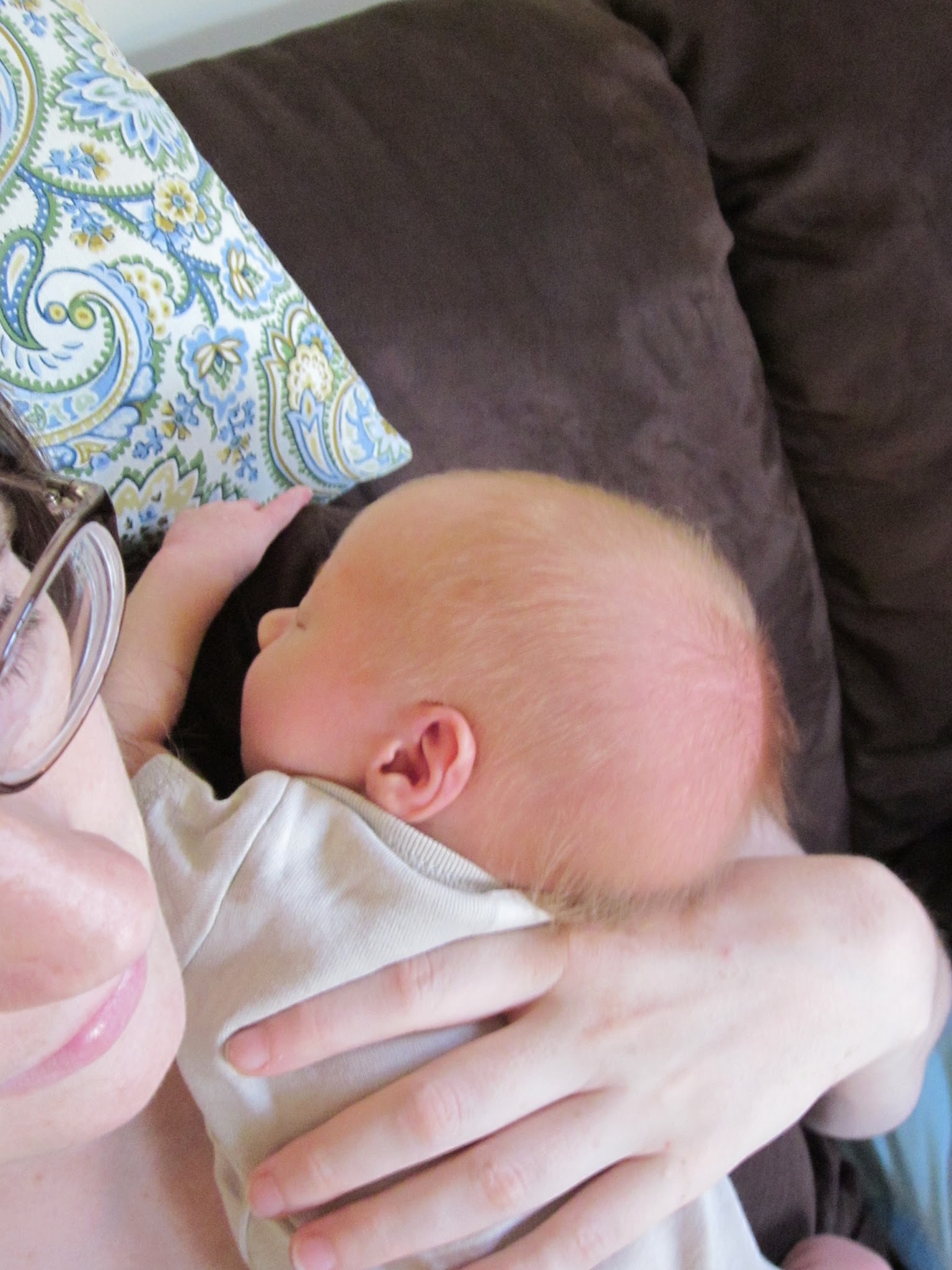
Look at that beautiful fuzz!
My friend posted on
facebook that she was planning to take her little boy for his first hair
cut and since our boys are the same age I felt a wave of maternal anxiety at the idea.
My youngest arrived with a precious layer of
strawberry-blond silk that glowed in the sunlight and stood out around his head
like a halo in every photograph we took.
But now, like his little friend, his hair is getting a bit untidy. It still curls charmingly at the nap of his
neck, but it also hangs in his eyes and is frayed with split ends. The thought of cutting it, though, nearly breaks
my heart.
When my oldest son was little he
would sit perfectly still on my lap as I ran my fingers through his hair. Now, at four, he stands on a dining room
chair once every few weeks as I painstakingly snip and trim. As he squirms, all itchy and twitchy, I watch
large swaths of thick dirty-blond hair falling floor. His wiggling wears me thin, but when I
threaten to stop half-way through he stills himself immediately, relishing
these rare moments of maternal attention.
My daughter doesn’t let me play
with her hair, but nearly every day of kindergarten she asked for two braids
and stood hopping from foot to foot as I wove the strands in place. After years of trimming her long locks at
home I now take her to Holiday Hair and sit in the empty chair beside her
watching her watch herself in the mirror.
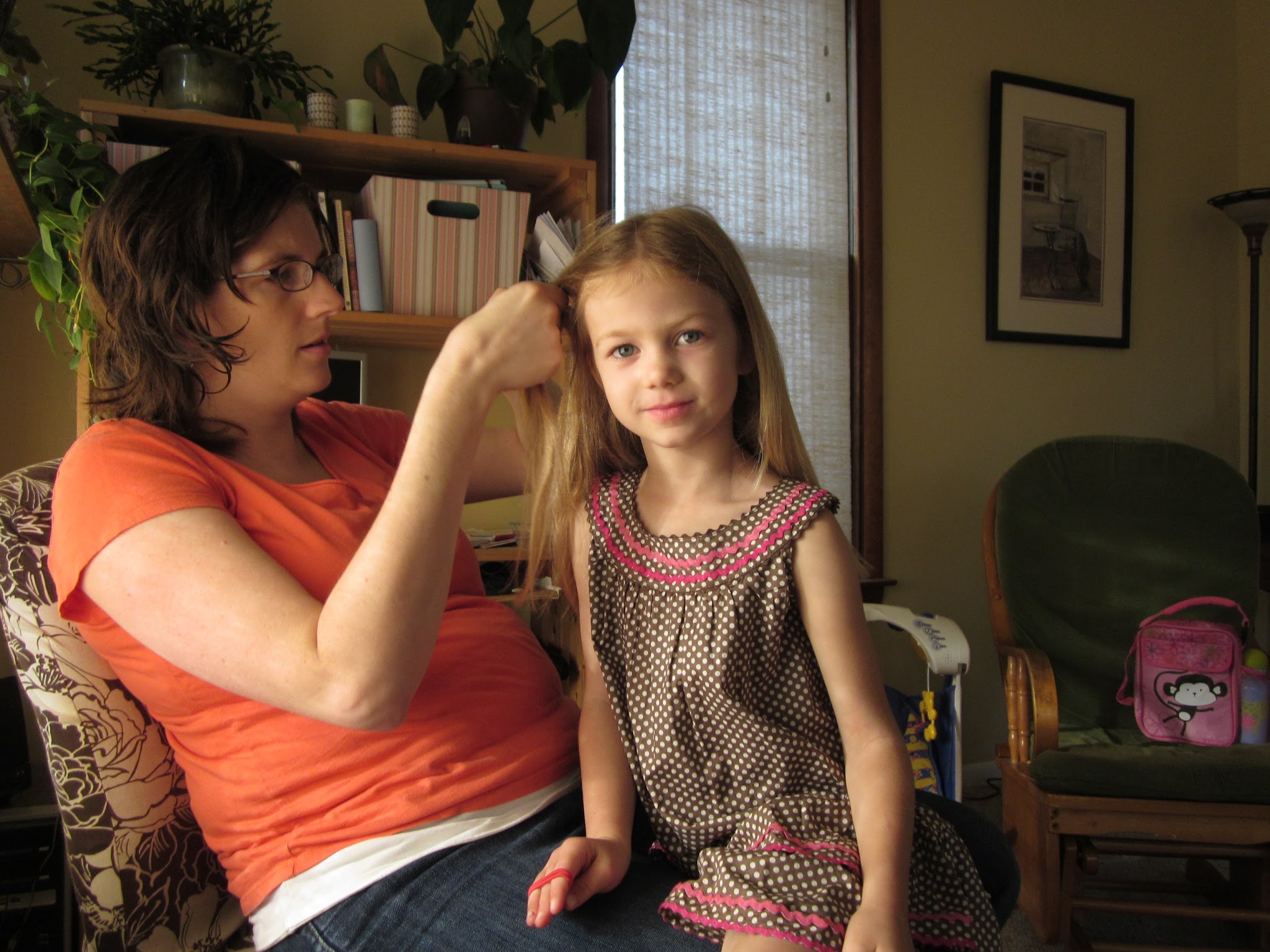
Sophia’s first day of school braid.
I number their hairs, these children
of mine. I scrub and rinse, watching the
water as it pours down over them. I
chant “look up, look up, look up,” begging them to tip their heads back so that
the soap won’t run into their eyes. I
pat their heads and trim as needed, watching bits of their childhood fall to
the floor with each snip of the scissors.
These are some of the many little ways I care for them – brushing and
combing and smoothing down – some of the many ways I express my love.
The intimate relationship a
mother has with her child’s hair reminds me of the place in scripture where we
are reminded that God numbers the hairs on our heads. As I marvel at the little curls that form on
their sweaty heads during nap time, I hear the passage anew as yet another
picture of God’s great love for us; God who knows and loves us with something
like the intimacy between a mother and her tow-headed children.
It won’t be long until they’re
cutting and combing and numbering their own hairs, but on days when they feel
lost or alone, I hope they’ll remember the feeling of my hand on their head, my
voice saying, “Look up, look up,” as the water runs down. I hope they’ll remember the One who loves
them even more than their mother does, the One who numbers the very hairs of
their heads.

My boy’s beautiful locks.
This post is linked with Playdates With God and Hear it on Sunday, Use it on Monday.
‘Ope
Isaiah stands at the low wooden shelf of the changing table with his chubby
hand tugging on the handle of a basket that’s stuck. Unable to get to the
books trapped inside, he turns to me whining and fussing to communicate his
desire.
Seizing the teachable moment, I prompt, “Help, Isaiah. Say, ‘help.'”
“Ope,” he says, copying my dramatic drawn-out inflection to
perfection, but missing the ‘h’ and ‘l.’
“Ope,” he shouts, pulling on the basket for emphasis.
* * *
Levi stands at the gate that divides the living room from the rest of the
house. He’s fussing to get my attention, while also checking and rechecking the
lock on the latch. He wants to be set free, he wants the run of the house.
Walking over and looking down into his face I say, “Open, Levi. Say
‘open please.'”
‘Ope,” he says, rubbing a quick circle over his bulging belly, the
baby-sign-language gesture for please. ‘Ope,” he repeats for good measure,
relieved to have the verbal keys that unlock the door to his desire.
* * *
It’s the day after Easter and my husband and I have an appointment with the
bank set for the following day. We have
dreams for our lives, our family, our ministry, dreams this beautiful little
house doesn’t seem capable of holding.
So we’re starting to lean into the future, starting to speak of our
hopes and dreams and as we do, I can feel the desperate, hungry flocks of fear
gathering like vultures.
As people of the resurrection, we’re called to dream, to imagine and move into our dreams, but too often I find myself stuck when the dark clouds of fear
and disappointment roll in. How does one
find a place to stand between control and resignation, between taking a dream
upon your own small shoulders and abandoning it in the dirt?
* * *
Levi and Isaiah are waiting at the gate again and as I approach Levi flashes a look of inspiration.
“Ope,” he says and his brother chimes in too so that they form a small chorus,
a flock of sweetly singing birds. “Ope,
ope,” they chirp while rubbing their bellies in little circles of
politeness.
But
through some blend of forced breath and mispronunciation, the word I hear is “hope”
and it’s then that my eyes and ears are opened to these two chubby-faced messengers
sent by God.
“Hope, hope,” Isaiah says as he tugs at the basket.
“Hope, hope,” Levi pleads as he stands at the locked gate.
“Please,” their small hands say as they circle their bellies again and
again.
* * *
These two little birds are teaching me the language of God-sized dreams, teaching me to sing the songs of desire and how can I help but join the chorus?
Standing at the gate to the future that I
can’t unlock on my own, I sing the song of hope, adding in a gesture of “please” for good measure. I throw back the shadows of fear and doubt with this small word that escapes my lips like a breath of fresh air, a mighty wind that chases the gathering clouds away.
“Hope, hope,” I say as we move forward, leaning, listening to the Whisperer
of dreams, the Giver of gifts, the One who sent this beautiful flock of birds to
settle in my nest singing their lovely song of hope.
Outlaws and Rebels, Every One
“They crucified two rebels with him, one on his left and one on his right.” Matthew 27:38
* * * * *
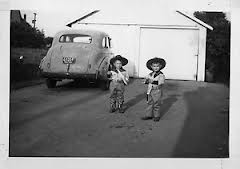
My 18 month-old boys saunter through the house with
swaggering bravado like two black-hats straight out of the lawless west. Working together they form a mafia-esque
crime-ring, a rebellious conspiracy against law and order and decency. Trafficking in black market goods pilfered
from the pile of floor-sweepings in the kitchen corner, they gather on the back
of the love seat, perched in the window to inspect and trade their haul.
They rip the heads off of their sister’s dolls and leave
graffiti on the living room walls and every time I kneel to zip Isaiah’s
coat, Levi circles around behind me and roots through my purse. A gifted pick-pocket, he snatches my wallet
and phone with such speed, stealth and precision that even I, the victim, have
to marvel.
When one is finally caught red-handed, and placed in
solitary (ie. the corner) the other comes quickly to the rescue, crouching down
beside him, chattering what I imagine are plans of daring-escape and revenge. Like true accomplices, though, they quickly
turn on each other when caught together at the scene of a crime – a mutually
enjoyed destruction turns all finger-pointing and tears when the fuzz shows up.
The other day I watched Levi running through the house with
what appeared to be a little shiv. It
sported a jagged, plastic tip and appeared capable of inflicting real harm, so
I quickly confiscated it, tossing it into the trash.
As we lay in bed at night my husband and I hear a “scritch,
scratch, scritch” on the bedroom wall near our heads. Levi’s crib sits just on the other side of
the wall so we sleep head-to-head, divided only by a few thin inches of plaster. We tell ourselves he’s rubbing the nubby
bottoms of his footed pajamas against the wall, but as I lay listening late into
the night, I think of that little shiv and wonder if he isn’t tunneling
his way to freedom one tiny scratch at a time. I
picture him tumbling through into our bed some night, his face full of surprise
and disappointment to find us there or, more likely, delighted.
These boys are outlaws, I tell you. Even so little, so cute, they have a rap sheet a mile-long. Looking at their round little faces, their hair
all downy-fluff, I’m reminded that we’re all thieves, all outlaws of one sort
or another, every last one of us. We’re
all Davids and Delilahs, Judases and Peters bent on greed and self-preservation. We’re all convicted, but
not condemned, chiseling our way toward freedom, one tiny crack at a time, until
at last we fall through the wall to Love.
This post is linked with Playdates With God and Hear it on Sunday, Use it on Monday.
Holy Saturday’s Work
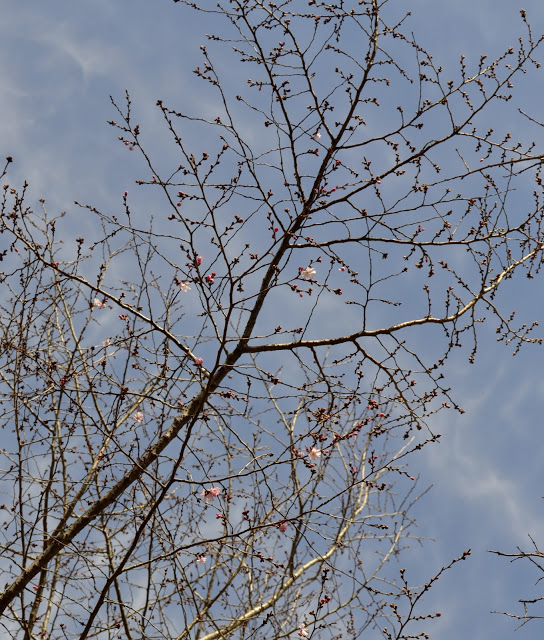
Holy Saturday’s Work
(for that which is already but not yet)
Go outside
and kneel
beside still-sleeping beds.
Strip away all
that’s dead;
the leaves,
brown and curled,
and the dry,
empty stems
of last year’s
blossoms.
Straighten,
one-by-one,
the
scallop-edged bricks
that have
stood, leaning,
all year-long
like
forgotten gravestones.
Roll the
giant flowerpot aside
and wonder
at the sound of
stone scraping
against stone.
– K. Chripczuk
The Tears and the Garden
From The Jungle
Book, after Mowgli fights off the deadly tiger Shere Kahn and the wolves who
betrayed the pack:
“At last, only
Akela, Bagheera, and about ten wolves who had been loyal to Mowgli remained.
The boy’s knees began to weaken, and a hurt began to grow inside of him, a hurt
he had never known before. Sobs lefts his throat and tears ran down his cheeks.
These strange happenings in his body frightened him, and he cried out to
Bagheera, “What is this? Am I dying?”
“No, Little
Brother,” replied the panther, gently. “These are tears, which only
[humans] use. Let them fall, Mowgli. Let them fall.”
Mowgli sat and cried as
if his heart were breaking. He had never cried before in his life. But then he
had never been forced to leave the jungle before.”
*
* *
Then Jesus went with his
disciples to a place called Gethsemane, and he said to them, “Sit here while I
go over there and pray.” He took Peter and the two sons of Zebedee along with
him, and he began to be sorrowful and troubled. Then he said to them, “My soul
is overwhelmed with sorrow to the point of death. Stay here and keep watch with
me.”
Matthew 26:36-38
* * *
They come as I am bent, hauling sleepers and
socks from the dryer, gathering the whole lot into my arms in a wide, sweeping
motion. They come too in the kitchen
when no one’s looking and I want to slide to the ground and hide behind the
counter and let the damn river flow.
On
Sundays, they rise in the in-between spaces, as I walk to the restroom or stand
looking for a seat in a sea of familiar faces.
Snuggled on the couch with my son reading the stories of Ramona I
feel their gathering tide and as I read this passage from The Jungle Book they
crash into me like waves breaking against a sandy shore.
This winter has been a season of tears, a rising, salty sea as my family and I find ourselves between what was and what will be and I’m reminded again and again that growth itself often involves surrender; dying to what’s familiar and opening our empty hands to embrace what’s new. The gift of new life is preceded by death, the birth foreshadowed by pain and the fact that Christ struggled so in the face of his own great transition brings me hope.
The tears of Jesus in the garden, like the
tears of Mowgli in the passage above and the tears I have felt this winter long,
are tears of transition. They are the
heavy, disoriented cries of pain that come in the dark cloudy pass of life
in-between.
“What
is this,” Mowgli says, “Am I dying?”
“My soul is overwhelmed with sorrow to the point of
death,” says Jesus.
To be human is to feel pain and sorrow, to sit breaking and broken as the tears roll down. We hold-on for as long as we can, clutching tight to
the old, the known, and then finally, letting go at last, we feel the fear of
falling as the thin skin of safety, the strong walls of that which holds us
give way to something more.
And all along the dark, dry and narrow passage that leads us continually from death to life, the gift of tears comes to water us, to nourish our thirsty souls and the seeds of life within.
“Let them fall,” says the good, wise friend,
Bagheera, “let them fall.”
* * *
Oh Christ, who surrendered through great
heaving tears of sorrow and loss, guide us please, through this narrow passage-way,
teach us to breathe through the pain as we wait for the gift of new life. Grace us, please, with the tears of surrender, those salty, sacred streams that water our souls.

Spring Snow (Remain here, stay)
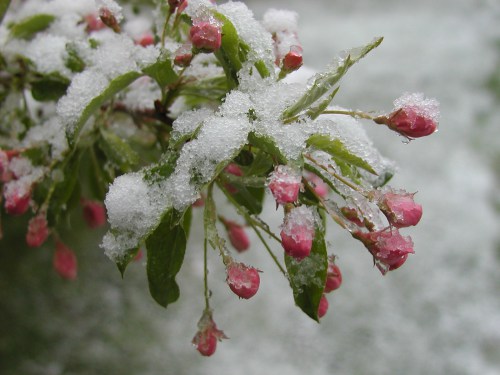
Then he said to them, “I am deeply grieved, even to death; remain here, and stay with me.”
Matthew 26:38
Snow fell during my March retreat, swirling, driven white upon the spring-green and
brown world. Flat and thin, large flakes
like communion wafers dissolving on the sun-warmed tongue of
the earth. It lay in patches,
queen-ann’s-lacing the woodland path where the first shoots sprung up and tiny,
white flowers dotted.
I couldn’t help but smile, for surely God was laughing –
laughing at our springing forward eagerness, our expectation that the turning
of the seasons might be rushed along through impatience. We were ready for spring, but the stillness
of winter crept in among us, bringing its gentle silence and heavy, dripping
ice.
As snow fell, heaven whispered, “Stay here, just a little
longer. There’s more to be found here in
the depths of this silence, more to be gathered.”
* * *
I know this snow won’t last, it’s here and gone before the day is done like manna, so much bread falling from heaven’s cloudy eye. But there’s nothing more painful to me than being asked to stay
where I would rather not. Give me the
command to “get up and go” and I’ll be ready, bags packed, at your beck and call. But ask me to stay and watch awhile and I, like the disciples, would
prefer a dark and restless sleep to the tearful wrestling with that which I
did not, would not, chose.
Yet here we are, days into spring, and snow is falling still,
heavy and wet, pillowing everything under gentle curves. The birds don’t seem to mind, busy as they are and singing
too, confident in what’s to come. They believe, as all earthly creatures must, that
the world will turn again, rolled back like a giant stone as life emerges.
* * *
Stay awake my friends, stay awake and watch awhile. Do not fear the long dark night for even now
the world itself is tilting, leaning toward the edge of winter and the end of our waiting. Outside my window the trees’ heavy
white robes of snow are sliding to the ground where they lay, like burial shrouds,
cast off, empty.
Remain here, stay and listen awhile and you too might hear the moment the melting
begins; one single drip followed by a chorus of dripping, dropping,
living waters as death is again defeated, transformed, until all that
remains are the shining droplets, a million sparkling crystals hung like jewels
on the tree of life.

This post is shared with Playdates with God and Hear it on Sunday, Use it on Monday.
Filled With Compassion
“But while he was still far off, his father saw him and was filled with compassion . . .”
Luke 15:20
First comes the divestment,
the division of all you have,
blessed, broken and given,
like bread.
Then the wait begins,
the long, empty hours and days
wherein you wander the vacant
halls of your life,
emptied of all that owned you.
Your life is a bowl now,
open,
hollowed out,
exposing a growing
breadth and depth of love,
a willing humility.
Then and only then
may you be filled
with compassion,
filled with that which reaches out
beyond the borders of you,
beyond emptiness,
to embrace
one come home.
The Search for Spring
I was worried that maybe it was a little too late for this post now that spring is officially here, but given that it’s only 35 degrees outside (and windy) and that I wore my coat and hat in the house all last evening, I think we could all still use the reminder. Enjoy!
* * * * *

While welcoming in the New Year, my family also unwittingly welcomed in a veritable cornucopia of germs and we’re still reeling from it all. I have the pediatritian on speed-dial and the fridge boasts a wide collection of fruit-flavored antibiotics. We’ve been trapped inside for days now, wading through mountains of old tissues and tripping over empty syringes of infants’ Ibuprophen.
One particularly rough morning, I stood in the middle of a sea of sickness like the captain of a sinking ship and declared, “Get dressed, get your shoes and coats on, we’re going out.” Mustering the efficiency of someone evacuating in the path of a natural disaster, I piled all four kids and the jogging stroller into the van in 10 minutes flat.
I pulled away from the curb without a plan . . .
This post was published in Central Penn Parent Magazine, simpy click on the link to continue reading.
Books

Between Heaven and Earth (poems)
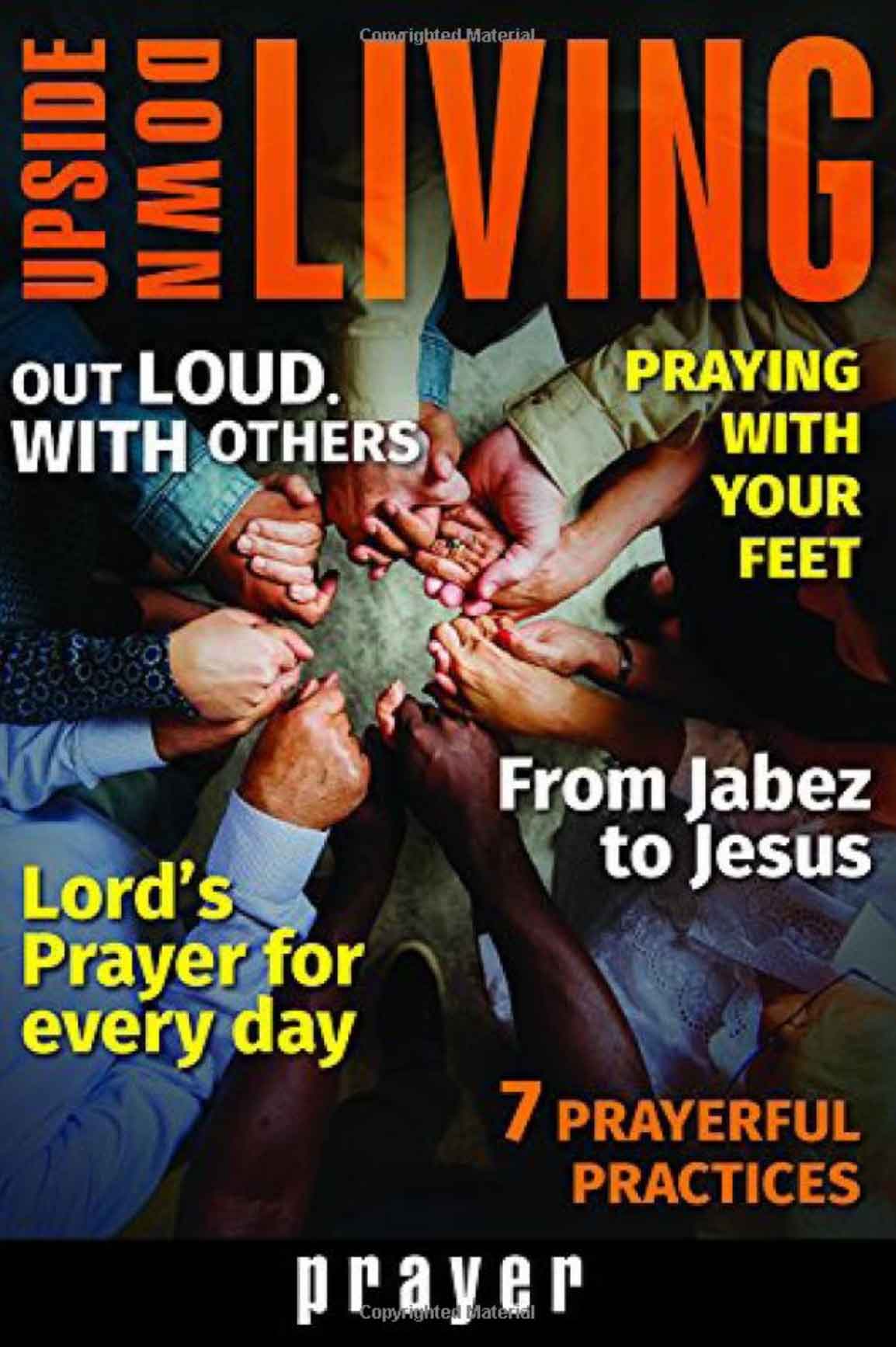
Prayer can easily become an afterthought, a hasty sentence, a laundry list of all the things we want. But what if prayer is a time to find out what God wants for us–and for our world? What does it mean to pray that the kingdom would come here and now as it is in heaven? Explore these questions in this study, and learn prayer practices that nurture intimacy with God and sensitivity to God’s dream for the world.

Follow this writer, spiritual director, and mother of four as she dives into the deep end of chicken farming and wrestles with the risks and rewards of living a life she loves. At turns hilarious, thoughtful, and always compassionate, Chicken Scratch will change the way you see the mess and chaos involved in living life to its fullest.
